


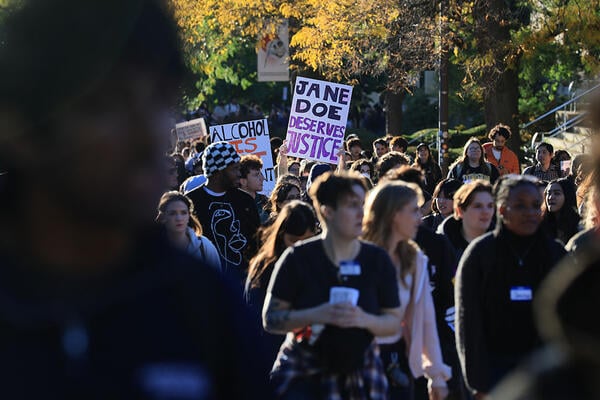
Cornell University students participated in an Oct. 5 rally protesting the university’s handling of sexual assault allegations.
In the wake of the horrific sexual violence allegations at Cornell University, Jane Doe’s lawsuit against her former school and the alleged perpetrators has already generated important scrutiny of the campus investigation and the local prosecutor’s response. There is also a much-needed spotlight on a flawed New York law that limits prosecutors’ ability to file rape charges based on alcohol- or drug-related incapacity if the victim drank or used drugs voluntarily. At this point, it may be tempting to think legal and policy fixes will prevent this situation from happening again.
But while better laws, policies and trainings are necessary and important, they are not enough. Just over a decade ago, campuses were filled with students challenging their colleges and universities for not responding effectively to sexual assault complaints, as students at Cornell are doing now. Their efforts helped to prompt policy and legal changes, including New York’s Enough Is Enough law, which mandated an affirmative-consent standard, created a Students’ Bill of Rights and required the state’s higher education institutions to do climate surveys, add resources and offer prevention programming. Yet surveys show that, at many colleges, sexual assault remains startlingly common, especially but not only for women.
If we are serious about addressing this problem, we have to understand, and change, the conditions in which campus sexual assault happens. Real life at college takes place in a world of social networks and pressures, and university policies and state laws are unlikely to be top of mind when students make plans for a night out.
Source: Inside Higher Ed — Read the full article on the original site ↗