


Partnering with Hacktron to find vulnerabilities in OpenAI’s systems
OpenAI is partnering with Hacktron to find vulnerabilities, test connections with third-party services, and strengthen defenses with frontier AI.
Read original on OpenAI News ↗
OpenAI is partnering with Hacktron to find vulnerabilities, test connections with third-party services, and strengthen defenses with frontier AI.
Read original on OpenAI News ↗
OpenAI introduces BioBasicsBench, a 100-task benchmark measuring how well AI agents interpret raw experimental data and handle everyday wet-lab science.
Read original on OpenAI News ↗
Cult.fit is using Codex to help teams across functions build tools, move faster, and change how work gets done.
Read original on OpenAI News ↗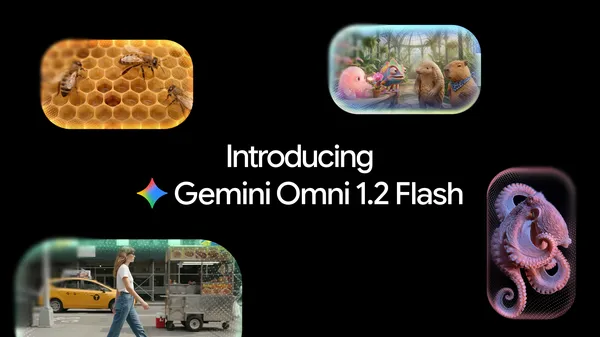
Gemini Omni 1.2 Flash brings native 15-second video generation and editing, stronger consistency, and 30% lower pricing.
Read original on Google AI Blog ↗
Australian universities are expanding access to ChatGPT and bringing AI into teaching and learning to prepare students for an AI-enabled workforce.
Read original on OpenAI News ↗
Introducing GPT‑6 Cyber, OpenAI’s cybersecurity model for finding exploitable vulnerabilities and developing fixes, trained to stay within authorized scope.
Read original on OpenAI News ↗
Here are Google’s latest AI updates from October 2026
Read original on Google AI Blog ↗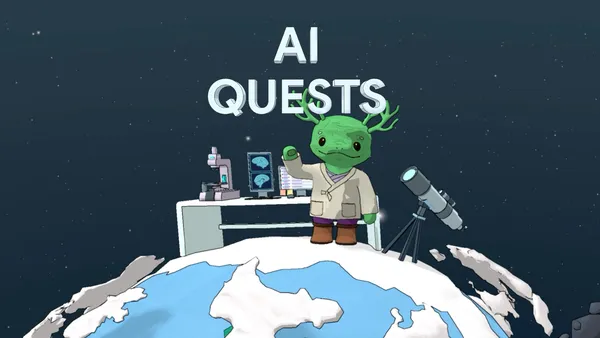
Learn AI literacy via Google’s latest AI Quests lesson on neuroscience, “Polar Peaks.”
Read original on Google AI Blog ↗
Widespread AI adoption is propelling Southeast Asia's digital economy to a projected $368 billion in 2026 and $1 trillion by 2035.
Read original on Google AI Blog ↗
India's Most Futuristic AI Conference Is Back – Bigger, Sharper, Bolder
Read original on Analytics Vidhya ↗
India's Most Futuristic AI Conference Is Back – Bigger, Sharper, Bolder
Read original on Analytics Vidhya ↗
India's Most Futuristic AI Conference Is Back – Bigger, Sharper, Bolder
Read original on Analytics Vidhya ↗
India's Most Futuristic AI Conference Is Back – Bigger, Sharper, Bolder
Read original on Analytics Vidhya ↗
India's Most Futuristic AI Conference Is Back – Bigger, Sharper, Bolder
Read original on Analytics Vidhya ↗
Google has released Gemini Omni 1.2 Flash, the newest version of its video generation and editing model. Gemini Omni 1.2 Flash generates and edits clips up to 15 seconds natively. It also cuts the price by 30% compared with Omni 1.1 Flash. The model is generally available on Google Cloud and the Gemini API. For developers, the takeaways are longer clips, fewer re-renders and a lower bill per second.
Read original on MarkTechPost ↗
Thinking Machines Lab has released Inkling 2 Small, the first model of its second Inkling generation. The Inkling 2 Small model is a sparse Mixture-of-Experts (MoE) with 594B total and 17B active parameters. It accepts text and images, and supports variable reasoning effort. On the Artificial Analysis Intelligence Index, it scores 31. Its predecessor, Inkling Small, scores 13 on the same index. The model is live on Tinker for fine-tuning and inference.
Read original on MarkTechPost ↗
Zyphra has released ZYFA (Zyphra FlashAttention on AMD), a set of FP8 and BF16 prefill attention kernels for AMD Instinct MI355X GPUs. ZYFA is Zyphra’s FP8 attention engine for long-context prefill, and the code is open source under Apache 2.0. On real model activations, its FP8 kernels run 1.16-1.76x faster than AITER, AMD’s default kernel library. At head dimension 128, ZYFA’s FP8 error is 62-78% lower than AITER’s.
Read original on MarkTechPost ↗
Buoyant, the company behind Linkerd, has released Kinference, an open source project for building inference platforms on Kubernetes. Kinference is an inference control plane for Kubernetes and vLLM. It sits in front of a fleet of vLLM workers and decides where each request goes. It applies routing policies, token rate limits, KV-cache-aware load balancing and per-tenant metrics in one layer. For dev teams serving many open-weight models to many internal clients, it targets the layer above the model server. The project is Apache 2.0 licensed on GitHub. The current release is v0.1.0-alpha.7.
Read original on MarkTechPost ↗
OpenAI fought dirty on career-making math problem, says NYU mathematician
Read original on Last Week in AI ↗
Our 257th episode with a summary and discussion of last week’s big AI news!
Read original on Last Week in AI ↗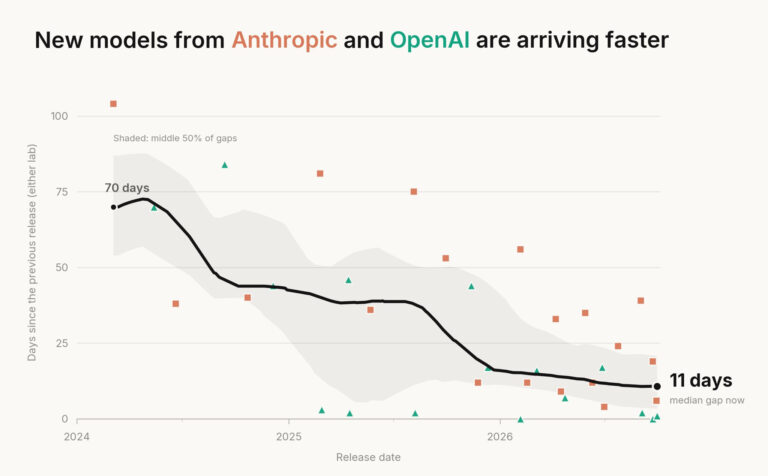
Anthropic launches Claude Opus 5.5 with stricter safeguards for cybersecurity
Read original on Last Week in AI ↗
Our 258th episode with a summary and discussion of last week’s big AI news!
Read original on Last Week in AI ↗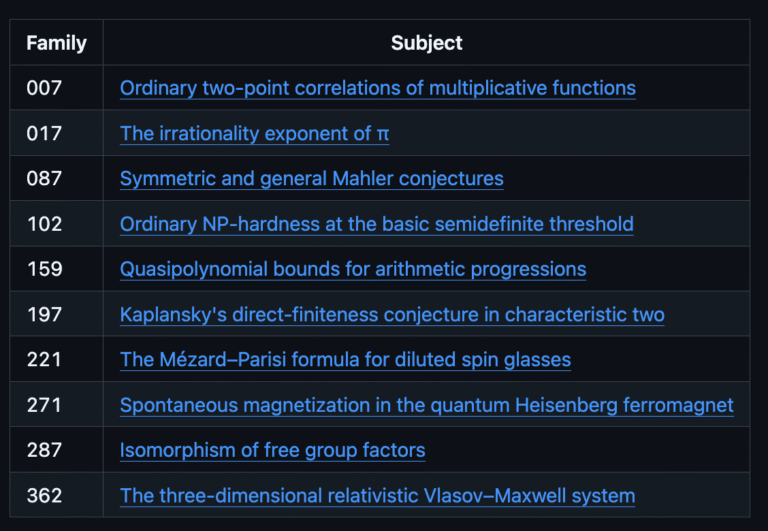
OpenAI publishes hundreds of math proofs from unreleased frontier model, Mistral and Reflection AI launch open-weight models to rival China, and more!
Read original on Last Week in AI ↗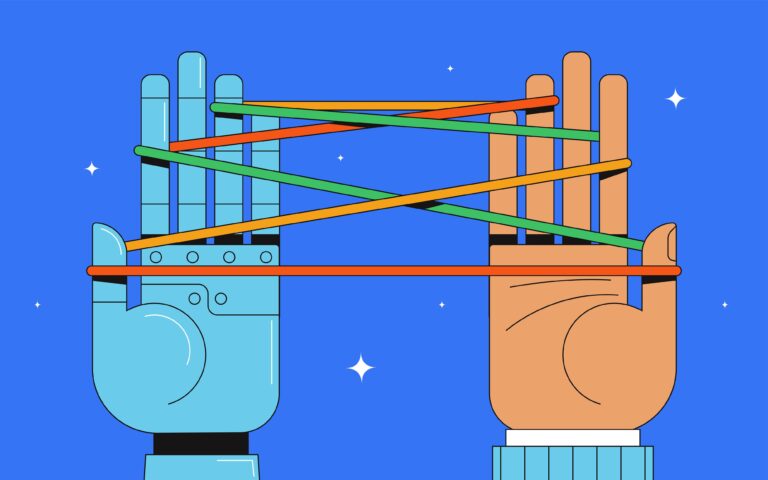
Modern engineering projects increasingly combine human judgment with machine capability. An engineer can define a problem, then ask an artificial intelligence tool to search relevant research and technical standards, generate design options, test them in simulation, and compare the results. The engineer can then bring the results to specialists who understand the parts AI cannot judge on its own, such as whether a design can be built safely, whether it makes sense in a particular setting, or how it might affect its users. The final decision about whether and how to move forward remains a human responsibility.
Read original on IEEE Spectrum - AI ↗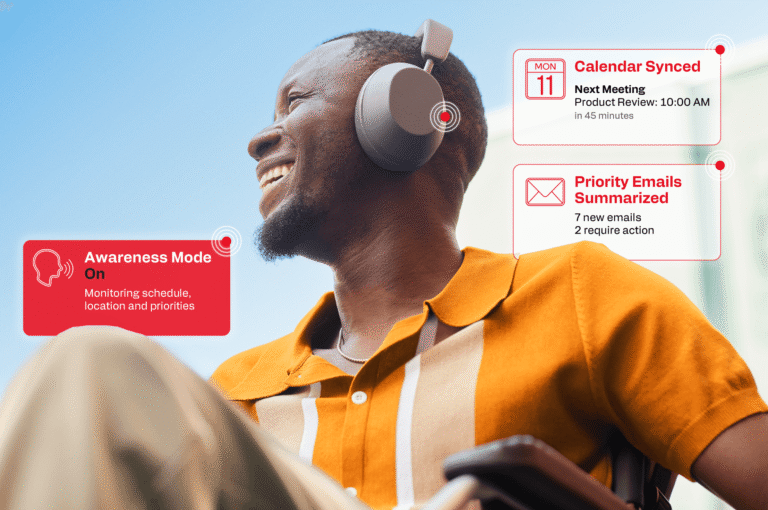
For many consumers, much of the promise and appeal of AI is personal. Consumers are looking past generic tools and want to know how these technologies will help them in their daily lives. These trends coincide with the advent of new classes of wearable devices that, in addition to being able to leverage powerful frontier models, feature built-in intelligence that understand the context of a user. Where are they? What are they seeing and hearing? What are their habits, their preferences, their schedules?
Read original on IEEE Spectrum - AI ↗
A recent scroll through social media got me thinking about trust. About half my feed was filled with AI slop that astute users would call out as being machine-generated, often to the embarrassment of the rube who unknowingly spread it and sometimes to the delight of the poster who shared it deliberately because they found it amusing or useful for sowing confusion.
Read original on IEEE Spectrum - AI ↗
The first time Mutembei Kariuki thought about how AI models could work in Kenya, his home country, was in 2019. He was attending a conference at the University of Tokyo on the future of AI, and kept hearing about how this technology was going to transform the world. “But nobody mentioned Africa at all,” he says.
Read original on IEEE Spectrum - AI ↗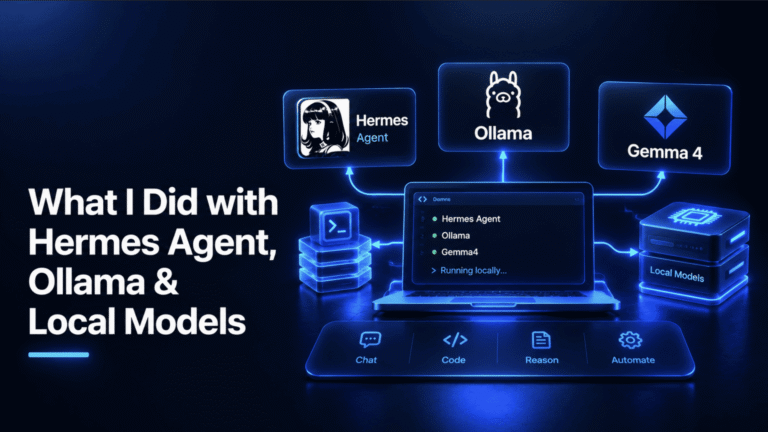
Build a local multi-agent travel planner with Hermes Agent and Ollama: a coordinator and three specialist agents that research destinations, suggest stays, and generate real Google Flights search links.
Read original on KDnuggets ↗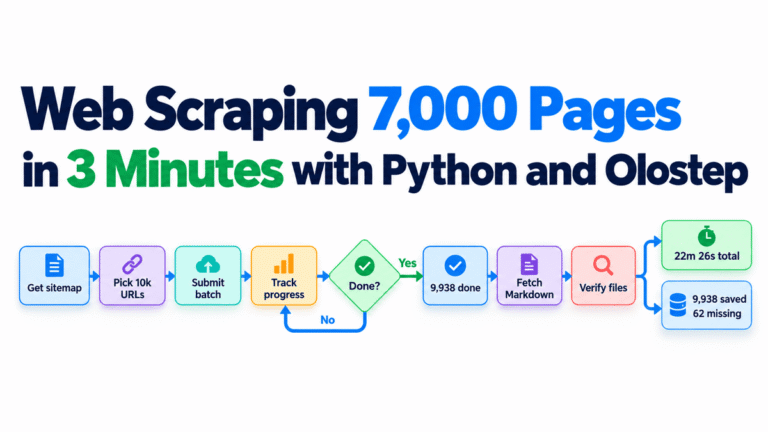
Scrape thousands of pages in a few minutes with the Olostep Batch API, download Markdown, and measure what actually finished.
Read original on KDnuggets ↗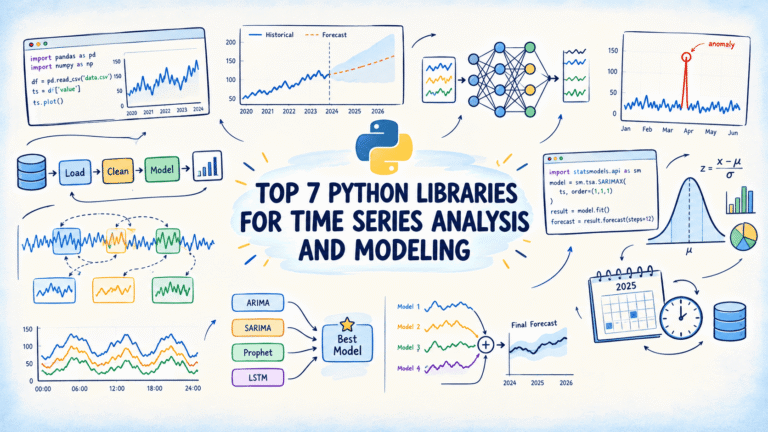
Working with time series data? These Python libraries cover everything from classical forecasting to deep learning and anomaly detection.
Read original on KDnuggets ↗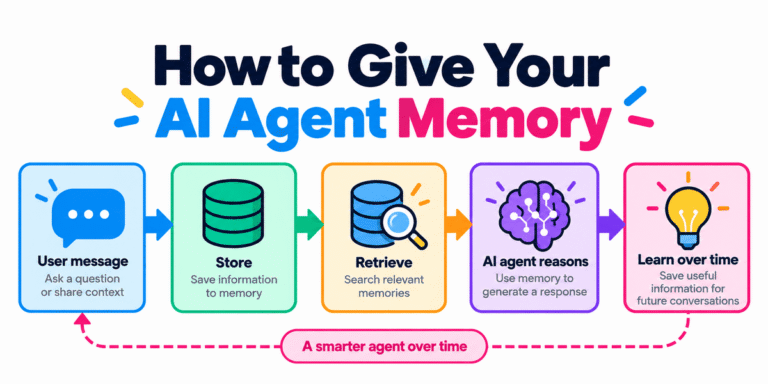
Learn how to give AI agents long-term memory using the OpenAI Agents SDK, Mem0, and MCP to remember preferences, context, and important information across sessions.
Read original on KDnuggets ↗
Everything about the Purplle Tech Challenge and off-campus SDE Intern hiring process .
Read original on Medium - data science interview ↗
This article is written for anyone who works alongside software engineers or applied scientists but does not come from a computer science…
Read original on Medium - data science interview ↗
Part 1: Event Stream Pairing with shift()Continue reading on Medium »
Read original on Medium - data science interview ↗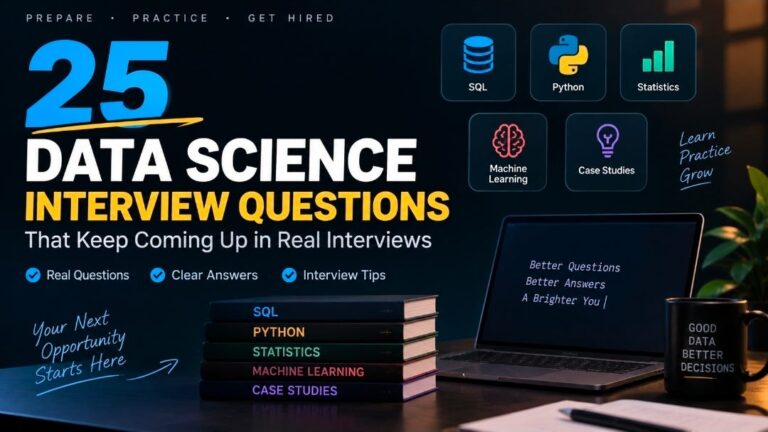
SQL, Python, Statistics, Machine Learning, and Real-World Case Studies
Read original on Medium - data science interview ↗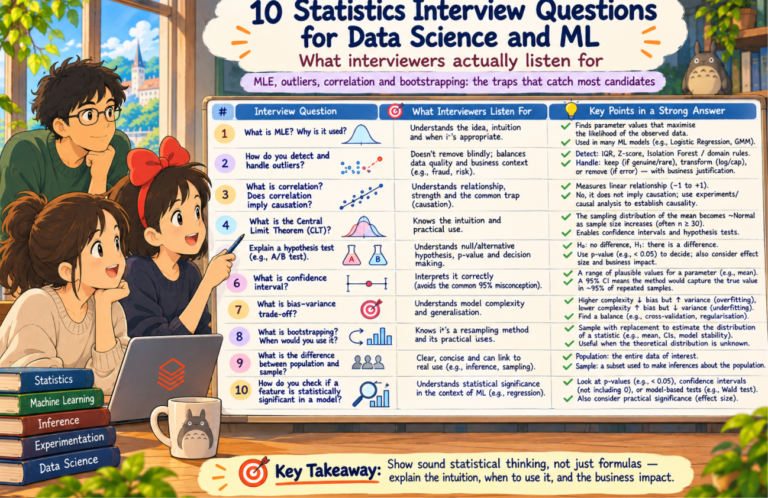
MLE, outliers, correlation and bootstrapping: the traps that catch most candidates
Read original on Medium - data science interview ↗
Local and Distributed Large LLM Inference with MLX and RDMA on Mac Studio
Read original on Apple Machine Learning Research ↗
Selection-Based Structured Reasoning: Toward Efficient Multimodal Search Agents
Read original on Apple Machine Learning Research ↗
AuthorsMingfei Zhang, Amit Surana, Ziauddin Majid, Chenxi Wang, Michael Xu
Read original on Apple Machine Learning Research ↗
GHARP: Real-Time Gaussian Head Animation from Large-Scale Reconstruction Prior
Read original on Apple Machine Learning Research ↗
Ex-Ante evaluation: Price the risk-adjusted value of the idea via multiple agents making forecasts and stake compute credits/tokens around the proposal’s soundness and viability Brokerage & trade: Licence ideas to executors (e.g, some agents might just generate ideas, others might run laboratories) via fractional licensing.
Read original on Import AI ↗
New benchmark shows how AI models lack intuitive visual reasoning:…Humanity’s Sixth Sense highlights some shortcomings of current AI systems…AI startups Elorian and Scale AI have built and released Humanity’s Sixth Sense, a benchmark that “measures how a model interprets and reasons through information a visual scene implies but doesn’t explicitly show.” Some examples of the types of task in HSS are a picture of a bookcase and being asked whether it can fit more books, or a photo of horses pulling a plough and a question of whether the chains bear the plough’s drag weight. HSS contains 522 questions that cover 288 images and 234 short video clips (totalling 17.6 hours of video). The questions fall into four categories:
Read original on Import AI ↗
Here’s a speech I gave on Saturday the 17th of October at the IMF meeting in Bangkok. This speech is inspired by the megatrend readers have seen me cover this year of AI beginning to operate at the frontier of human science, sometimes autonomously. While we all may quibble over the details, I think it’s evident we’re in the early stages of the singularity, and I wanted to use my privileged position of giving the Per Jacobsson lecture to try and tell the assembled audience of economists, bankers, and policymakers, that they should expect significant, rapid change in the future. In this speech, I focused primarily on how humanity can share in the benefits of AI if we exercise proper…
Read original on Import AI ↗
Tech Tales:The Magical Realism Robot Workshop for Sick Kids[2035, after the uplift]So one of the jobs that no one expected was designing cute robots for sick kids in hospitals.
Read original on Import AI ↗
LLMs are very bad at low-latency tasks:…Realtime-Bench says it’ll be a while till AI systems can play games or do online auctions for you…Researchers have built Realtime-Bench, “a suite of carefully curated dynamic tasks where delayed actions directly affect success”. The test helps evaluate how well modern, general-purpose AI systems can perform tasks where decisions need to be made in real-time. The benchmark consists of 50 interactive game and web tasks, split across 30 web tasks in four categories (travel, e-commerce, service, and security), and 20 game tasks (arcade, puzzle, strategy, and simulation).Who did the research: The benchmark was built by people at the University of Texas at Austin, Ohio State University, University of Illinois at Urbana-Champaign, NVIDIA, Northwestern University,…
Read original on Import AI ↗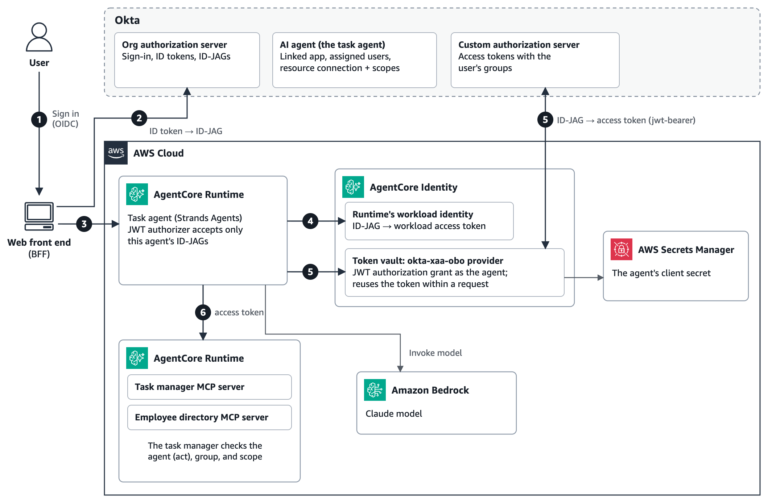
An AI agent that updates a ticket or reads a customer record acts for a person, inside applications that person can reach. Your identity team then has to answer a question that per-app OAuth consent and shared service accounts leave open: which agent might act for which user in which application, and how you stop it. Okta Cross App Access (XAA) answers it in your identity provider (IdP). You register the agent in Okta, an administrator approves the applications it might reach, and Okta evaluates policy each time the agent asks to act for a user. In our tests, after an administrator removed a user’s assignment to the agent, Okta refused the agent’s new requests for that user within about…
Read original on AWS Machine Learning Blog ↗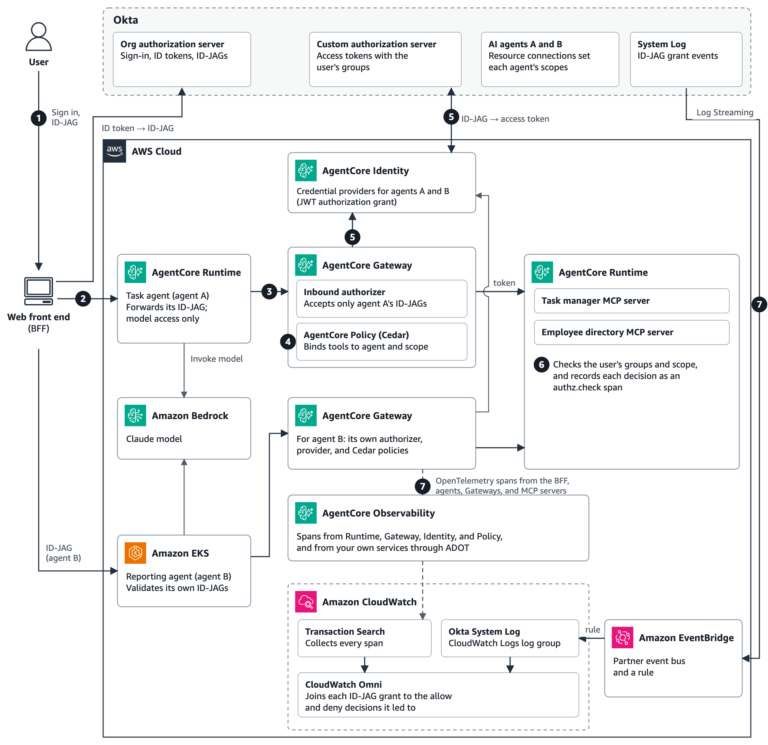
In Part 1, you built a task agent on Amazon Bedrock AgentCore, a platform to build, connect, and optimize agents at scale, with any framework or model. The agent runs on Amazon Bedrock AgentCore runtime, a capability of Amazon Bedrock AgentCore, and acts for signed-in users through Okta Cross App Access (XAA). Okta decided which agent might act for which user, and Amazon Bedrock AgentCore Identity, a capability of Amazon Bedrock AgentCore, redeemed Okta’s grant inside the agent. That proves the governance mechanism, and it runs on a deliberately small topology: one agent, two Model Context Protocol (MCP) servers, and the authorization check written into each server.
Read original on AWS Machine Learning Blog ↗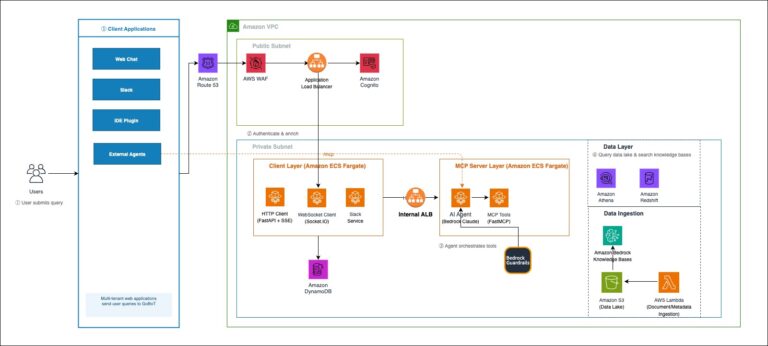
Organizations building applications powered by artificial intelligence (AI) face a recurring challenge: giving large language model (LLM) agents access to enterprise data lakes without duplicating integration logic across every agent and application. Most teams begin by wiring agents directly to databases and APIs, with no shared gateway such as a Model Context Protocol (MCP) server in between. Each new dataset demands custom code, and each agent reimplements its own access control. As the number of datasets or agents grows, permission enforcement drifts, and onboarding a new data source becomes a multi-day engineering effort.
Read original on AWS Machine Learning Blog ↗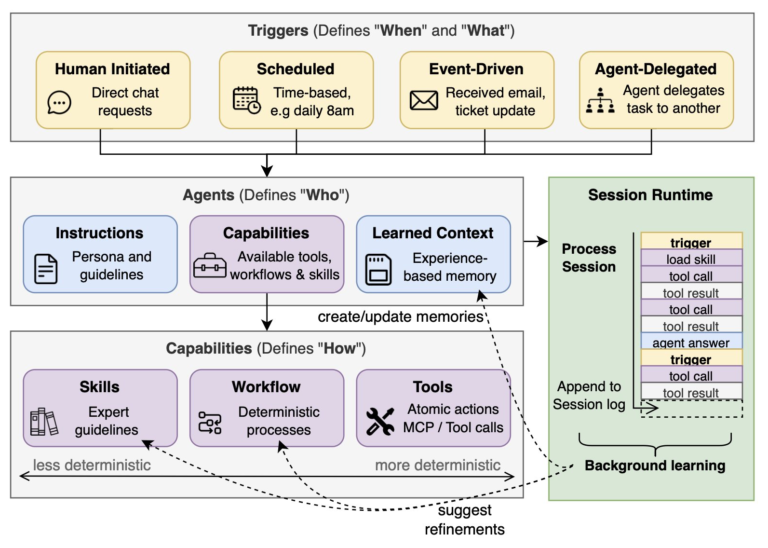
Over the past year, as we built Amazon Quick, our agents went from answering questions to taking actions: scheduling meetings, running research, generating reports. As the system evolved, one problem kept resurfacing: there was no shared definition of the primitives that agentic work is built from. The same few ideas kept getting rebuilt under different names: an actor that does the work, a signal that starts it, a packaged procedure, and a memory that carries lessons forward. This repetition leaked into product design and onto the user.
Read original on AWS Machine Learning Blog ↗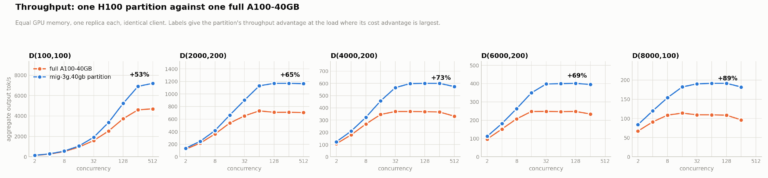
When you deploy a model to a GPU endpoint, the smallest unit of GPU you can request is one whole accelerator.
Read original on AWS Machine Learning Blog ↗
As GPU clusters scale, operations span compute, network, hardware, and scheduling. Site reliability engineers (SREs) often have to examine multiple dashboards to identify the cause of training performance drops. What if a team of AI agents could perform that correlation through one interface?
Read original on NVIDIA Technical Blog ↗
In an AI factory, high bandwidth memory (HBM)is the fastest, most expensive, and most contested memory tier. Every byte spent on a redundant weight copy, an idle session’s KV cache, or a recomputed prefix is a byte that is not being used to produce tokens. The question is no longer how much memory a GPU has, but how much useful work each byte delivers.
Read original on NVIDIA Technical Blog ↗
One underperforming GPU can slow an entire distributed training job. The node may pass basic health checks and show normal utilization, leaving operators to discover the problem only after the workload is running.
Read original on NVIDIA Technical Blog ↗
During reinforcement learning (RL) post-training, training trajectories are generated on the fly by running inference with the current policy model. For training efficiency, it is common to run inference and training in parallel on separate GPU resources in a disaggregated setup. Although the policy model is updated only on the training GPUs, the system must periodically refresh the weights on the inference GPUs with the latest parameters generated on the training GPUs. This transfer of model weights between training and inference GPUs is called refit.
Read original on NVIDIA Technical Blog ↗