

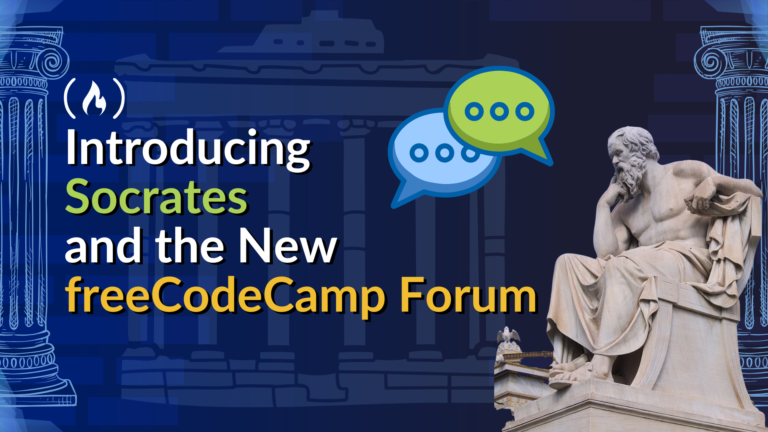
Introducing Socrates and the New freeCodeCamp Forum
freeCodeCamp just turned 12 years old. And so did our beloved forum. And today I'm thrilled to say that the forum is now focused on discussions rather than Q&A.
Read original on freeCodeCamp News ↗
freeCodeCamp just turned 12 years old. And so did our beloved forum. And today I'm thrilled to say that the forum is now focused on discussions rather than Q&A.
Read original on freeCodeCamp News ↗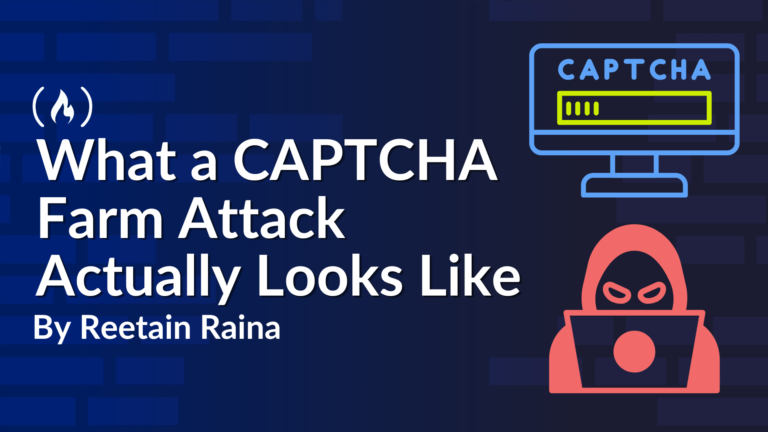
CAPTCHAs are something most of us have come across while browsing the internet. Sometimes we're asked to identify traffic lights in pictures, solve a small puzzle, or simply tick a box to confirm we're human. Websites use these challenges to help distinguish real users from automated bots.
Read original on freeCodeCamp News ↗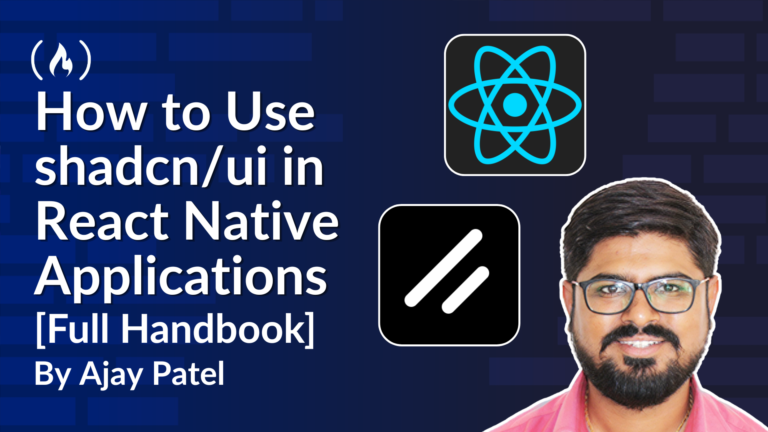
If you've built a couple of React Native apps, the following probably feels familiar. You start with a colors.ts file and a simple Button component. Everything looks fine at first. Then the design changes a few times, and that small color file starts growing. Your Button also picks up another prop every time someone asks for a slightly different style.
Read original on freeCodeCamp News ↗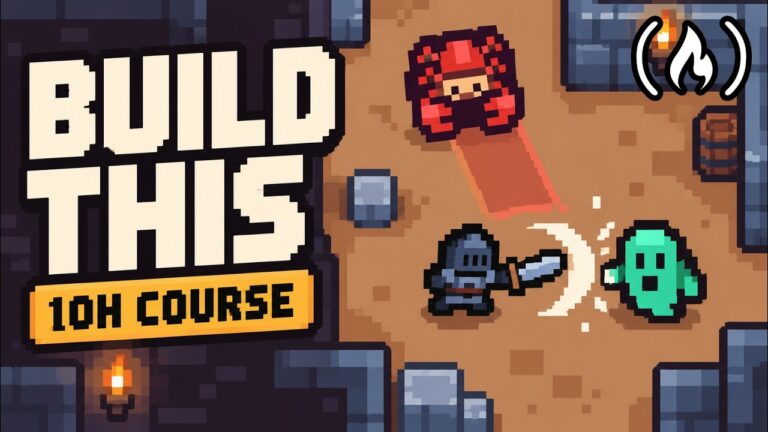
A top-down action roguelite only works when combat feels sharp, rooms feel connected, and every run asks you to trade power for risk. Godot 4 has the tools for that, but most tutorials stop before those systems fit together into a game someone else can open and play.
Read original on freeCodeCamp News ↗
PDF files are commonly used to share presentations, scripts, reports, lesson materials, comic pages, and other visual documents. But reviewing a long PDF page by page can take time, especially when someone needs to understand the overall sequence of scenes, slides, or visual content.
Read original on freeCodeCamp News ↗
Today, Anthropic, an AI safety and research company that built Claude, is launching 10 courses on Coursera that are available for free to learners around the world. With tailored courses for developers, small business owners, creators, and teachers, learners from several fields can build technical skills to better use Anthropic’s AI products and develop AI fluency for their everyday work.
Read original on Coursera Blog ↗
Today, on the sidelines of our first Coursera + Udemy Partner & Instructor Forum in Madrid, we announced more than 30 new programs and several exciting platform updates — all designed to help learners and creators better navigate the changing skills landscape. Held in partnership with Real Madrid at their Bernabéu Stadium, we brought together our top university partners, industry educators, and instructors from around the world to discuss emerging trends, best practices, and new innovations.
Read original on Coursera Blog ↗
I’m excited to announce that Amy Weisenbach will join Coursera as our new Chief Marketing Officer, effective November 30, 2026.
Read original on Coursera Blog ↗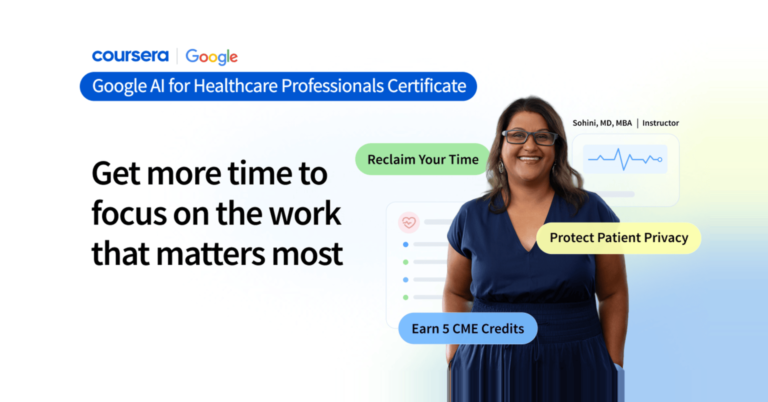
Today, Google is launching its first health program on Coursera, the Google AI for Healthcare Professionals Certificate. The new program is designed to help healthcare professionals responsibly and confidently use AI in their daily work. This marks an exciting expansion, given the tremendous opportunities at the intersection of AI and healthcare.
Read original on Coursera Blog ↗
Training videos can help employees access, review, and use workplace knowledge more easily. But simply recording an expert or converting slides into a video does not guarantee effective learning. The impact of a video depends on the specific performance issue, its design, production quality, delivery, and what follows after employees watch it.
Read original on eLearning Industry ↗
SweetRush enhances its L&D staffing services with its human-centered Talent Agency, AI coach, agile client dashboard, and network of 100K+ L&D professionals.
Read original on eLearning Industry ↗
Your training budget gets spent every year. Most of it buys activity, not performance. The difference is decided at the moment of approval, and most approvals are a formality. Someone senior asks, someone in L&D nods, the money moves.
Read original on eLearning Industry ↗
Management skills matter most when doing your own job well is no longer enough. If you're an Instructional Designer moving into a manager role, you'll need to coordinate workloads, help colleagues grow, set priorities, and explain your decisions to others. Creating great content is still important. But as a manager, you also need to ask yourself: can you help others do their best work?
Read original on eLearning Industry ↗
A learning brief is a short working document that aligns the L&D team, subject-matter experts, and key stakeholders on the purpose, scope, audience, objectives, and success criteria of a training project — before any content development begins.
Read original on eLearning Industry ↗
Annie Andrews, the senator-elect from South Carolina, is a pediatrics professor at the Medical University of South Carolina.
Read original on Inside Higher Ed ↗
During the pandemic, I experienced my first real episode of burnout. I was falling asleep every day after work, with fatigue so heavy I’d wake up four hours later on the couch not realizing I’d fallen asleep in the first place. Despite being an expert on the topic, and telling patients they had it, I had trouble turning the lens on myself.
Read original on Inside Higher Ed ↗
In my radio days, we had a running joke about a “collision mix.” That was when two songs played back-to-back made absolutely no sense next to each other. Sometimes they were intentional, but mostly they resulted from us having more enthusiasm than competence.
Read original on Inside Higher Ed ↗
Welcome to the third installment of “The Academic Worker,” where we’ve been kicking things off with a miniseries on tenure, academia’s most controversial practice.
Read original on Inside Higher Ed ↗
I work as a Medical Education Learning Specialist (MELS) at a large medical school in the US. My job is to take the science of learning and apply it to a very specific educational environment: undergraduate medical education. While a fair bit of that involves breaking down the science of learning, it also requires understanding the context in which the learning is taking place. In this post I want to explain the basic structure of medical school and licensing exams. This may be of interest to any incoming or aspiring medical students (particularly within the US since I will focus on the US medical school system), MELS colleagues, or anyone who knows someone in medical school and is curious about…
Read original on The Learning Scientists ↗
As a learning expert, I (Megan) still get asked about learning styles all the time. Recently I was chatting with a colleague and was excited to tell her that I’m getting through so many more books now that I’ve fully embraced audio books. She smiled at me and said, I think somewhat nervously, remind me again why learning styles isn’t a thing?
Read original on The Learning Scientists ↗
While we spend a good deal of time talking about learning strategies and how to balance note-taking, content review, and active retrieval practice, all of those strategies are actually fairly useless if you haven’t taken the time to prepare for learning.
Read original on The Learning Scientists ↗
Ryan Thomas Lee is an educator based in Chiang Mai, Thailand, and a postgraduate researcher in the Psychology and Neuroscience of Mental Health MSc programme at King's College London. He is the founder of JAI Behavioural, an advisory consultancy developing evidence-based cognitive and institutional governance frameworks for international schools. His empirical audit of AI policy across Southeast Asia and the Middle East is forthcoming in the proceedings of IEEE SAMYRAD 2026.
Read original on The Learning Scientists ↗
This blog post is a bit different because it includes a call for collaboration at the end. But first, I’ll give some context what this is all about.
Read original on The Learning Scientists ↗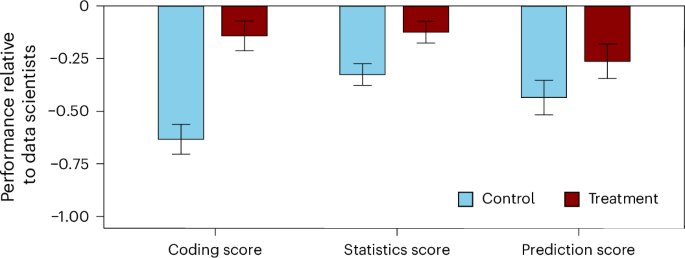
Upskilling often refers to the process by which workers acquire and expand their skills, enabling them to perform different types of work as market demands change. Here we demonstrate that generative artificial intelligence can act as an ‘exoskeleton’, enhancing workers’ capabilities when attempting new skills, but these gains depend on continued technology use.
Read original on Nature Human Behaviour ↗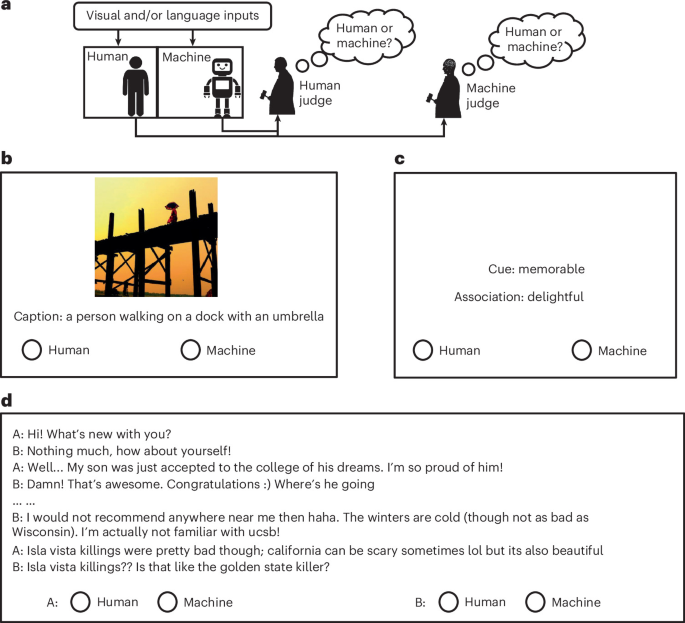
Nature Human Behaviour, Published online: 26 October 2026; doi:10.1038/s41562-026-02590-6
Read original on Nature Human Behaviour ↗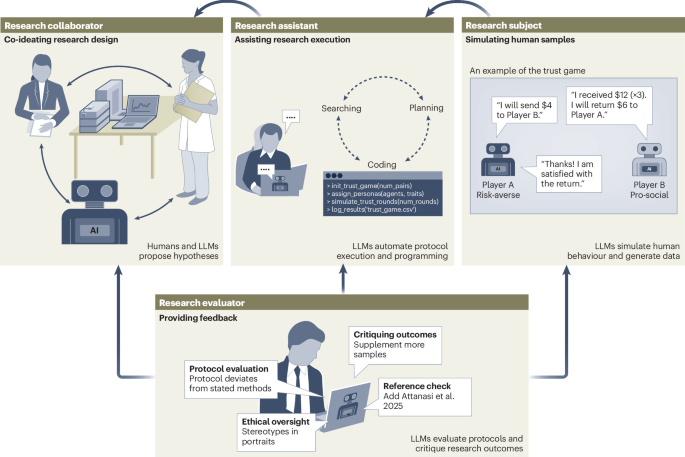
Large language models (LLMs) are transforming computational social science. This Review examines how LLMs now serve four distinct research roles: subjects that simulate human behaviour, assistants that automate analysis, collaborators that generate hypotheses and evaluators that audit and improve research quality. We analyse recent advances across sociology, political science, psychology, anthropology, economics and related fields, revealing how LLMs accelerate discovery while creating new methodological paradigms.
Read original on Nature Human Behaviour ↗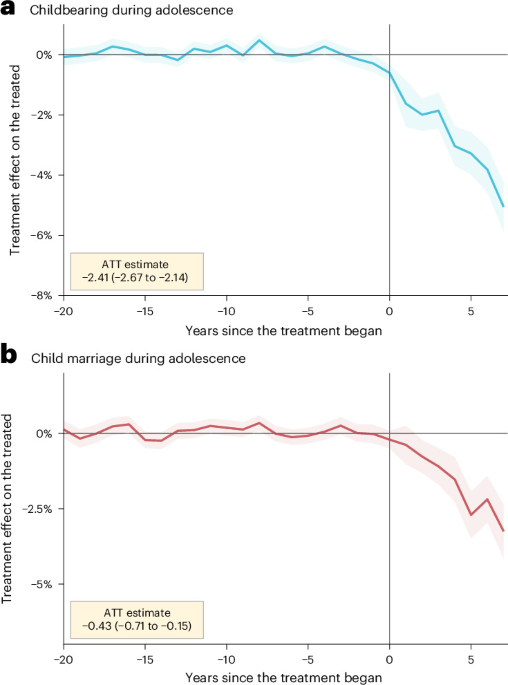
Across nearly 6.7 million women in 117 low- and middle-income countries, eligibility under national preprimary education laws was associated with higher educational enrolment and completion, more gender-egalitarian attitudes, more favourable empowerment-related behaviours and greater reproductive autonomy.
Read original on Nature Human Behaviour ↗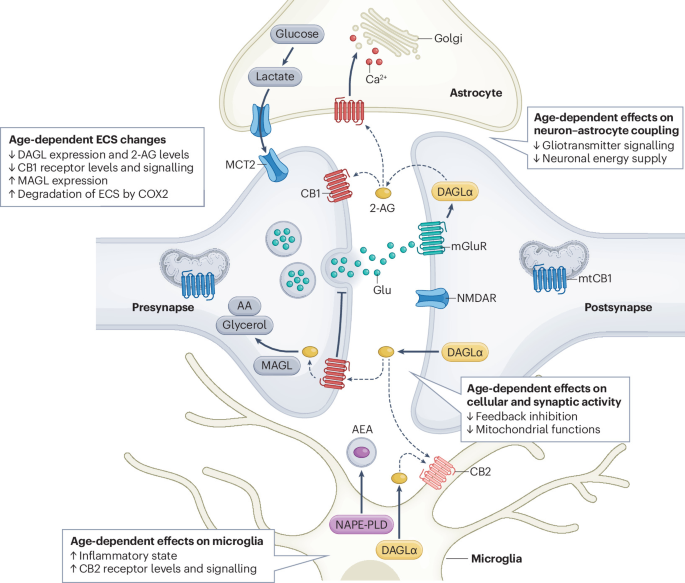
Ageing is accompanied by a progressive decline in homeostatic resilience that increases vulnerability to chronic disease, disability and cognitive impairment. Although unhealthy brain ageing can often be prevented by managing the underlying risk factors, the molecular, cellular and physiological mechanisms that connect risk factors to late-life brain dysfunction remain incompletely understood. This review examines the role of the endocannabinoid system in brain ageing.
Read original on Nature Reviews Neuroscience ↗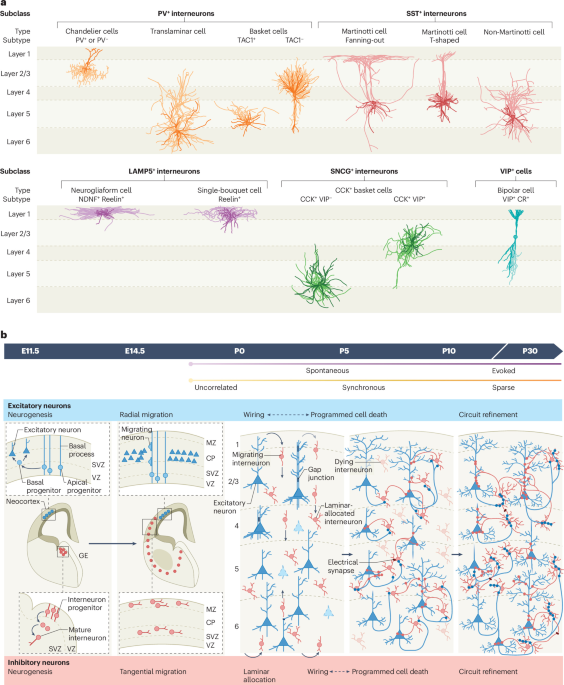
The mammalian cerebral cortex undergoes profound functional changes during early postnatal development. During this period, neurons generate spontaneous electrical activity long before sensory experience, coordinating into distinct patterns of synchronous activity. Traditionally, neuronal activity has been viewed as instructing interneuron development by modulating transcriptional programmes, morphology and connectivity.
Read original on Nature Reviews Neuroscience ↗
Reactivation of memory traces during hippocampal sharp wave ripples (SPW-Rs) drives memory consolidation, a process that occurs almost exclusively during non-rapid-eye-movement (NREM) sleep and quiet wakefulness. Feng et al. identify a population of hippocampal interneurons that are selectively active during these ‘offline’ states and regulate sleep-dependent SPW-R generation and memory consolidation.
Read original on Nature Reviews Neuroscience ↗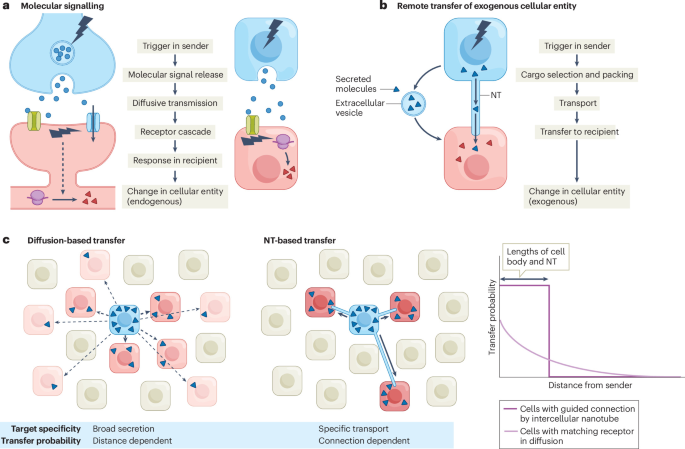
Communication between cells in the nervous system has long been understood to occur through chemical and electrical synapses, and through the release of signalling molecules and extracellular vesicles across the extracellular space. Intercellular nanotubes (NTs) — thin, membranous tubular bridges that physically connect distant cells — represent a structurally distinct route of communication, enabling the direct, targeted transfer of cellular cargoes between selected cells.
Read original on Nature Reviews Neuroscience ↗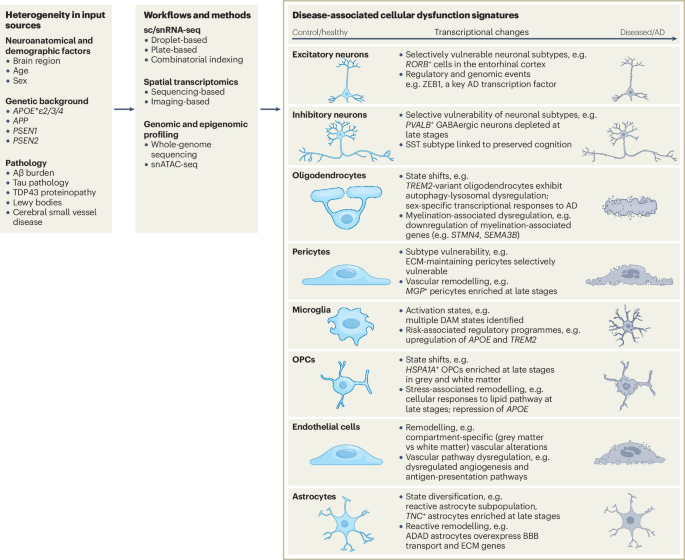
Alzheimer disease (AD) is defined neuropathologically by the presence of amyloid plaques and neurofibrillary tangles, yet these canonical lesions alone cannot account for its clinical, regional and cellular heterogeneity. AD is a multicellular, spatially organized disease shaped by the interactions of neurons, glia and vascular cells within distinct anatomical microenvironments.
Read original on Nature Reviews Neuroscience ↗
Correction to: Nature Neuroscience https://doi.org/10.1038/s41593-025-01951-0, published online 12 May 2025.
Read original on Nature Neuroscience ↗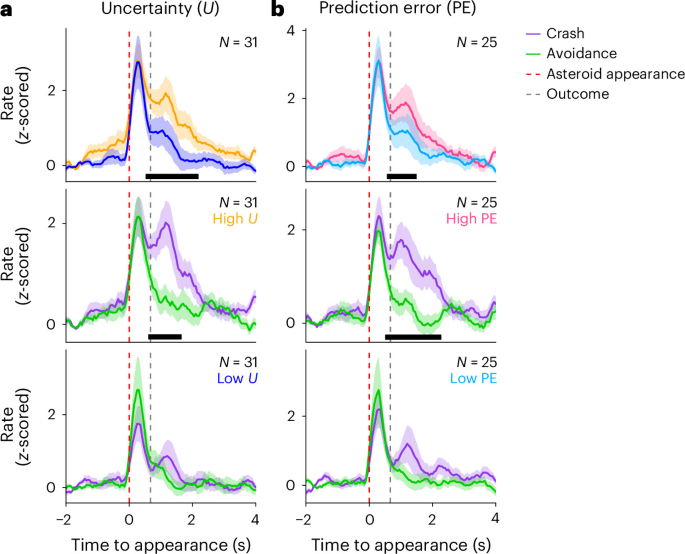
Single-neuron recordings provide direct evidence that the human claustrum tracks uncertainty and prediction errors during adaptive behavior. Its responses differed from those in the anterior cingulate cortex, which raises the possibility that these regions make distinct contributions to updating beliefs and guiding behavior in ever-changing environments.
Read original on Nature Neuroscience ↗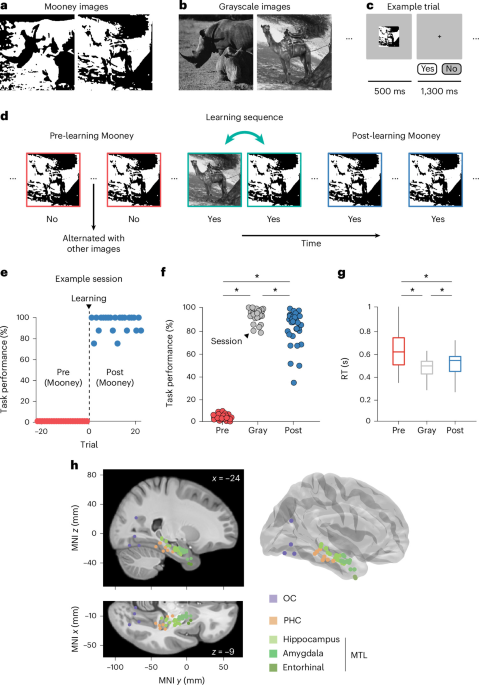
Nature Neuroscience, Published online: 04 November 2026; doi:10.1038/s41593-026-02496-6
Read original on Nature Neuroscience ↗
Addendum to: Nature Neuroscience https://doi.org/10.1038/nn.3070, published online 11 March 2012.
Read original on Nature Neuroscience ↗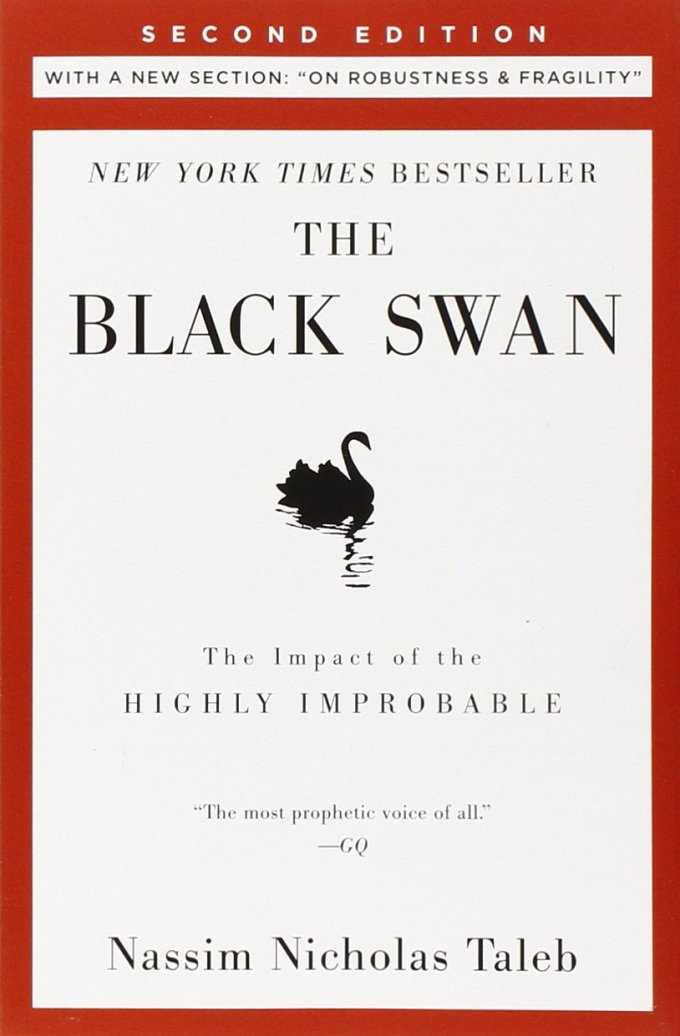
“It is our knowledge — the things we are sure of — that makes the world go wrong and keeps us from seeing and learning,” Lincoln Steffens wrote in his beautiful 1925 essay. Piercingly true as this may be, we’ve known at least since Plato’s famous Allegory of the Cave that “most people are not just comfortable in their ignorance, but hostile to anyone who points it out.”. Although science is driven by “thoroughly conscious ignorance” and the spiritual path paved with admonitions against the illusion of thorough understanding, we cling to our knowledge — our incomplete, imperfect, infinitesimal-in-absolute-terms knowledge — like we cling to life itself.
Read original on The Marginalian ↗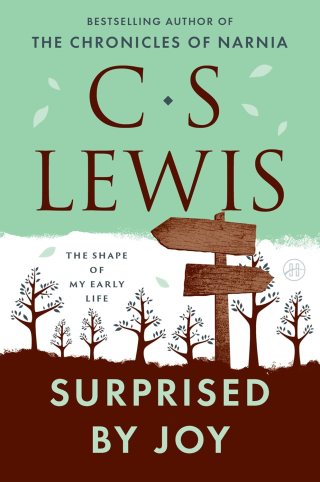
Our lives are defined not by what we have but what we give — on what and whom we spend our energy and time, how we share our material possessions and our mental powers, what we do with our gifts. “Anything you do not give freely and abundantly becomes lost to you,” Annie Dillard wrote in contemplating the nature of creativity. “You open your safe and find ashes.”
Read original on The Marginalian ↗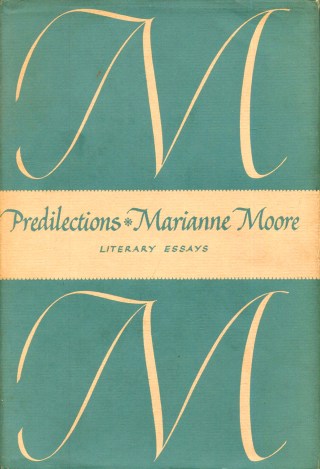
Several years ago, rummaging through the archives of the Academy of American Poets, I came upon a box labeled “Ballots 1950” — the record of the secret vote by the chancellors the year the Academy’s prestigious fellowship was awarded to E.E. Cummings, catapulting him into renown. The voting process is a black box — no one outside the Academy ever finds out who else is in the running and by how much the winner wins.
Read original on The Marginalian ↗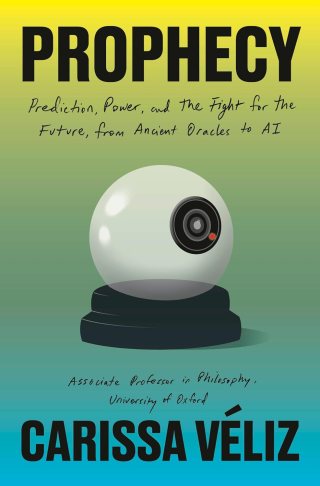
“Humor, more than anything else in the human make-up, can afford an aloofness and an ability to rise above any situation, even if only for a few seconds,” Viktor Frankl wrote in recalling the role of humor as a lifeline to sanity and survival in the Holocaust.
Read original on The Marginalian ↗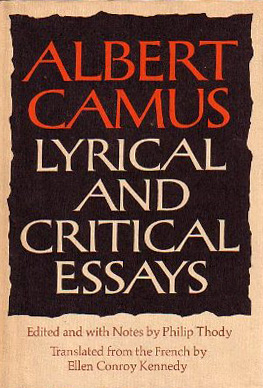
Three years after he became the second-youngest laureate of the Nobel Prize, awarded him for literature that “with clear-sighted earnestness illuminates the problems of the human conscience,” Albert Camus (November 7, 1913–January 4, 1960) died in a car crash with an unused train ticket to the same destination in his pocket. The writings he left behind — about the key to strength of character, about creativity as resistance, about the antidotes to the absurdity of life, about happiness as our moral obligation — endure as a living testament to Mary Shelley’s conviction that “it is by words that the world’s great fight, now in these civilized times, is carried on.”
Read original on The Marginalian ↗
A philosopher who has “long been skeptical of journal rankings” based on polls or Scopus data has developed a new way of assessing philosophy journals: by how frequently their articles are cited in the Stanford Encyclopedia of Philosophy and the Internet Encyclopedia of Philosophy.
Read original on Daily Nous (philosophy news) ↗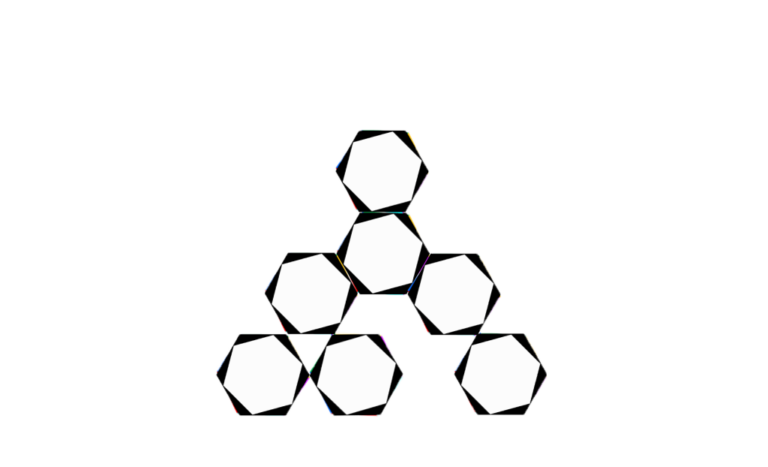
Mini-Heap posts usually appear when several new items accumulate in the Heap of Links, a collection of items from around the web that may be of interest to philosophers.
Read original on Daily Nous (philosophy news) ↗
A team of researchers led by Purdue University associate professor of philosophy J.P. Messina has been awarded a nearly $2.91 million in funding for its project, “The Neglected Safeguards of Liberalism.”
Read original on Daily Nous (philosophy news) ↗Five years ago, Andrew Shen created a browser extension, SEP+, that improved the experience of using the Stanford Encyclopedia of Philosophy in various ways. He has now released an update, SEP+ v2, which does even more.
Read original on Daily Nous (philosophy news) ↗
‘Imagining is another kind of seeing’: immerse in the exquisite sensory world of a woman with impaired vision
Read original on Psyche ↗
As a psychologist, I’ve long pondered what counts as ‘delusional’.
Read original on Psyche ↗
If you want to remember and understand, copying isn’t enough.
Read original on Psyche ↗
When an ankle injury put the brakes on my running habit, I had to rethink the wisdom of tying my identity to an activity
Read original on Psyche ↗
Feel stuck with a habit you know is bad for you?
Read original on Psyche ↗
Researchers have identified a specific pattern of brain activity that can distinguish people with cocaine use disorder from those without the condition. This brain activity pattern can also predict whether a person will respond well to a magnetic brain stimulation therapy designed to reduce cravings. The study detailing these results was published in Nature Mental Health.
Read original on PsyPost ↗
A new analysis of more than 25,000 calls and text messages to a national psychedelic helpline offers what the authors describe as the largest real-world portrait to date of who reaches out for support during or after a psychoactive drug experience.
Read original on PsyPost ↗
Married couples in South Korea report higher rates of sexual inactivity compared to those in the United States, though couples in both nations share similarities in how age and personal motivations relate to intimacy. The findings show how different cultural environments, work habits, and communication styles correspond with physical connection in romantic relationships. The research was published in The Journal of Sexual Medicine.
Read original on PsyPost ↗
In older adults without memory problems, the buildup of Alzheimer’s-related tau protein in the brain tends to precede and predict a rise in mild depressive symptoms, with little evidence that mood changes drive protein accumulation. The findings, published in the Journal of Neuroscience, provide evidence that subtle emotional shifts in late life may be an early consequence of Alzheimer’s-related brain changes rather than an independent trigger for disease progression. This pattern was statistically significant only in cognitively healthy individuals, suggesting that early temporal windows offer the best opportunity to observe how brain pathology affects mood.
Read original on PsyPost ↗
Wendell Berry died last week at 92 at his home in Port Royal, Kentucky, where he farmed his land using traditional techniques and wrote with pencil and paper in a cabin lacking electricity.
Read original on Cal Newport ↗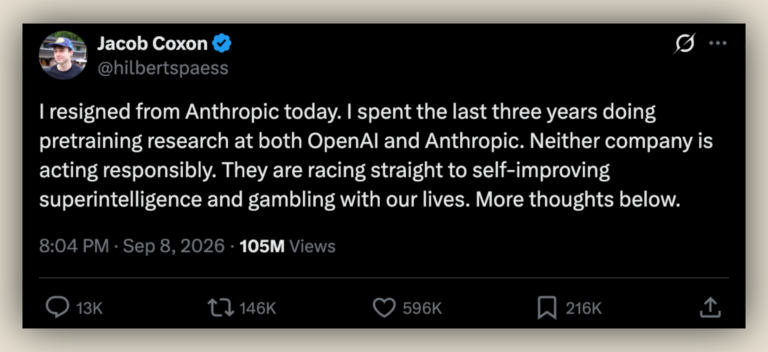
Yesterday, Jacob Coxon, an Anthropic engineer, resigned. As he explained on X: “[OpenAI and Anthropic] are racing straight to self-improving superintelligence and gambling with our lives.”
Read original on Cal Newport ↗
Yesterday, multiple Anthropic employees casually announced online that they thought the types of AI they’re building could kill billions of people. Not in some distant hypothetical future, but in the next few years. Understandably, this created a tsunami of media attention and anxious discussion.
Read original on Cal Newport ↗
Over the last several months, the two leading frontier AI labs have shown some brazen behavior.
Read original on Cal Newport ↗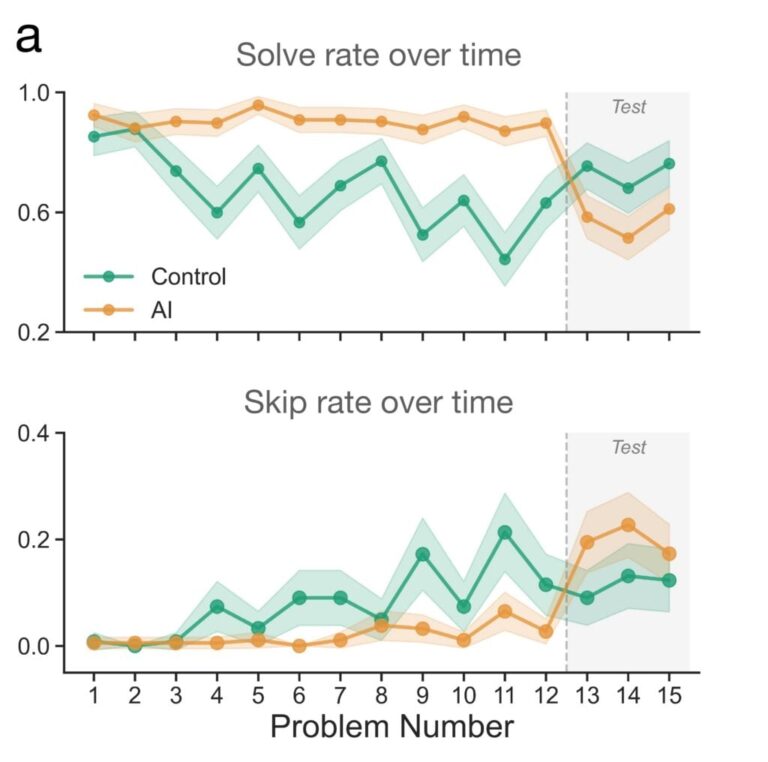
A new research paper titled “AI Assistance Reduces Persistence and Hurts Independent Performance,” which was recently presented at the Conference on Language Modeling, has been attracting attention.
Read original on Cal Newport ↗
Welcome to part three in our four-part Back to Basics series on unit planning. In week 1 we completed the first step of the process, which was to write a set of measurable objectives for a sample unit on food safety. In week 2 we designed a unit assessment plan that included diagnostic, formative, and summative assessments. Today we’ll build the individual daily lesson plans. And in part four, I’ll share my process for differentiating instruction.
Read original on Cult of Pedagogy ↗
If you bring up differentiation among teachers, you’re not likely to hear a lot of enthusiasm. Some will readily admit they don’t differentiate as often as they probably should. Others see the value in differentiation but feel buried in work trying to make it happen. And some question whether differentiating instruction is a realistic goal at all.
Read original on Cult of Pedagogy ↗
Listen to the interview with Max Yurkofsky and Jal Mehta (transcript):
Read original on Cult of Pedagogy ↗
This page contains Bookshop.org links. When you make a purchase through these links, Cult of Pedagogy gets a small percentage of the sale at no extra cost to you. What’s the difference between Amazon and Bookshop.org?
Read original on Cult of Pedagogy ↗