

This episode is sponsored by Deepgram. Try Deepgram for voice agents that truly understand your context! #contextiseverything
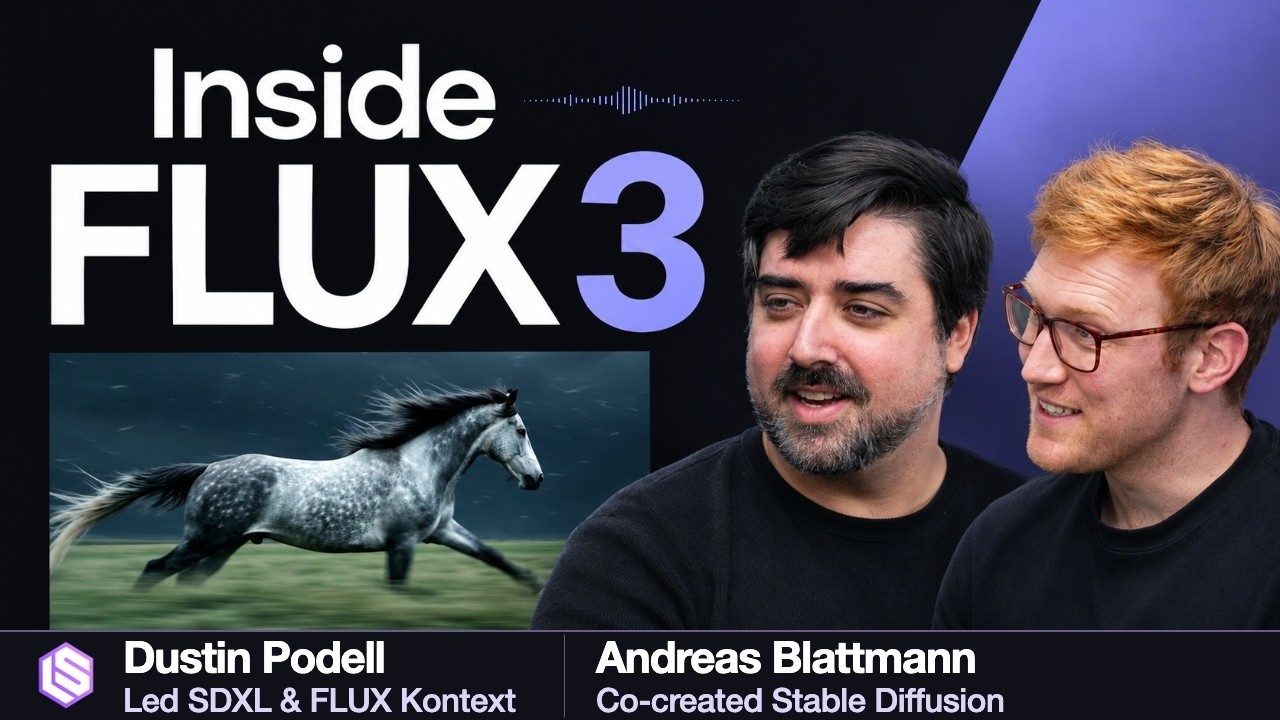
Not many people know that Stable Diffusion is why I went fulltime into AI (I aptly titled Multiverse, not Metaverse to call out Zuck’s mistaken investment). It turns out that Dustin Podell also had the same aha moment – quitting his day job when the model came out. But we took very different paths… I stuck to what I knew in human content creation, and Dustin immersed deep into AI content creation with Andreas Blattmann, co-inventor of Latent Diffusion and the rest of the world-leading imagegen crew at Stability AI. Stability fell apart, but Anj Midha helped the core group spin out to BFL, which immediately built an incredible new imagegen model in the Flux series. But why are they now going into video and world models?
Andreas gives an example you can try with one hand. If somebody tosses you a ball, your hand starts moving before the ball reaches you. You can do that without being able to write down the trajectory. When he talks about building visual intelligence, that’s the kind of knowledge he means. A still can show you where the ball is. A video shows you how it got there. The sound of impact can tell you when it hit something, even if the camera missed the contact. That’s BFL’s argument for training FLUX 3 on the three signals together. BFL’s FLUX 3 release
The horse in motion is one of the FLUX 3 examples we show in the intro. The audio examples are worth playing with the sound on. FLUX 3 Video
Source: Latent Space — Read the full article on the original site ↗