


What happens to us after we die is a fundamental question of human civilization, and anxieties about succession lurk beneath every human story: Will my work live on? Will my children pass on good values? Have I done my duty? Our rituals, religions, sacred sites, and art all seek to answer these big questions, yet none can conclusively, or we wouldn’t keep asking.
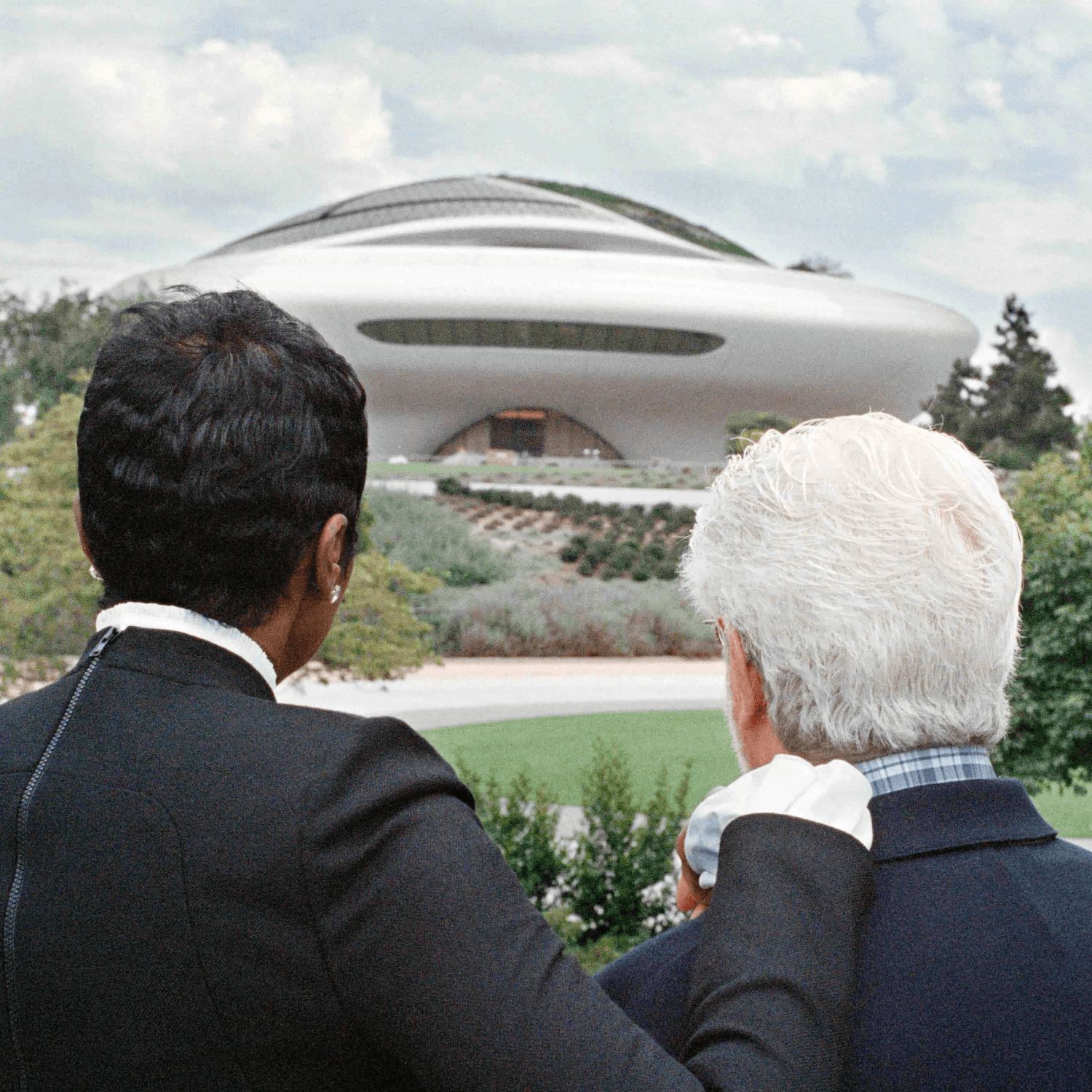
I could feel these existential questions in the air as I walked past huge models of Star Wars spaceships alongside a Frida Kahlo self-portrait in the galleries of Los Angeles’ new Lucas Museum of Narrative Art — a tribute to human storytelling through visual art that filmmaker George Lucas and his wife, Mellody Hobson, a Chicago-born investor and civic leader, worked on for nearly 17 years. After a lifetime of creating and collecting exceptionally popular narrative art, what happens to these ideas and objects when their 82-year-old creator and cataloguer, George Lucas, is gone? And what happens to his reputation, his legacy — himself?
I left the museum thinking that Lucas attempts to resolve the mystery of life after death in two ways. First, by guiding us through the history of visual storytelling itself and seeing how others dealt with creativity and mortality. Second, by installing his own work among high-brow canonical artists like Van Gogh, Artemisia Gentileschi, Alphonse Mucha, and Frida Kahlo. By the time we’re done with the approximately five-hour tour of the museum, we are tempted to accept Lucas’s methods and his place among the greats.
During the trippy experience of browsing this five-story museum, which houses some 100,000 square feet of gallery space, Lucas and Hobson manage to conjure an interesting co-exhibition of pop and high culture in a way that does not blur the lines between the two, but instead insists that exceptional talent and greatness exist at every level, and that each category’s leaders deserve recognition. Through curation and design, the co-founders seem to be declaring that the public, voting with its dollars, knows best. I was wondering how they did it.
Source: Big Think — Read the full article on the original site ↗