


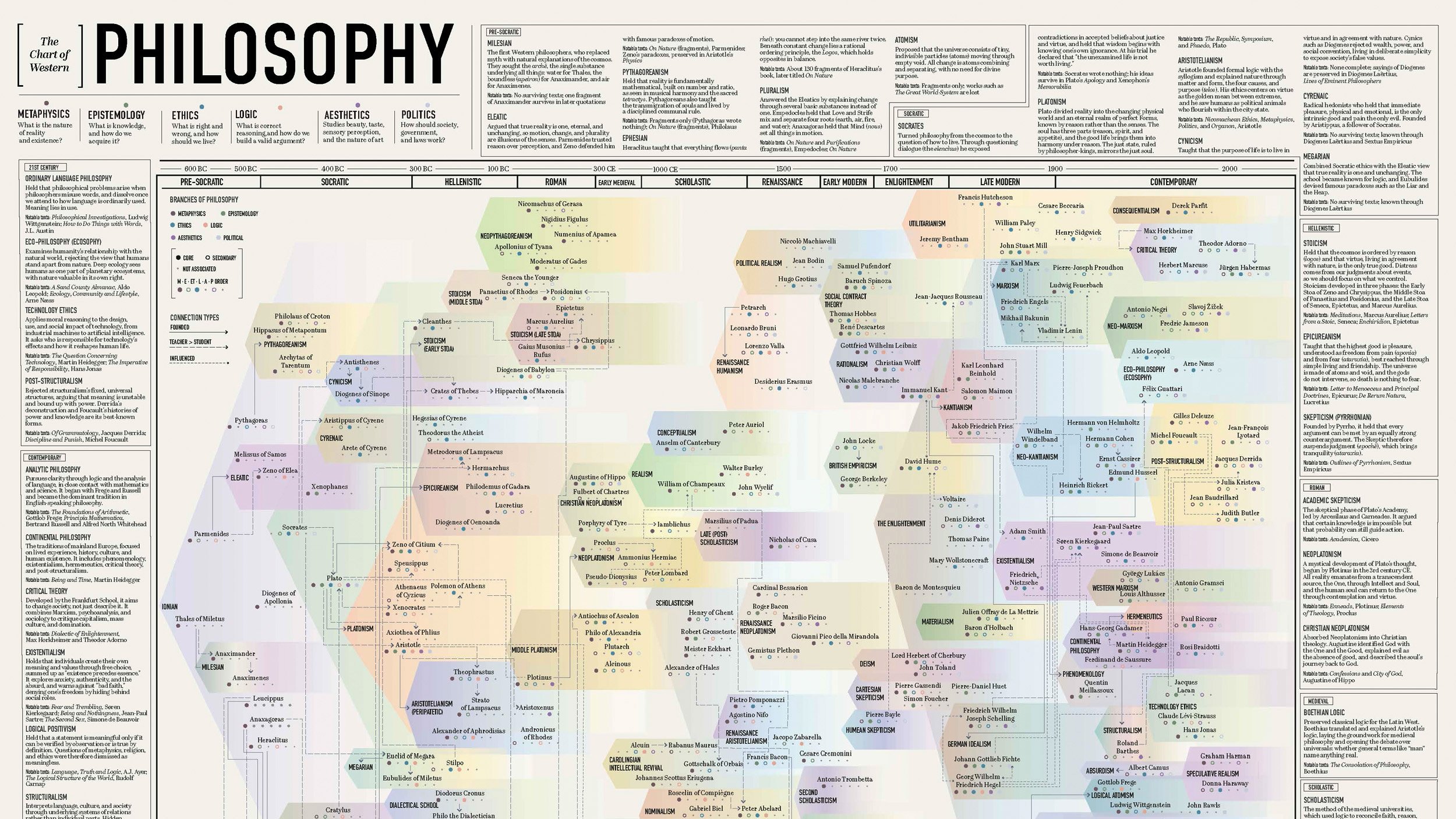
One of the biggest problems any new learner faces is that overwhelming feeling of standing on the shoreline looking out to sea. You want to learn astrophysics, zoology, or economics — where do you start? What ideas come first? Which thinkers are core and which are super niche?
Philosophy is no different. If anything, it’s worse. Because a lot of people know a few philosophers or have read a few books and quotes. Millions have watched the first season of True Detective. But when faced with the vastness of “Philosophy,” it’s like standing on a tiny sloop in the Pacific Ocean, being told to swim.
Sure, you can take a course. There are hundreds of great intro books out there. My entire professional raison d’être is to fix this problem. But now we’ve got another way. Big Think has decided to create “The Chart of Western Philosophy.” It lays out some 2,600 years of Western thought on a single timeline, from Thales to Žižek, so you can see at a glance where everyone sits and how they connect. Here you will find the schools and movements that shaped philosophy, from the Milesians and the Stoics to the Existentialists and the Post-Structuralists, each tagged to show which branches of philosophy it cares about most, and the lines of teacher, student, and influence that tie them all together. Around the edges are short guides to the major schools and the texts worth reading.
To celebrate the poster’s release and to find out more about it, I spoke with Big Think’s resident artist and poster-maker extraordinaire, Ben Gibson, who is also cofounder of the infographic poster company Pop Chart.
Source: Big Think — Read the full article on the original site ↗