


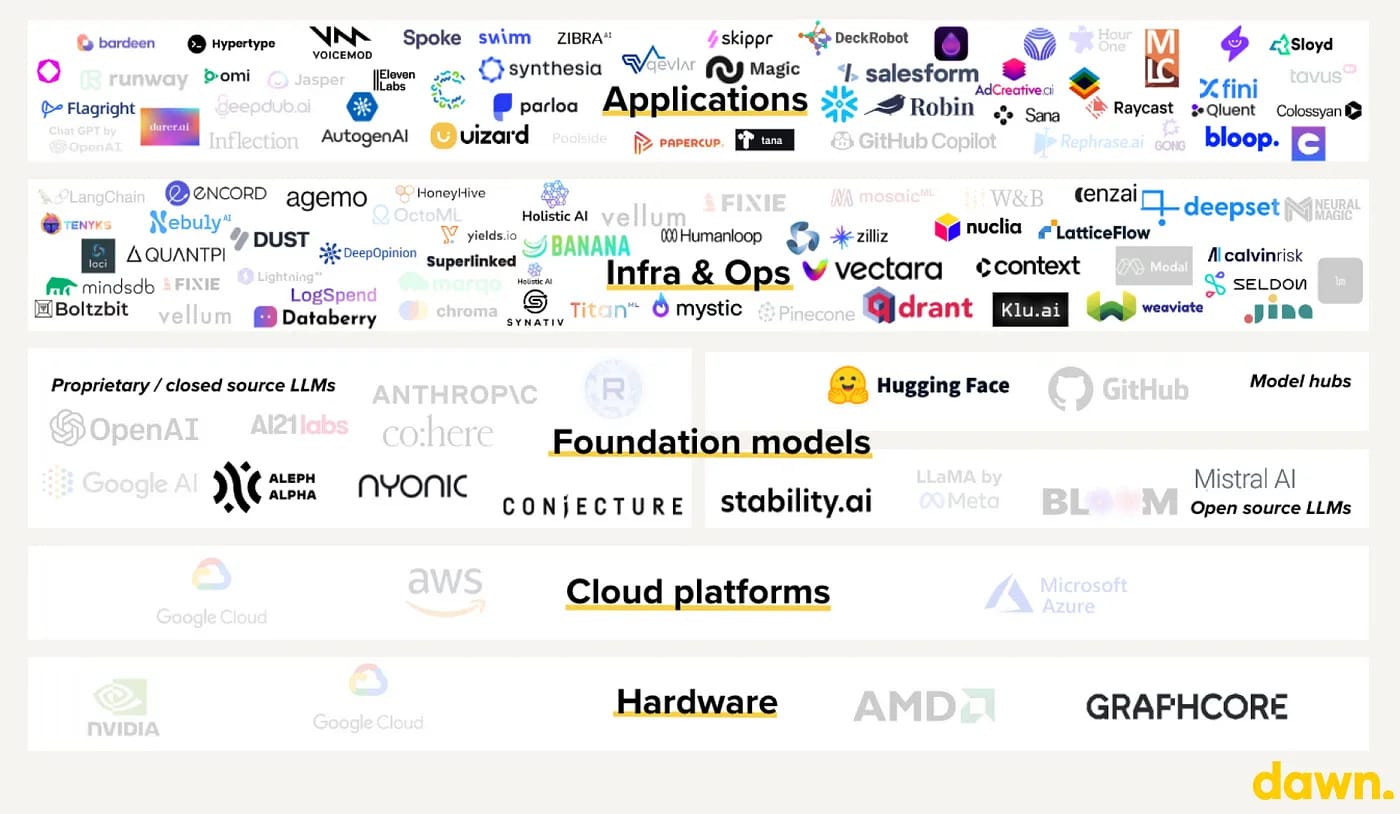
It’s crazy how the AI and NLP landscape has evolved over the last five years. 5 years ago, around the time I finished my PhD, if you wanted to work on cutting-edge natural language processing (NLP), your choice was relatively limited.
Recently, I decided to go on the job market again, which has become much more diverse. In this post, I want to highlight some macro trends that I observed and the reasons that I joined my new company, Cohere, which may be helpful in guiding your own job search.
Note: This post reflects my personal opinions and not those of my previous and current employers. It is written from my perspective as a Europe-based researcher focused on NLP. If you are interested in AI companies but have a different skillset, some of these thoughts should still be relevant to you.
In the past, most problems at the forefront of ML and NLP were firmly in the purview of fundamental or basic research. As models were not powerful enough, datasets reflected simplified evaluation settings that were feasible at the time and typically far removed from applications. In order to work on such cutting-edge problems, you generally had the choice of joining academia or going to a handful of big tech labs (Google Research/Brain, DeepMind, FAIR, MSR, etc).
Source: Sebastian Ruder — Read the full article on the original site ↗