


Cult.fit builds operational muscle with Codex
Cult.fit is using Codex to help teams across functions build tools, move faster, and change how work gets done.
Read original on OpenAI News ↗
Cult.fit is using Codex to help teams across functions build tools, move faster, and change how work gets done.
Read original on OpenAI News ↗
Australian universities are expanding access to ChatGPT and bringing AI into teaching and learning to prepare students for an AI-enabled workforce.
Read original on OpenAI News ↗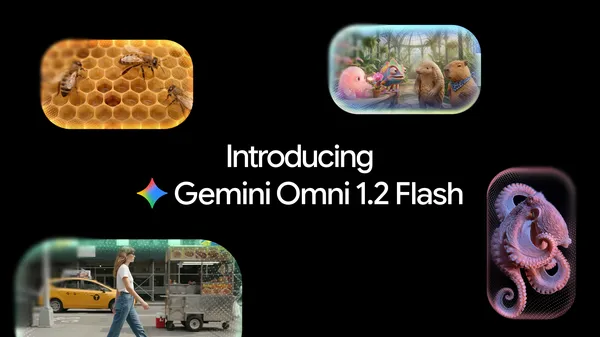
Gemini Omni 1.2 Flash brings native 15-second video generation and editing, stronger consistency, and 30% lower pricing.
Read original on Google AI Blog ↗
Introducing GPT‑6 Cyber, OpenAI’s cybersecurity model for finding exploitable vulnerabilities and developing fixes, trained to stay within authorized scope.
Read original on OpenAI News ↗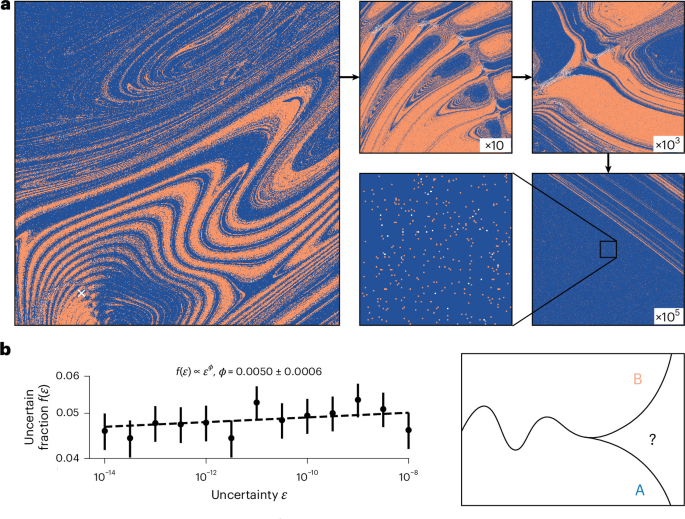
Nature Machine Intelligence, Published online: 05 November 2026; doi:10.1038/s42256-026-01336-3Deep learning outcomes are hard to predict and reproduce. Ly and Gong propose fractal basin geometry as a mechanism: starting points leading to different outcomes interweave at arbitrarily fine scales, so greater precision yields little improvement.
Read original on Nature Machine Intelligence ↗
Texas is the fastest-growing data center market in the US and ground zero for Big Tech’s largest AI buildouts. But the blue wave that swept the Lone Star State may jeopardize that position. Democrat James Talarico won the US Senate seat against Ken Paxton. Gina Hinojosa won the race for governor against the Republican incumbent,…
Read original on MIT Technology Review – AI ↗
A sales representative asks an AI agent for customer pricing, and the agent pulls data from multiple sources: restricted pricing systems, internal communications, and archived quotes. The output looks accurate to the agent, so a second agent uses the data to draft the proposal for the sales rep. No human checks either handoff. When it’s…
Read original on MIT Technology Review – AI ↗
A new approach known as “reverse game theory” aims to control powerful AI models by designing systems that incentivize them to stick to the rules. As AI models become more capable, safety researchers are scrambling to ensure they are “aligned” with human desires—to make sure, in other words, that rogue agents don’t break the law,…
Read original on MIT Technology Review – AI ↗
This story originally appeared in The Algorithm, our weekly newsletter on AI. To get stories like this in your inbox first, sign up here. At the end of September, President Trump signed an executive order that contained just one directive, ordering government agencies to rebrand what they had been calling artificial intelligence as “Super Intelligence.” That…
Read original on MIT Technology Review – AI ↗
Here are Google’s latest AI updates from October 2026
Read original on Google AI Blog ↗
Learn AI literacy via Google’s latest AI Quests lesson on neuroscience, “Polar Peaks.”
Read original on Google AI Blog ↗
Widespread AI adoption is propelling Southeast Asia's digital economy to a projected $368 billion in 2026 and $1 trillion by 2035.
Read original on Google AI Blog ↗
We’re giving developers, enterprises, scientists, and consumers access to Gemini 4 Argon, our latest frontier model.
Read original on Google AI Blog ↗