


“Man* is by Nature a migratory animal,” the elderly Frederick Douglass reflected in an 1887 speech about his global travels. “It does not appear that he was intended to dwell forever in any one locality. He is a born traveler.”
A generation after him, Maya Angelou observed that “you only are free when you realize you belong no place — you belong every place — no place at all.”
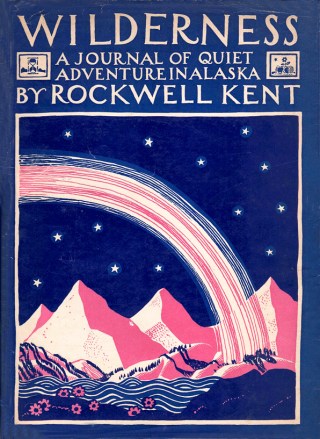
Partway in time between Douglass and Angelou, the painter, printmaker, and philosopher Rockwell Kent (June 21, 1882–March 13, 1971) captured this vital interplay between freedom and belonging, between nature and human nature, in the preface to Wilderness (public library) — the exquisite record of the seven months he spent on a remote Alaskan island with his young son in the gloaming hour of the Spanish flu pandemic and the First World War, at the dawn of his artistic life.
We each have a particular style of wanderlust, pulled by particular types of nature that best speak to our own — those places where we most freely lose ourselves and, in consequence, find ourselves. For some, they are the austere open space of blue skies and red canyons. For me, they are the mossy old-growth forests of New Zealand and the American Pacific Northwest. For Kent, it was the severe majesty of…
Source: The Marginalian — Read the full article on the original site ↗