



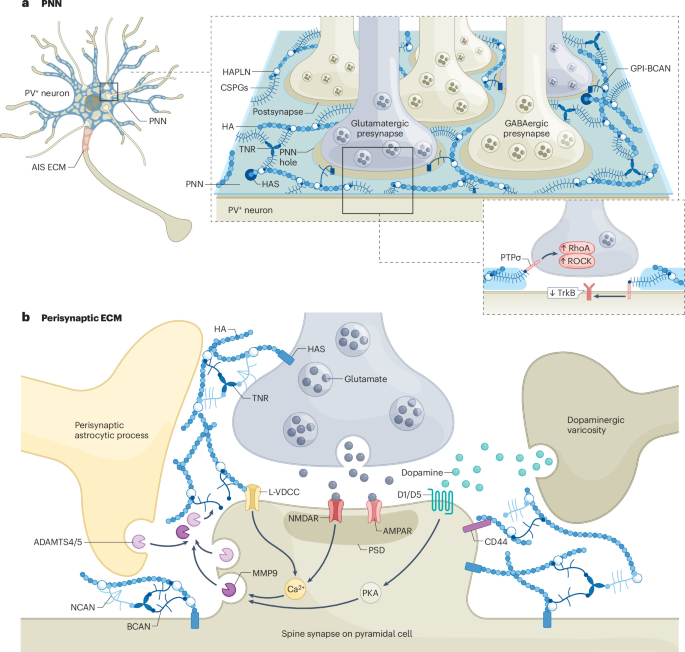
The neural extracellular matrix (ECM) is increasingly recognized as an active regulator of brain function and an important contributor to the pathogenesis of neuropsychiatric disorders. This Review examines ECM organization, function and adaptive remodelling in the healthy brain and synthesizes evidence for its pathophysiological alterations in schizophrenia, major depressive disorder and bipolar disorder. Based on findings from human studies and animal models, we propose an ECM-extended conceptual framework of major psychiatric diseases in which polygenic liability, stress exposure and neuroinflammatory signalling converge to remodel the ECM in circuits supporting reward processing, emotion regulation, cognitive control and social cognition. In this model, an early phase of protease-dominant ECM loosening destabilizes microcircuits composed of parvalbumin-expressing inhibitory neurons and principal cells whereas later reactive ECM rebuilding stabilizes dysfunctional network states and contributes to disease persistence, relapse and treatment resistance. This framework positions the ECM as a central hub of genetic, glial, synaptic and systems-level pathogenesis and suggests avenues for the development of ECM-sensitive biomarkers and ECM-directed interventions that may improve the treatment of these disorders.
This is a preview of subscription content, access via your institution
Prices may be subject to local taxes which are calculated during checkout
Data used in Fig. 2 are described in ref. 61 and available in the PNN Atlas. In Fig. 3a, plots were generated using data presented in the mouse Brain RNA-Seq database (GEO accession GSE52564)267 and cell-type-specific gene expression patterns from Supplementary Data S3 and S4 in ref. 169.
Source: Nature Reviews Neuroscience — Read the full article on the original site ↗
Get the best of this topic in your inbox
Join the newsletter. A short, useful digest, no spam.