


Angelica Willis, Research Engineer, Google Research, and Nichole Young-Lin, Clinical Lead, Google for Health
A prospective multi-center study demonstrates how AI-based blind sweep ultrasound assessment can enable non-sonographer operators with low-cost probes to deliver expert-level gestational age assessments, marking a significant step toward expanding life-saving maternal care globally.
The World Health Organization (WHO) estimates that more than 250,000 preventable deaths occur worldwide each year due to pregnancy-related complications. While prenatal ultrasound can improve outcomes and reduce fetal and maternal mortality, two-thirds of people globally lack access to diagnostic medical imaging like ultrasound. Current methods that support maternal health rely heavily on specialized clinical training, leaving millions in low-resource settings without access to a single ultrasound during their entire pregnancy.
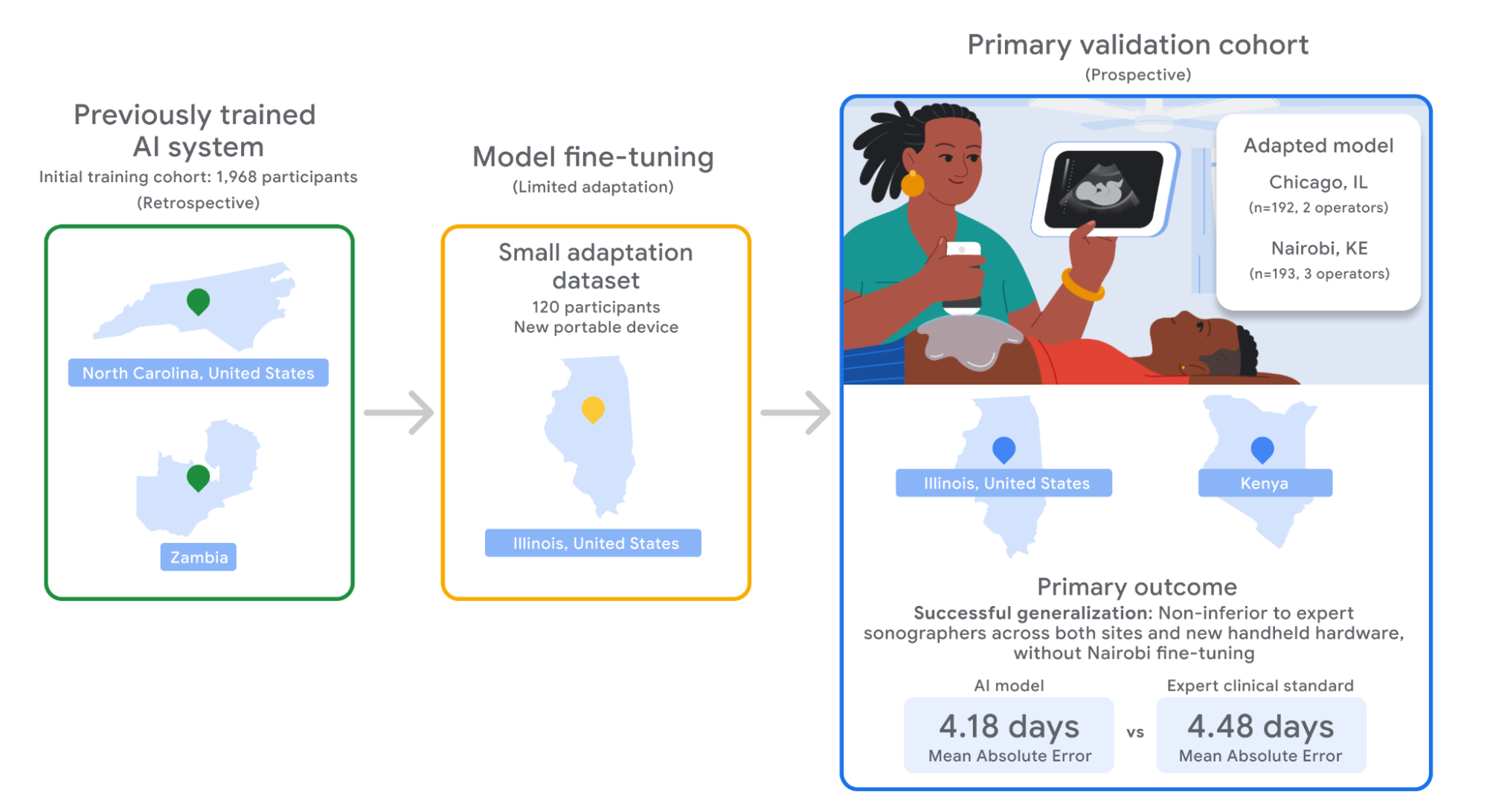
We saw an opportunity to conduct research towards addressing this real-world need, by developing machine learning systems that interpret "blind sweep" ultrasounds. This way of scanning allows frontline healthcare workers without specialized sonography training to perform scans by simply gliding low-cost, portable ultrasound probes across the abdomen in a standardized pattern.
Source: Google Research Blog — Read the full article on the original site ↗