



|
Getting your Trinity Audio player ready...
|
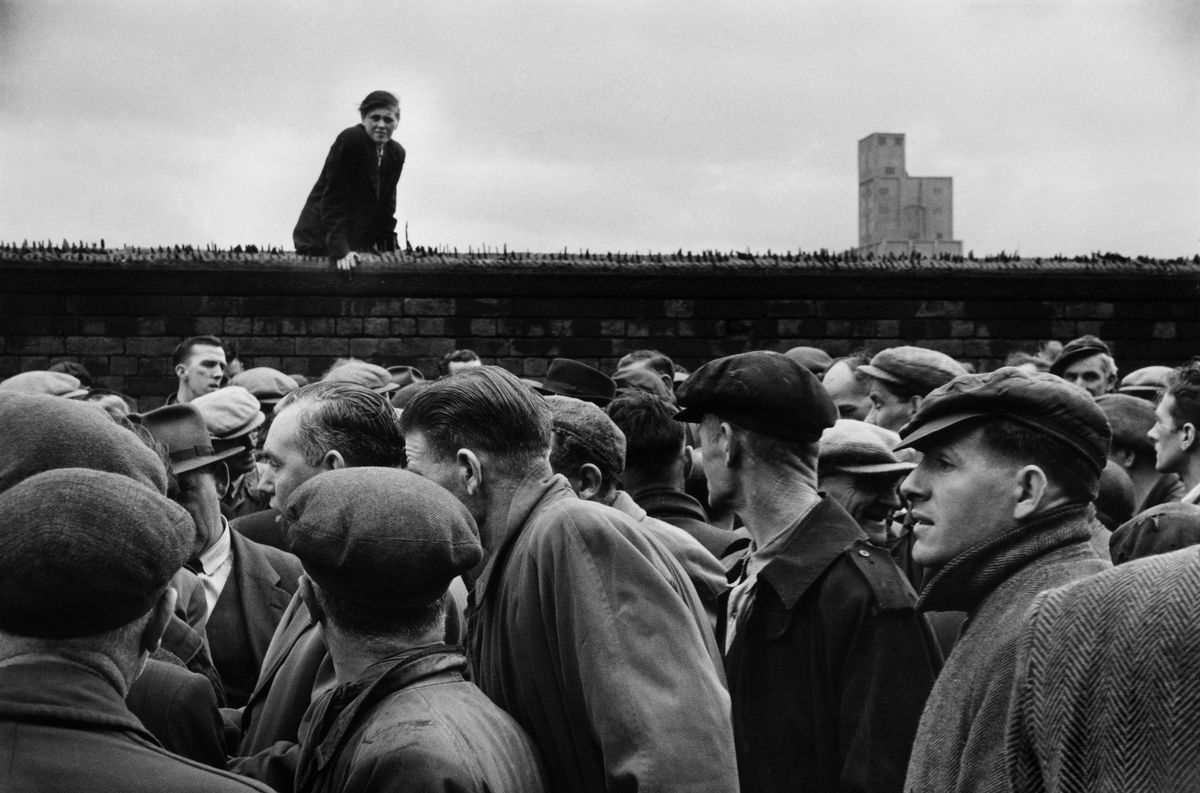
Striking dockworkers, England, 1954. Photo by Marc Riboud/Magnum Photos
It’s no accident that equality comes first among the ‘self-evident’ truths articulated in the United States Declaration of Independence. The claim that ‘all men are created equal’ serves there not simply as an abstract premise from which revolutionary consequences ought to follow, but as a concrete practical foundation on which the American colonists could claim to stand as equals with the greatest king and hold him to account. Still impressed by his own handiwork 50 years later, Thomas Jefferson even prophesied that the ‘palpable truth’ of equality enshrined in the Declaration would one day unite all of humankind.
Yet today, it’s evident that the word ‘equality’ means very different things to different people. What once seemed capable of providing common ground is now just another source of controversy. What explains this shift? I suspect that the deceptively simple, conceptual language of ‘equality’ has itself played a substantial role. A better understanding of ‘equality talk’ – as the application of this language to human beings and their relations – might therefore shed some light on our predicament.
Let’s begin by examining a group of people that generally prides itself on thinking (and speaking) more clearly than most: professional philosophers. What are they doing when they talk about equality?
Source: Aeon — Read the full article on the original site ↗
Get the best of this topic in your inbox
Join the newsletter. A short, useful digest, no spam.



