


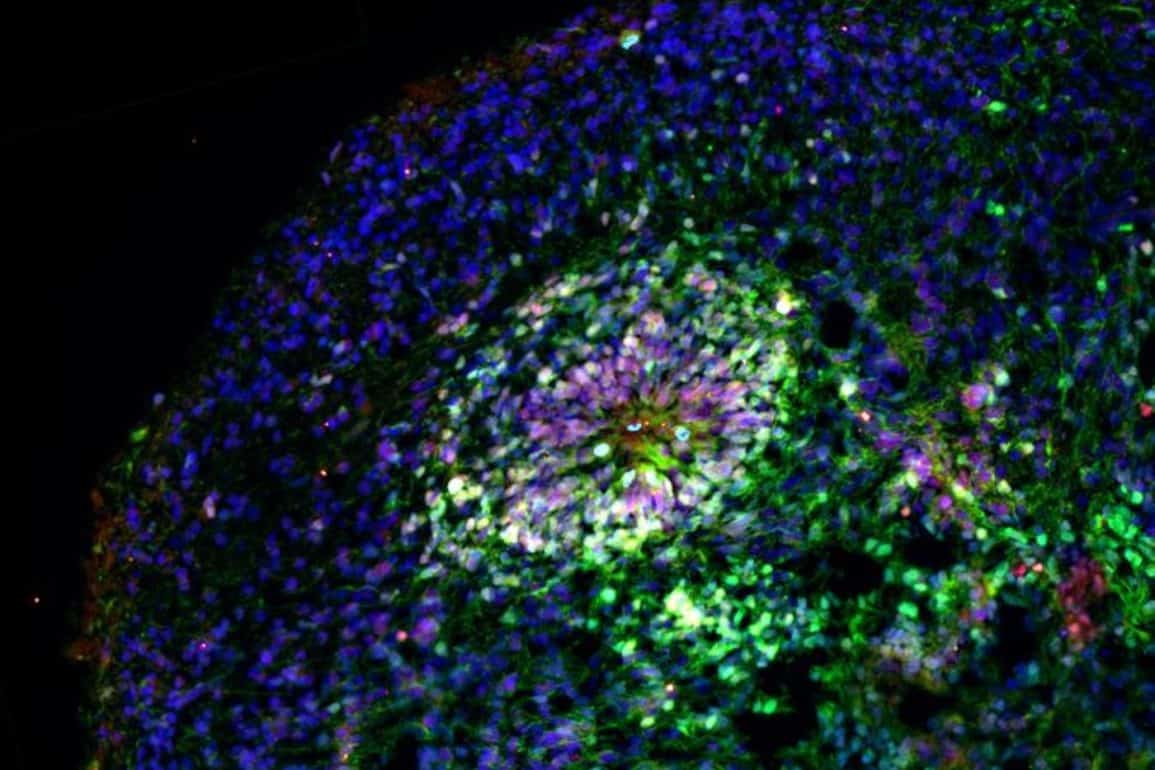
Researchers discovered a primate-specific DNA regulatory switch that governs the production of specialized brain-building stem cells called basal radial glia (bRG). The study shows that evolution expanded primate cerebral cortex complexity by altering how the shared DACH1 gene is regulated, boosting bRG progenitor production without needing to invent entirely new genes.
What genetic innovations enabled the human cerebral cortex, the wrinkled outer sheet of neural tissue responsible for language, abstract reasoning, perception, and memory, to grow vastly larger and more intricate than the brains of most other mammals?
For decades, evolutionary neurobiologists have hunted for uniquely human genes that either expand the starting pool of neural progenitor cells or prolong the developmental window during which those cells divide.
Now, a collaborative team of researchers in Taiwan and Japan has uncovered a third evolutionary mechanism: rather than inventing new genes from scratch, evolution rewrote the regulatory instructions controlling an ancient, shared gene to alter which types of brain-building cells are manufactured.
Source: Neuroscience News — Read the full article on the original site ↗