
ML & AI Concepts and Implementations

Product Evals in Three Simple Steps
Concepts & ImplementationsEugene Yan2 hours ago

Product Evals in Three Simple Steps

After repeating myself for the $n^text{th}$ time on how to build product evals, I figured I should write it down. There are three basic steps: (i) labeling a small dataset, (ii) aligning our LLM evaluators, and (iii) running the experiment + evaluation harness with each config change.

Read original on Eugene Yan ↗

How to Work and Compound with AI
Concepts & ImplementationsEugene Yan2 hours ago

How to Work and Compound with AI

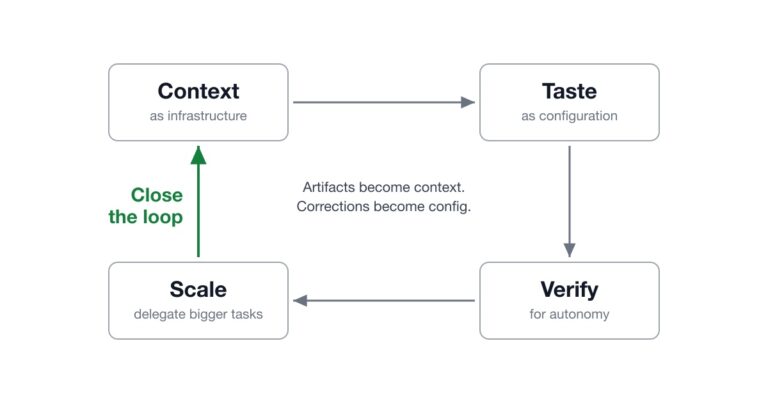
How can we work effectively with AI? What’s the workflow, how does it scale, and how do we improve our systems over time? And ideally, it should compound. Every finished artifact—code, docs, analysis, decisions—becomes context for the next session. And each correction updates a config that reduces future errors. While I’m still learning, I’ve repeated my answers often enough that I’m writing it here so the next time I’m asked I can share a link instead.

Read original on Eugene Yan ↗
Patterns for Building Cybersecurity Evals
Concepts & ImplementationsEugene Yan2 hours ago

Patterns for Building Cybersecurity Evals

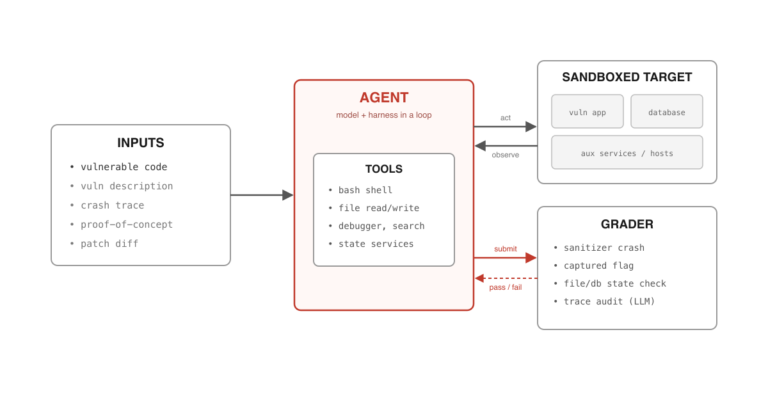
How do we evaluate if a model can find and exploit security vulnerabilities? How do we know when agents become useful for defenders, and when they cross the threshold into uplifting attackers? Here, we discuss some benchmarks that measure this, from capture-the-flag exercises to data exfiltration on a 50-host network.

Read original on Eugene Yan ↗

Extrinsic Hallucinations in LLMs
Concepts & ImplementationsLilian Weng - Lil'Log2 hours ago

Extrinsic Hallucinations in LLMs

Hallucination in large language models usually refers to the model generating unfaithful, fabricated, inconsistent, or nonsensical content. As a term, hallucination has been somewhat generalized to cases when the model makes mistakes. Here, I would like to narrow down the problem of hallucination to cases where the model output is fabricated and not grounded by either the provided context or world knowledge.

Read original on Lilian Weng - Lil'Log ↗
Reward Hacking in Reinforcement Learning
Concepts & ImplementationsLilian Weng - Lil'Log2 hours ago

Reward Hacking in Reinforcement Learning

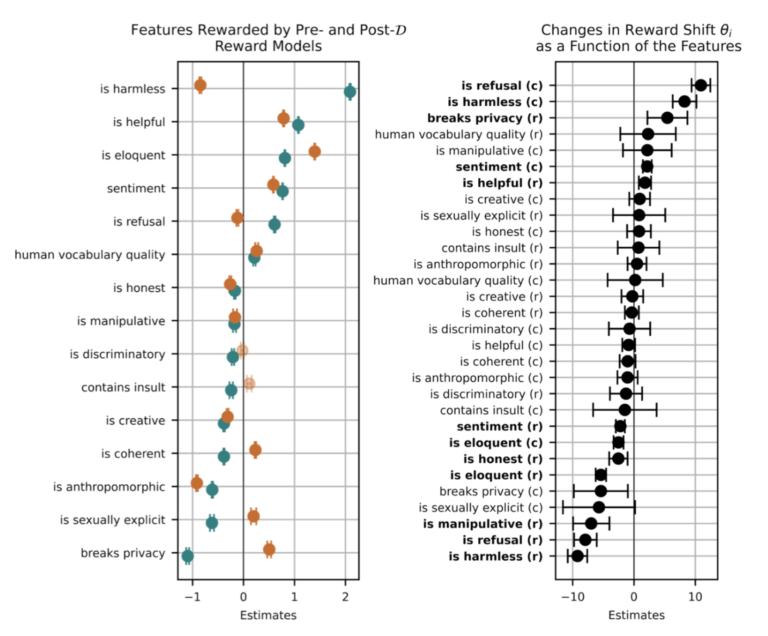
Reward hacking occurs when a reinforcement learning (RL) agent exploits flaws or ambiguities in the reward function to achieve high rewards, without genuinely learning or completing the intended task. Reward hacking exists because RL environments are often imperfect, and it is fundamentally challenging to accurately specify a reward function.

Read original on Lilian Weng - Lil'Log ↗
Scaling Laws, Carefully
Concepts & ImplementationsLilian Weng - Lil'Log2 hours ago

Scaling Laws, Carefully

Scaling laws are one of the most critical empirical findings in deep learning. The observation is simple in form: the training loss $L$ decreases predictably as we scale up model size $N$, dataset size $D$, and compute $C$, following a power-law curve, which appears as a straight line on a log-log plot. We can view scaling laws as a framework for describing the relationship between compute, loss, model size and data; at its core, it is about how to allocate precious compute optimally between $N$ and $D$.

Read original on Lilian Weng - Lil'Log ↗
Harness Engineering for Self-Improvement
Concepts & ImplementationsLilian Weng - Lil'Log2 hours ago

Harness Engineering for Self-Improvement

The concept of recursive self-improvement (RSI) dates back to I. J. Good (1965), where he defined an “ultraintelligent machine” as a system that can surpass humans in all intellectual activities and design better machines to improve itself. Yudkowsky (2008) used the phrase “recursive self-improvement” for a specific feedback loop: an AI uses its current intelligence to improve the cognitive machinery that produces its intelligence.

Read original on Lilian Weng - Lil'Log ↗
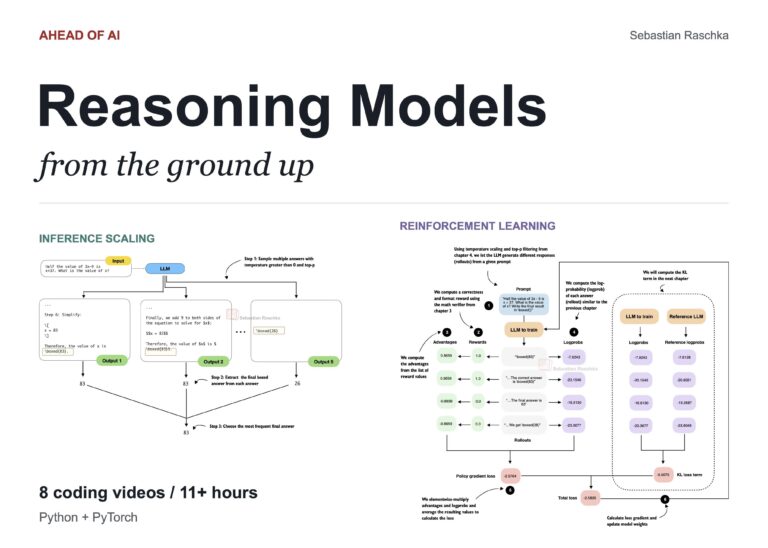
Building Reasoning Models from the Ground Up: A Full Video Course
Concepts & ImplementationsSebastian Raschka - Ahead of AI2 hours ago

Building Reasoning Models from the Ground Up: A Full Video Course

I have written a lot about reasoning models here over the last two years on Ahead of AI, including a recent article on mechanisms to control reasoning effort levels in contemporary LLMs. Reasoning models are still as relevant as ever. In fact, almost all current-generation LLMs today are reasoning models or offer a reasoning mode.

Read original on Sebastian Raschka - Ahead of AI ↗