



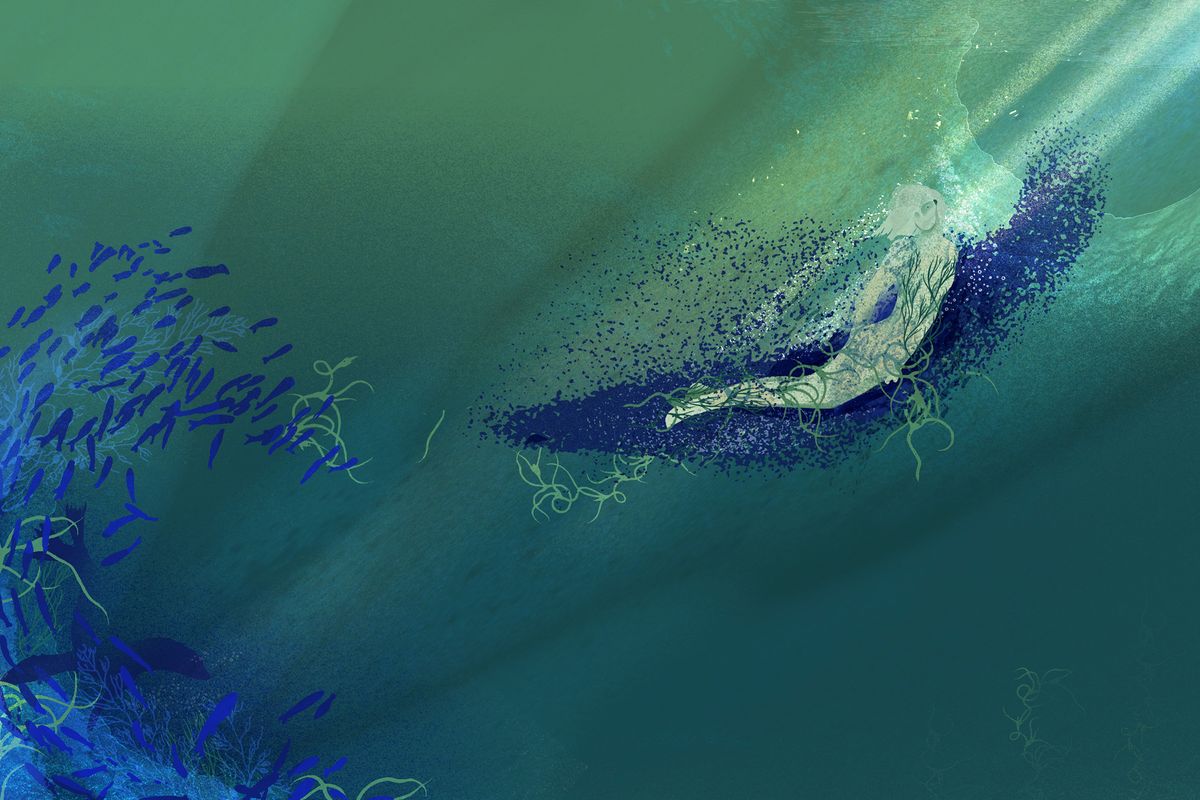
In October 1948, in Country Kerry, Ireland, Seán Ó Muircheartaigh met with Seosamh Ó Dálaigh to tell him about the woman who came from the sea. She had appeared, said Ó Muircheartaigh, one night on the magharees, those bright spits of sand that occasionally pop up amid the rain-lashed rocks of the Dingle peninsula. Alone on the beach, she settled herself on a rock and began combing her hair.
Also on the beach was a farmer, who – much to the surprise of the woman herself – would by daybreak become her husband. He’d come to gather seaweed, seeing her before she saw him. Beautiful as she was, the woman was also strange: the creature he saw stagger onto that Dingle beach was not a woman at all. It was a seal.
By the time Ó Muircheartaigh told Ó Dálaigh about the seal woman, he was already 80. He had been born in the apocalyptic aftermath of the Great Hunger that divested as much as a third of Ireland’s population to death or migration, and he had survived two great wars. Most of the disappeared were – like Ó Muircheartaigh himself – small farmers and native Irish, or Gaeilge, speakers. The famine had been not just a physical genocide: it had been a linguistic and cultural one, too.
Both Ó Muircheartaigh and Ó Dálaigh were veteran contributors to the Irish Folklore Commission: the former as a renowned storyteller; the latter, an equally renowned collector. The IFC is now the National Folklore Collection at University College Dublin – a behemoth of 3 million pages of texts and recordings. But in 1948, following eight centuries of colonialism, the loss of 99 per cent of the island’s forests, a staggering emigration, and the decline of the Irish language, the IFC was in a race against time and the fragility of memory. As it turned out, an awful lot of people had heard stories about seals that came to land as humans.
Source: Aeon — Read the full article on the original site ↗
Get the best of this topic in your inbox
Join the newsletter. A short, useful digest, no spam.