


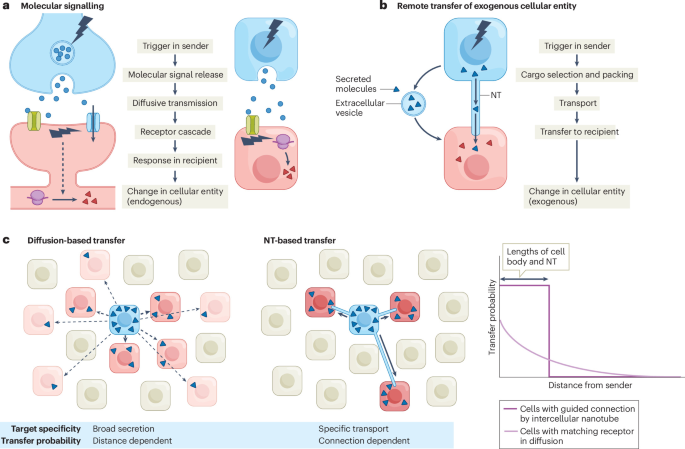
Communication between cells in the nervous system has long been understood to occur through chemical and electrical synapses, and through the release of signalling molecules and extracellular vesicles across the extracellular space. Intercellular nanotubes (NTs) — thin, membranous tubular bridges that physically connect distant cells — represent a structurally distinct route of communication, enabling the direct, targeted transfer of cellular cargoes between selected cells.
Once studied almost exclusively in culture, NTs have now been visualized in situ and in vivo throughout the nervous system, including dendritic NTs between neurons, NTs formed by microglia and astrocytes, interpericyte NTs in the retina and NTs between satellite glia and peripheral sensory neurons. Through these connections, cells exchange mitochondria, proteins and their aggregates, and calcium, supporting three emerging roles: homeostatic rescue of stressed cells, pathological propagation of toxic proteins in neurodegeneration and non-synaptic calcium signalling, respectively.
NT networks are dynamic and stress-responsive, suggesting that they provide a plastic infrastructure for resource sharing among neurons and glia. Understanding their function will require establishing a standardized definition, achieving rigorous in situ validation and quantification, and developing specific molecular tools to manipulate NTs.
This is a preview of subscription content, access via your institution Prices may be subject to local taxes which are calculated during checkout
Source: Nature Reviews Neuroscience — Read the full article on the original site ↗