


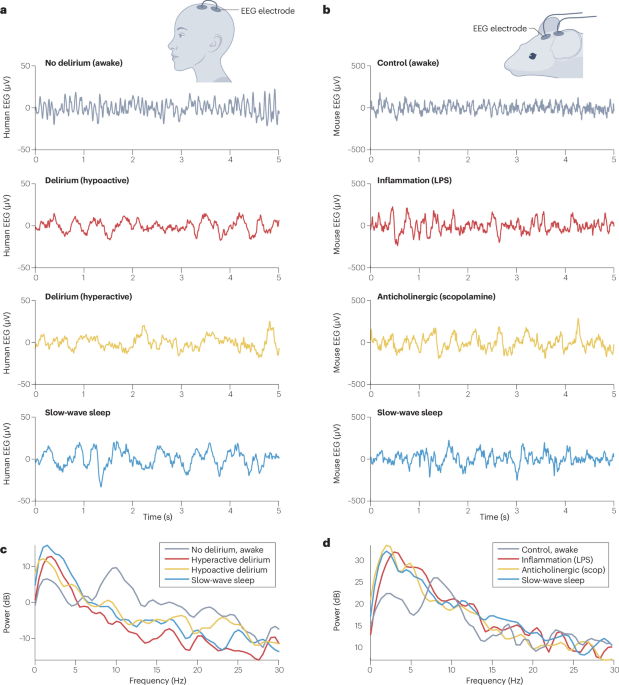
Delirium is a frequent and distressing neuropsychiatric syndrome characterized by acute disturbances of attention, awareness and cognition. Delirium emerges in response to diverse medical insults, particularly in hospitalized patients. Despite its high prevalence and association with accelerated cognitive decline, dementia and mortality, the neurobiology of delirium remains incompletely understood, and there are no treatments for delirium. Evidence from electrophysiology, neuroimaging, biomarkers and emerging animal models has begun to clarify the pathophysiological mechanisms underlying delirium. Delirium can be conceptualized as the interaction of acute systemic or cerebral stressors with pre-existing vulnerabilities, creating a ‘perfect storm’ for brain dysfunction. Generalized electroencephalographic slowing and network disintegration are convergent signatures across diverse types of delirium. Disruptions in neuromodulatory systems, energy metabolism and neuroimmune signalling may underlie impairment of large-scale brain function. The mechanisms that drive acute delirium may also contribute to subsequent brain injury and long-term decline, compounding its broad personal and societal impact.
This is a preview of subscription content, access via your institution
Prices may be subject to local taxes which are calculated during checkout
American Psychiatric Association. Diagnostic and Statistical Manual of Mental Disorders (DSM-5-TR) 5th Edn (American Psychiatric Association, 2022).
Source: Nature Reviews Neuroscience — Read the full article on the original site ↗