



|
Getting your Trinity Audio player ready...
|
For more than a decade, I have argued that the liberal arts resist the kind of definition people crave. Like the Tao itself, the liberal arts cannot be named without diminishing what they are; they can only be experienced, lived, moved through. That argument, and related ones I’ve made on what “liberal” actually means and why the humanities still matter in a STEM-obsessed age, were always gesturing at something larger than curriculum design. They were gesturing at a pattern and engagement with a curriculum —one that Taoist philosophy names directly and that a good liberal education embodies without always saying so.
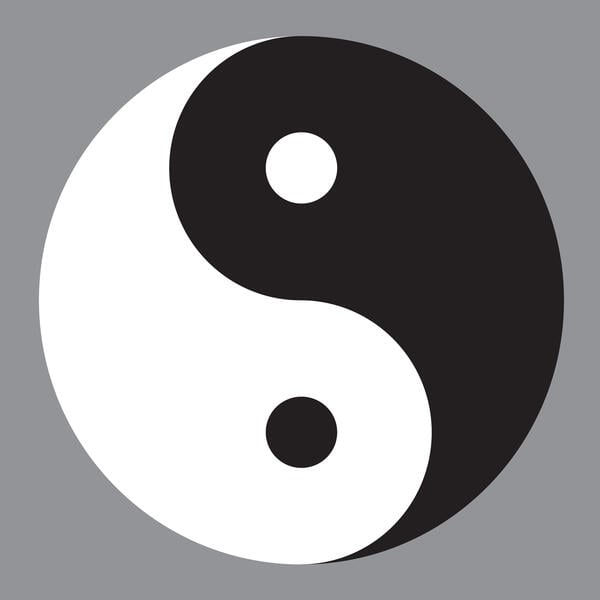
The pattern is yin and yang: two poles, endlessly distinct, endlessly entwined, each carrying the seed of the other. In the classical symbol, the white field holds a black dot; the black field holds a white dot. Neither pole is ever pure. This is not decoration—it is the claim that no single mode of knowing is self-sufficient, that every discipline, pushed far enough, discovers the seed of its opposite already living inside it.
Set the humanities and the sciences, including mathematics, as the two poles of learning, and the pattern holds with unusual precision. Humanities areas such as literature, history, philosophy, language and art—the list is illustrative, not exhaustive, and any attempt to close it would misunderstand what the humanities are—cultivate meaning, interpretation and the qualitative texture of human experience. The sciences and mathematics, in their own irreducibly varied forms, cultivate measurement, prediction and formal structure. Taught in isolation, each pole calcifies: Science without humanistic reflection can measure everything and understand little of why it matters; humanities without empirical rigor can generate meaning untethered from how the world actually behaves.
But taught as they are meant to be taught, within a genuine liberal arts core, each pole carries its opposite’s seed. Mathematics is itself an ancient humanistic art of pattern and abstraction, closer to poetry than most STEM advocates admit. Literature and history demand the same disciplined attention to evidence, structure and falsifiable claims that any laboratory requires.
Source: Inside Higher Ed — Read the full article on the original site ↗
Get the best of this topic in your inbox
Join the newsletter. A short, useful digest, no spam.



