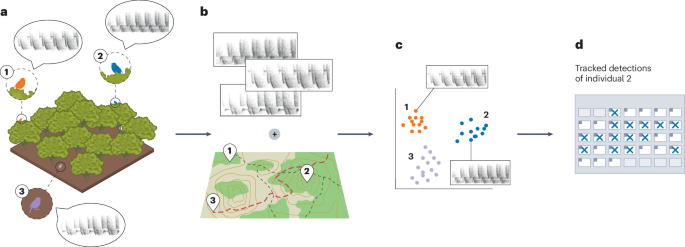
The ability to differentiate bird vocalizations has taken a significant step forward with a new research method. Scientists have developed a system that uses automated analysis of sound recordings to distinguish between the unique song structures of individual birds within the same species. This represents a potentially powerful tool for monitoring bird populations across different environments.
This development matters significantly to organizations like ODEFTO LABS, those working with AI, and anyone focused on ecological data collection and analysis. The implications extend to several key areas: potential cost savings in traditional bird monitoring efforts, a more refined understanding of customer needs regarding environmental data, a competitive advantage in offering innovative monitoring solutions, and reduced risk associated with relying on less precise data methods. Simultaneously, the approach presents an opportunity to enhance the accuracy and scale of bird population tracking, contributing to a broader conservation effort. The research builds upon decades of work in ornithology and acoustic analysis, providing a modern, automated method for gathering valuable ecological information. The study’s publication in Nature Methods, a respected scientific journal, lends further credibility to the technique and demonstrates its potential for wider adoption. The underlying methodology relies on machine learning, a technology increasingly important for interpreting complex datasets, and integrates with established practices in the field of ecological research. The foundational work cited in the article, including the 1924 paper by Saunders in the Auk, provides a historical context for this advancement, highlighting the long-standing interest in understanding bird song. The 2026 research by Lapp et al. further solidifies the technique’s validity through a rigorous, published methodology.
To capitalize on this development, ODEFTO LABS should take the following actions within the next month:
First, dedicate resources to exploring the integration of this new sound analysis technique into existing AI-powered sound monitoring solutions. Focusing on the specifics of differentiating song structures offers a clear product development angle that directly addresses a key challenge in bird population monitoring. Second, initiate a pilot project, perhaps in collaboration with a partner institution, to test the system’s accuracy and effectiveness in a real-world setting. Evaluating the system’s performance across a range of geographic locations and bird species would provide valuable data for refining the methodology and validating its applicability. Finally, begin to assess the potential for incorporating this technology into data subscription offerings, tailoring packages to meet the diverse needs of clients researching avian populations. Focusing on delivering detailed information about individual birds, rather than simply aggregating overall population counts, represents a significant shift in the field of ecological monitoring.
Looking ahead, careful attention should be paid to the expansion of this technology’s capabilities. The current system’s success relies on its ability to distinguish song structures, but further research may focus on incorporating other auditory cues, such as calls and vocalizations, to provide a more comprehensive picture of bird behavior and ecology. Simultaneously, advancements in machine learning algorithms should continue to improve the accuracy and efficiency of the analysis process, leading to even more detailed and reliable data about bird populations across the globe. Exploring variations in song structure related to factors such as age, sex, and territoriality could reveal valuable insights into bird social dynamics and evolutionary adaptations.
The last section was written with AI help from the abstract only.
Source: Nature - Machine Learning — Read the full article on the original site ↗
Get the best of this topic in your inbox
Join the newsletter. A short, useful digest, no spam.