


Zeinab Esmaeilpour and Ahmed A. Metwally, Research Scientists, Google Research
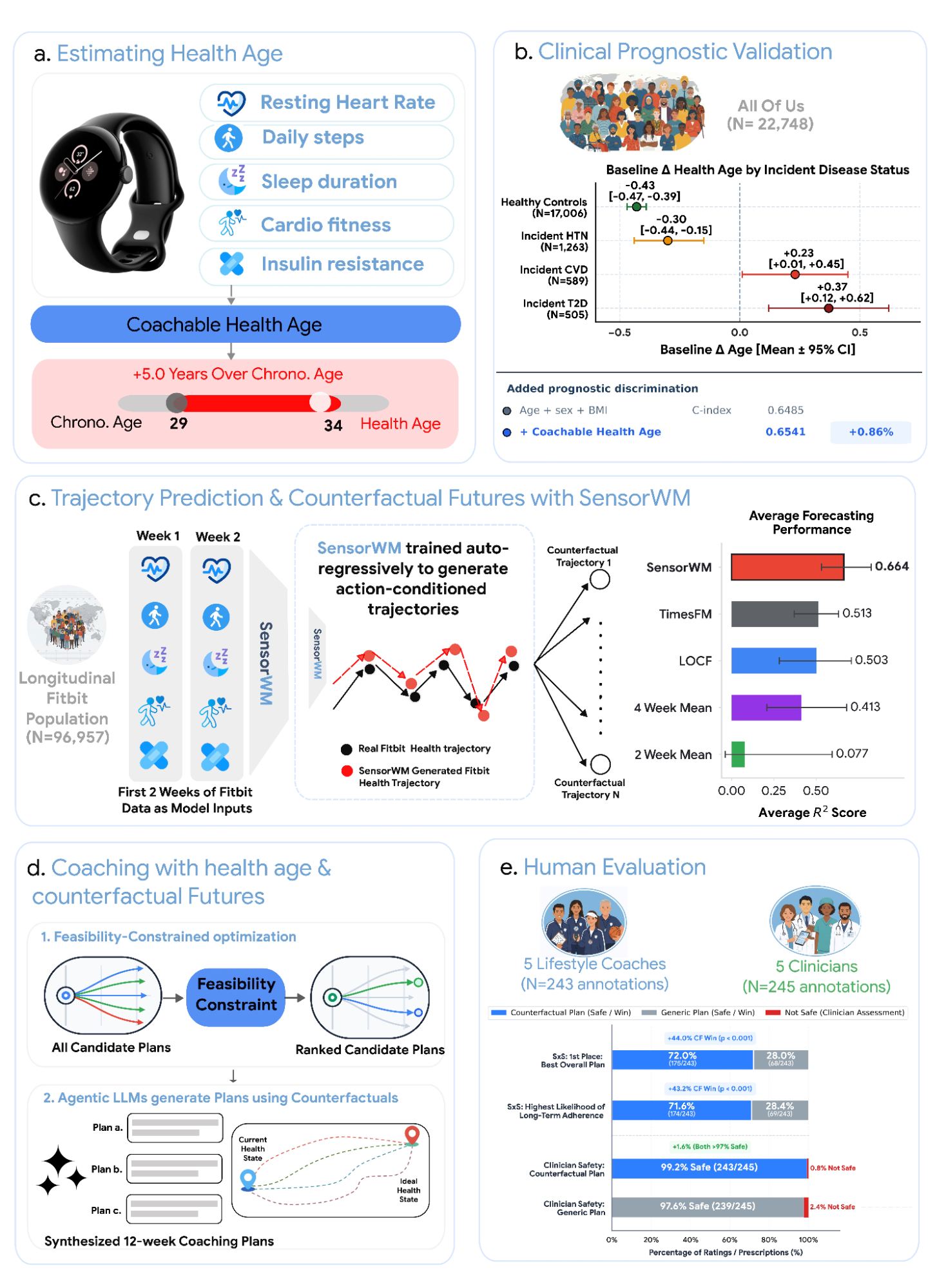
We introduce an investigational machine learning framework that translates passive wearable signals into a modifiable coachable health age, uses an action-conditioned world model to simulate personalized 12-week "what-if" habit trajectories, and expands to routine blood biomarkers to track early cardiovascular-kidney-metabolic (CKM) health.
Heart disease, kidney conditions, and metabolic disorders like type 2 diabetes aren't isolated, they form an interconnected web known as cardiovascular-kidney-metabolic (CKM) syndrome. CKM progression often begins silently years before symptoms appear, shaped by everyday habits like movement, sleep, and cardiovascular activity. Catching these subtle shifts early offers the best chance to reverse the trend. Yet while smartwatches easily track what we did yesterday, moving from passive tracking to meaningful action is much harder: How do my daily habits affect my CKM right now? And if I sleep 30 minutes longer or add a brisk walk to my routine, how much will my health improve over the next three months?
Age is often seen as playing a part in answering these questions, but chronological age alone isn’t enough because two people born in the same year can have vastly different physiological health. While researchers have developed “biological clocks” from blood tests or wearable sensors to estimate whether someone's body is aging faster or slower than their calendar age, most existing clocks aren't built for everyday coaching. Many are trained simply to estimate the birth year, latching onto traits you can't easily change, or act as black boxes that can't show how modifying a specific habit will shift your future health.
Source: Google Research Blog — Read the full article on the original site ↗