



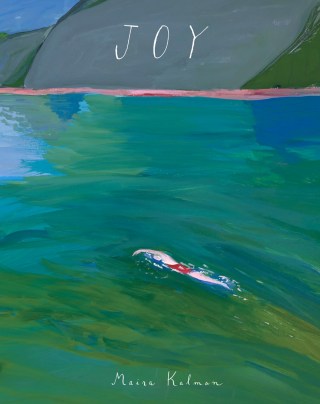
One of the most important things I have learned about life is that joy is a choice, an orientation, a practice of bending the mind in the direction of gladness — a choice increasingly countercultural in our age of competitive complaint, and yet all the more urgent precisely because our world gives us so many valid reasons for despair. “Experience of conflict and a load of suffering has taught me that what matters above all is to celebrate joy… Life is wasted when we make it more terrifying, precisely because it is so easy to do so,” the artist René Magritte wrote in his timeless manifesto for the courage of joy in the wake of the second World War of his life. “We’ve all had too much sorrow — now is the time for joy,” Nick Cave sang an epoch later as he contemplated the paradox of joy against the backdrop of unimaginable loss.
Joy is not difficult to find, but it can be difficult to trust — partly because the merchants of pseudo-morality have sold us the dangerous myth that, in an unjust world, despair is an emblem of our solidarity with justice, and partly because in this age of grandiosity, we have forgotten that joy is a plurality of smallnesses: a function of what Hermann Hesse called “the little joys” that light up a life with presence.
We need them, these reminders that joy is not a denial of suffering but the fulcrum of our resilience in its midst; that it comes to us not with horns and cymbals but as a distant whisper from the birthplace of the ordinary, not like a bouquet of roses offered with champagne but like the lovely little weed blooming through a crack in the sidewalk of the quotidian. And that is precisely what artist-philosopher Maira Kalman offers in her book Joy (public library) — a love letter to the sweet strangeness of life, to its unboastful wonderland of small miracles, to the way it expands and expands and expands the moment we contract the aperture of attention onto a single unit of gladness.
And then it goes where we, short-termists of the present, rarely go: into the lives of some of her heroes who lived through times and turmoils far more unimaginable than ours: She paints Alfred Dreyfus sitting in his prison cell on Devil’s Island; she paints the bedroom in which Beethoven, fully deaf, wrote “Ode to Joy”; she paints Virginia Woolf and her “surprisingly colorful” sitting room just before she filled her coat pockets with stones and waded into the River Ouse; she paints Kafka under the black hat he wore as a helmet of despair, his hand rested tenderly on his beloved dog.
Source: The Marginalian — Read the full article on the original site ↗