



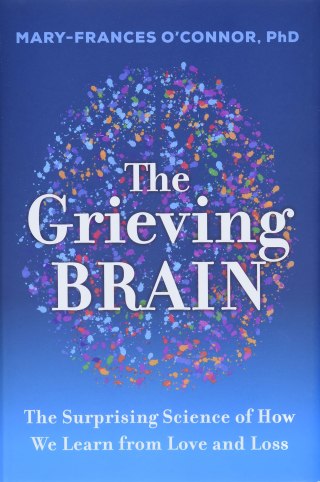
“‘Tis good — the looking back on Grief,” Emily Dickinson wrote as she calibrated love and loss. But she did not mean that it is good to ruminate and wallow — Dickinson so deftly played with the surface of meaning, so delighted in startling us into a flinch or furrow before plunging us into the deeper truths she fathomed. She meant, I think, that a love lost is grieved forever, whatever the nature of the loss — this she knew, and turned the ongoingness of it into a lifetime of art — but by looking back, we are reminded over and over that the sharp edge of grief does smooth over time, that today’s blunt ache is worlds apart from the first stabs, until grief becomes, as Abraham Lincoln wrote in his stirring letter of consolation to a bereaved young woman, “a sad sweet feeling in your heart, of a purer and holier sort than you have known before.”
And besides, what does it mean to lose a love anyway? We never lose people, not really. I don’t mean this in some mystical sense — let there be no confusion about what actually happens when we die. I don’t even mean it in the poetic sense. I am speaking strictly from the point of view of the mind emerging from the dazzling materiality of the brain — that majestic cathedral of cortex and synapse shaping every thought we have and every feeling we tremble with.
On the one hand, we lose people all the time — to death, to distance, to differences; from the brain’s point of view, these varieties of loss differ not by kind but only by degree, triggering the same neural circuitry, producing sorrow along a spectrum of intensity shaped by the level of closeness and the finality of the loss.
On the other hand, no person we have loved is ever fully gone. When they die or vanish, they are physically no longer present, but their personhood permeates our synapses with memories and habits of mind, saturates an all-pervading atmosphere of feeling we don’t just carry with us all the time but live and breathe inside. Or the opposite happens, which is its own devastation — the physical body remains present, but the person we have known and loved, that safehouse of shared memories and trust, is gone — lost to mental illness, to addiction, to neurodegenerative disease.
Source: The Marginalian — Read the full article on the original site ↗
Get the best of this topic in your inbox
Join the newsletter. A short, useful digest, no spam.