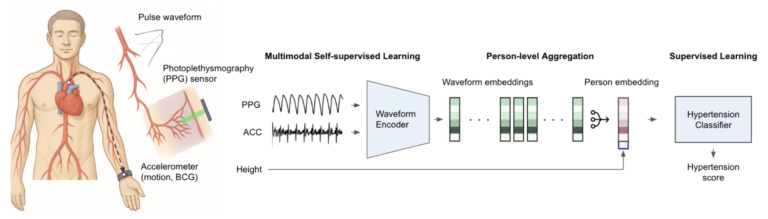
Detecting signs of hypertension using wearable sensors
Paolo Di Achille, Staff Research Scientist, and Ming-Zher Poh, Senior Staff Research Scientist, Google Research
Read original on Google Research Blog ↗

by ODEFTO Group

Paolo Di Achille, Staff Research Scientist, and Ming-Zher Poh, Senior Staff Research Scientist, Google Research
Read original on Google Research Blog ↗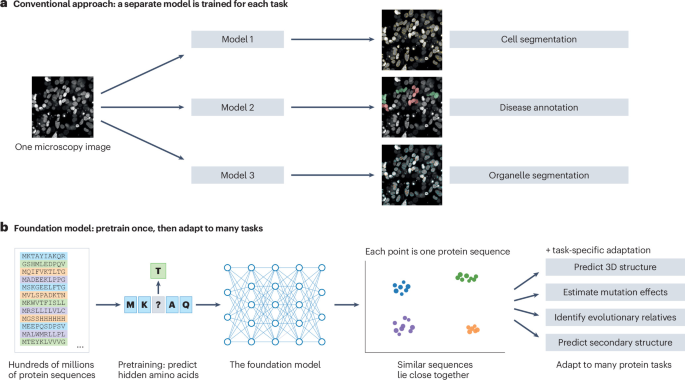
A foundation model is trained on a broad body of data to learn general patterns and can then be adapted to many tasks.
Read original on Nature - Machine Learning ↗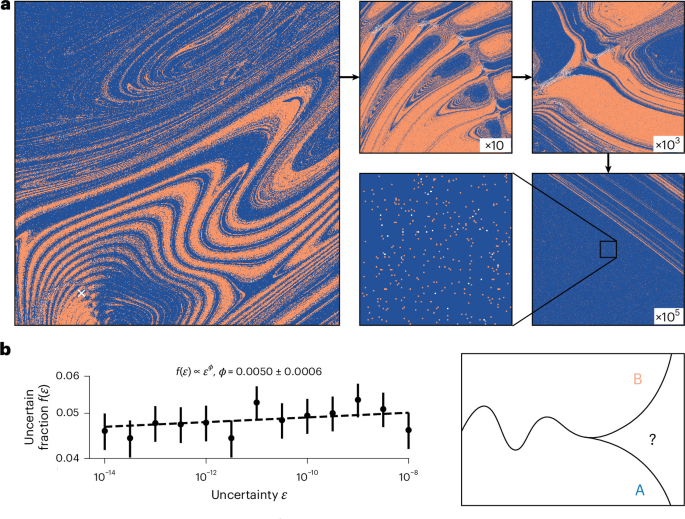
Nature Machine Intelligence, Published online: 05 November 2026; doi:10.1038/s42256-026-01336-3Deep learning outcomes are hard to predict and reproduce. Ly and Gong propose fractal basin geometry as a mechanism: starting points leading to different outcomes interweave at arbitrarily fine scales, so greater precision yields little improvement.
Read original on Nature Machine Intelligence ↗
Quantifying enzyme kinetic parameter changes upon mutations is essential for accelerating enzyme evolution. Current methods focus on predicting absolute values of kinetic parameters (turnover numbers kcat and Michaelis constants Km), yet they fail to accurately capture mutation effects. To our knowledge, no method directly models…
Read original on Nature - Machine Learning ↗
AuthorsAbhinav Moudgil†**, Ningyuan Huang‡**, Eeshan Gunesh Dhekane, Pau Rodríguez Lopez, Luca Zappella, Federico Danieli
Read original on Apple Machine Learning Research ↗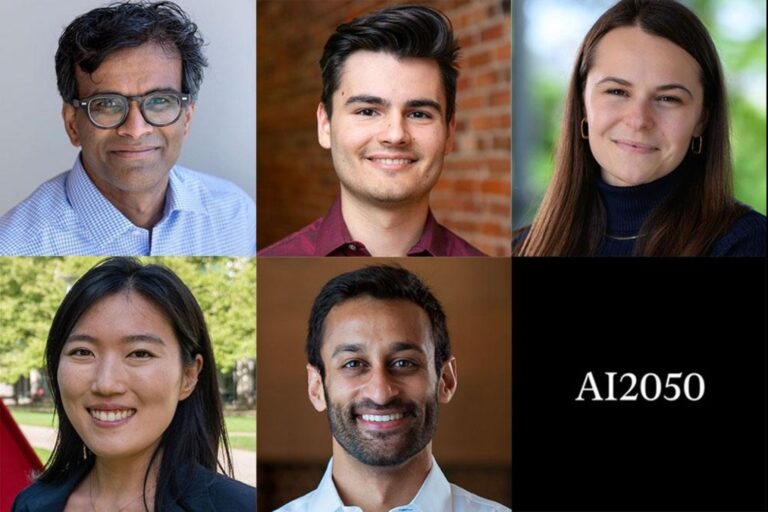
Five MIT faculty members and two additional alumni were recently named to the 2026 cohort of AI2050 Fellows. The honor is announced annually by Schmidt Sciences, Eric and Wendy Schmidt’s philanthropic initiative that aims to accelerate scientific innovation.
Read original on MIT News - AI ↗
People are peppering artificial intelligence chatbots everyday with questions, but when it comes to politics and the looming 2026 U.S. midterm elections, what role are AI platforms playing? Could an AI chatbot sway a voter to switch parties or re-examine their political beliefs?
Read original on MIT News - AI ↗
For centuries, infrastructure has evolved alongside technology. New materials and engineering techniques enabled taller buildings, longer bridges, and larger cities. Computing and digital technologies later transformed how infrastructure was designed, monitored, and operated.
Read original on MIT News - AI ↗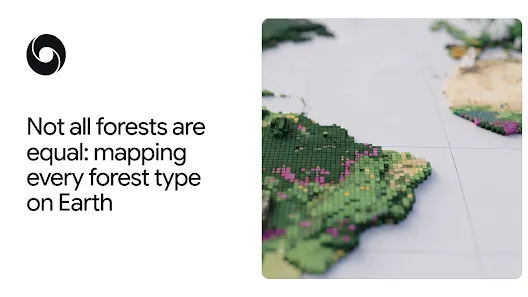
A global map categorizing every 10-meter patch of land on Earth into distinct forest types.
Read original on Google DeepMind Blog ↗
An experimental weight-loss drug that has not yet received regulatory approval is already attracting users willing to obtain unapproved versions online. Now, scientists are using artificial intelligence to investigate their experiences, uncovering unexpected symptom reports that differ from those documented in clinical trials.
Read original on ScienceDaily - AI ↗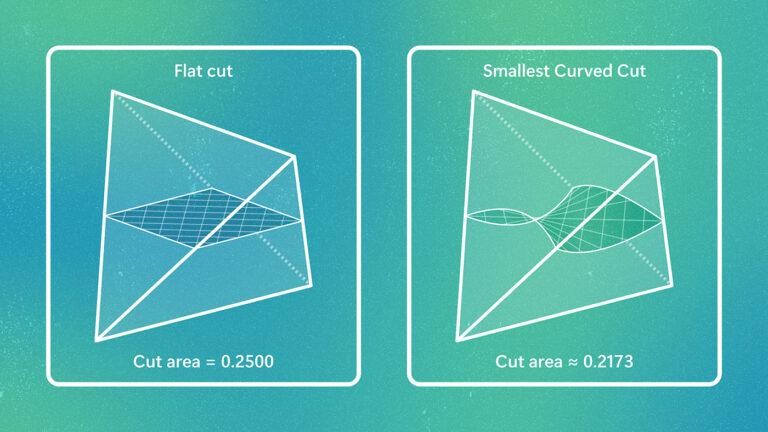
For decades, a fundamental question about the difficulty of computing in high-dimensional spaces has resisted proof. New research resolves this question, removing a major theoretical obstacle to understanding the efficiency of randomized algorithms used across science and computing.
Read original on Microsoft Research ↗
Pixels to Tokens: Token Space Efficient Active Learning for Low-Budget Semantic Segmentation
Read original on Apple Machine Learning Research ↗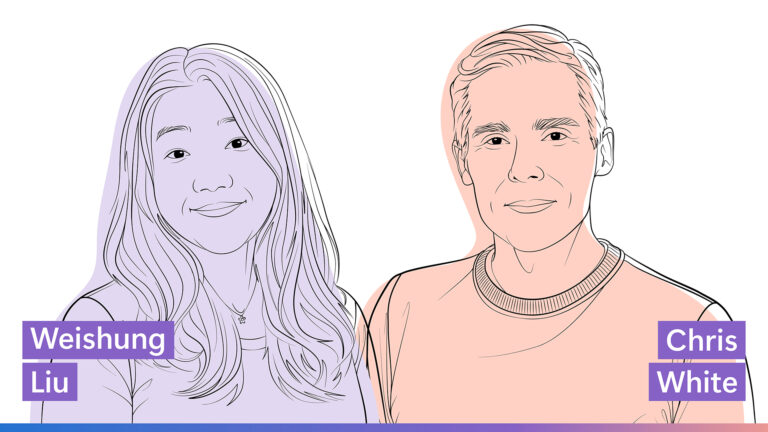
In the summer of 2010, postdoc Chris White worked with a multidisciplinary team at the Defense Advanced Research Projects Agency, or DARPA, to determine if a new approach to data analysis could prevent violence and protect troops during the war in Afghanistan. At the conclusion…
Read original on Microsoft Research ↗
Pooja Rao, Research Scientist, Petar Sirkovic, Software Engineer, and Annalisa Pawlosky, Research Scientist, Google
Read original on Google Research Blog ↗
Pengfei Tian, Maxwell L. Bileschi, Zoi Tsangalidou, Sukhdeep Singh and Lucy J. Colwell
Read original on Google DeepMind Blog ↗Enter your email to receive updates. You can unsubscribe at any time.



