


Three years after he became the second-youngest laureate of the Nobel Prize, awarded him for literature that “with clear-sighted earnestness illuminates the problems of the human conscience,” Albert Camus (November 7, 1913–January 4, 1960) died in a car crash with an unused train ticket to the same destination in his pocket. The writings he left behind — about the key to strength of character, about creativity as resistance, about the antidotes to the absurdity of life, about happiness as our moral obligation — endure as a living testament to Mary Shelley’s conviction that “it is by words that the world’s great fight, now in these civilized times, is carried on.”
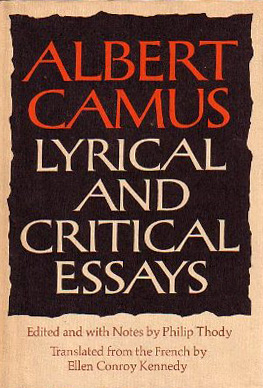
Camus addressed his views on writing most directly in a 1943 essay about the novel, included in his altogether indispensable Lyrical and Critical Essays (public library).
One must be two persons when one writes… The great problem is to translate what one feels into what one wants others to feel. We call a writer bad when he expresses himself in reference to an inner context the reader cannot know. The mediocre writer is thus led to say anything he pleases.
In a sentiment James Baldwin would echo in his advice on writing, insisting that “beyond talent lie all the usual words: discipline, love, luck, but most of all, endurance,” Camus…
Source: The Marginalian — Read the full article on the original site ↗