


“Humor, more than anything else in the human make-up, can afford an aloofness and an ability to rise above any situation, even if only for a few seconds,” Viktor Frankl wrote in recalling the role of humor as a lifeline to sanity and survival in the Holocaust.
Humor is a fundamental human freedom: To laugh is to protect ourselves from all that dehumanizes us — tyranny and transactionalism, captivity and commodification. Humor is also fundamental to free societies, to freedom of thought, to democracy: To laugh together is to harmonize our deepest humanity.
Because humor is the art of surprise, it exists beyond the reach of — and is an antidote to — the artifices of predictive computation we mistake for intelligence.
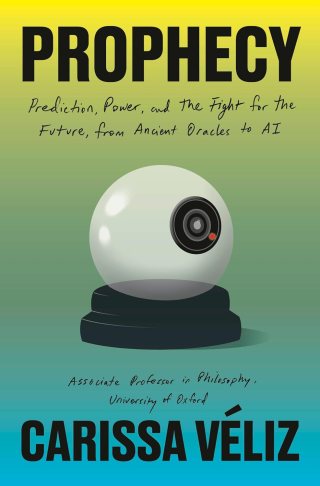
In her altogether fantastic manifesto for breaking free from the prison of predictive technologies, Carissa Véliz argues that humor thrives in the same “spaces of indeterminacy” where creativity and innovation also thrive. (“Whatever inspiration is, it’s born from a continuous ‘I don’t know,’” the Polish poet Wisława Szymborska observed in her magnificent Nobel Prize acceptance speech.) With an eye to the emotional attunement of sharing laughter, Véliz considers the relationship between humor, democracy, and AI:
Source: The Marginalian — Read the full article on the original site ↗