
LWiAI Podcast #257 – GPT 6 Astra, AI Extinction, Security Incidents
Our 257th episode with a summary and discussion of last week’s big AI news!
Read original on Last Week in AI ↗

by ODEFTO Group

Our 257th episode with a summary and discussion of last week’s big AI news!
Read original on Last Week in AI ↗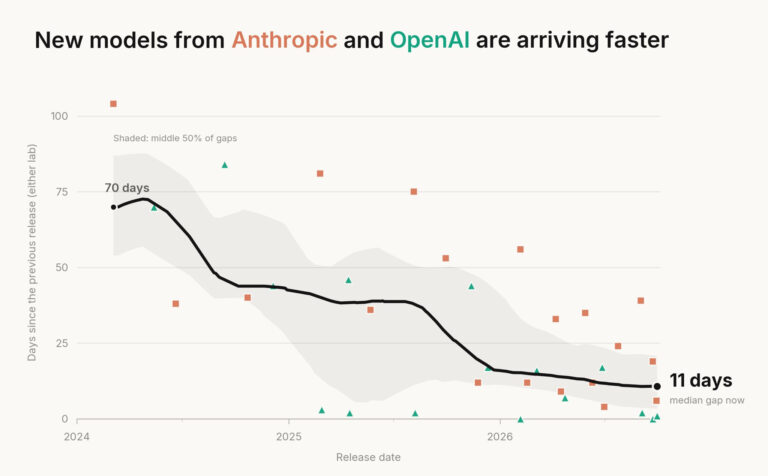
Anthropic launches Claude Opus 5.5 with stricter safeguards for cybersecurity
Read original on Last Week in AI ↗
Our 258th episode with a summary and discussion of last week’s big AI news!
Read original on Last Week in AI ↗
OpenAI publishes hundreds of math proofs from unreleased frontier model, Mistral and Reflection AI launch open-weight models to rival China, and more!
Read original on Last Week in AI ↗
Modern engineering projects increasingly combine human judgment with machine capability. An engineer can define a problem, then ask an artificial intelligence tool to search relevant research and technical standards, generate design options, test them in simulation, and compare the results. The engineer can then bring the results to specialists who understand the parts AI cannot judge on its own, such as whether a design can be built safely, whether it makes sense in a particular setting, or how it might affect its users. The final decision about whether and how to move forward remains a human responsibility.
Read original on IEEE Spectrum - AI ↗
For many consumers, much of the promise and appeal of AI is personal. Consumers are looking past generic tools and want to know how these technologies will help them in their daily lives. These trends coincide with the advent of new classes of wearable devices that, in addition to being able to leverage powerful frontier models, feature built-in intelligence that understand the context of a user. Where are they? What are they seeing and hearing? What are their habits, their preferences, their schedules?
Read original on IEEE Spectrum - AI ↗
A recent scroll through social media got me thinking about trust. About half my feed was filled with AI slop that astute users would call out as being machine-generated, often to the embarrassment of the rube who unknowingly spread it and sometimes to the delight of the poster who shared it deliberately because they found it amusing or useful for sowing confusion.
Read original on IEEE Spectrum - AI ↗
The first time Mutembei Kariuki thought about how AI models could work in Kenya, his home country, was in 2019. He was attending a conference at the University of Tokyo on the future of AI, and kept hearing about how this technology was going to transform the world. “But nobody mentioned Africa at all,” he says.
Read original on IEEE Spectrum - AI ↗
The European Union now requires AI-generated text to be watermarked so that it can be identified as such. But tests on OpenAI’s new textGrain watermark, released in October and developed to comply with the new E.U. law, show that these watermarks often do not survive additional editing of the text or when it’s under 150 words. With no clear legal benchmark for how well watermarks should work, it’s uncertain whether textGrain will meet Europe’s transparency rules, which could cost the company significantly and make it difficult to detect AI-generated text as models grow more sophisticated.
Read original on IEEE Spectrum - AI ↗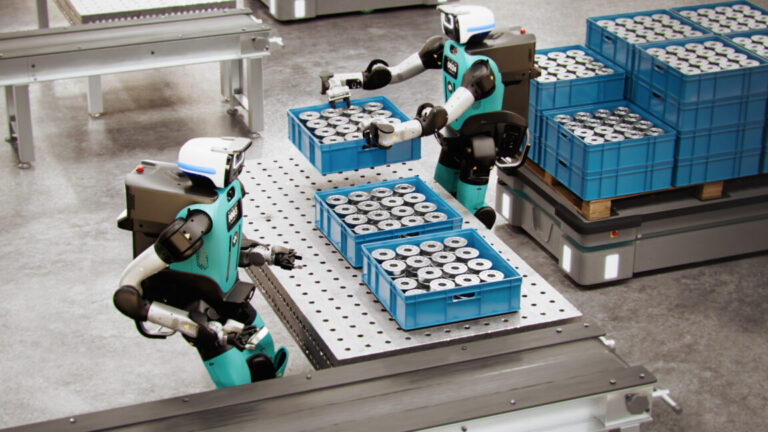
Humanoid robots remain unproven at scale and have not yet achieved widespread commercialization, compared with industrial robots that have decades of proven track records in warehouses and factories. That frank acknowledgment is among the risks outlined in a securities filing by Agility Robotics—the first dedicated developer of humanoid robots to become a publicly traded company in the United States.
Read original on Ars Technica - AI ↗
ChatGPT allegedly helped a North Carolina woman, Cheryl Gates, craft a “personalized plan” to poison her husband, James, after fueling her delusions that he planned to divorce her and leave her with nothing. A grand jury indicted Cheryl Gates on charges of attempted first-degree murder and food contamination in October.
Read original on Ars Technica - AI ↗
Google faced the ire of educators and parents earlier this week when it announced a new AI policy for K–12 schools. Google said that it developed its new approach to give schools more control, but early reporting also suggested Google would block search access for schools that didn't want to use AI. Google didn't see the backlash coming, but now that it's here, the search giant is clarifying what exactly its new policy means and what's changing.
Read original on Ars Technica - AI ↗
Yesterday, when reporting on emerging efforts to pipe the console version of GTA VI through a PC's DLSS-powered Nvidia GPU, we mentioned in passing that PC players could instead just wait for the AI-assisted decompilation port that will no doubt be coming in short order. Now, a former Rockstar tech director says he thinks that exact threat could cause the developer to work faster on the official PC version of its soon-to-release crime/lifestyle simulator.
Read original on Ars Technica - AI ↗
After weeks of backlash—and a failed attempt to quell it—Meta has indefinitely delayed plans to update its commercial terms and require Meta Business account users to allow extensive AI training on external websites linked on Facebook.
Read original on Ars Technica - AI ↗
CEO Sam Altman said recently that OpenAI is prioritizing safety instead of going ‘guns blazing’ toward an IPO.
Read original on The Verge - AI ↗
AI is dramatically speeding up Anthropic’s research, even as the company calls for slowing down AI development.
Read original on The Verge - AI ↗
Today, I’m talking with Alex Stamos, chief security officer at Cognition and longtime cybersecurity expert, about what a mess cybersecurity is right now.
Read original on The Verge - AI ↗
The government is approving sales of Nvidia’s AI chips to Chinese firms with ties to blacklisted companies.
Read original on The Verge - AI ↗Enter your email to receive updates. You can unsubscribe at any time.



