



|
Getting your Trinity Audio player ready...
|
Agents today review code, process claims, and run unattended for hours. Many also sit behind interactive experiences where a person waits for the first response. Amazon Bedrock AgentCore runtime gives these agents a fully managed, serverless environment: each session runs in its own isolated microVM, the platform scales to zero when there’s no work, and you only pay for the resources your sessions consume.
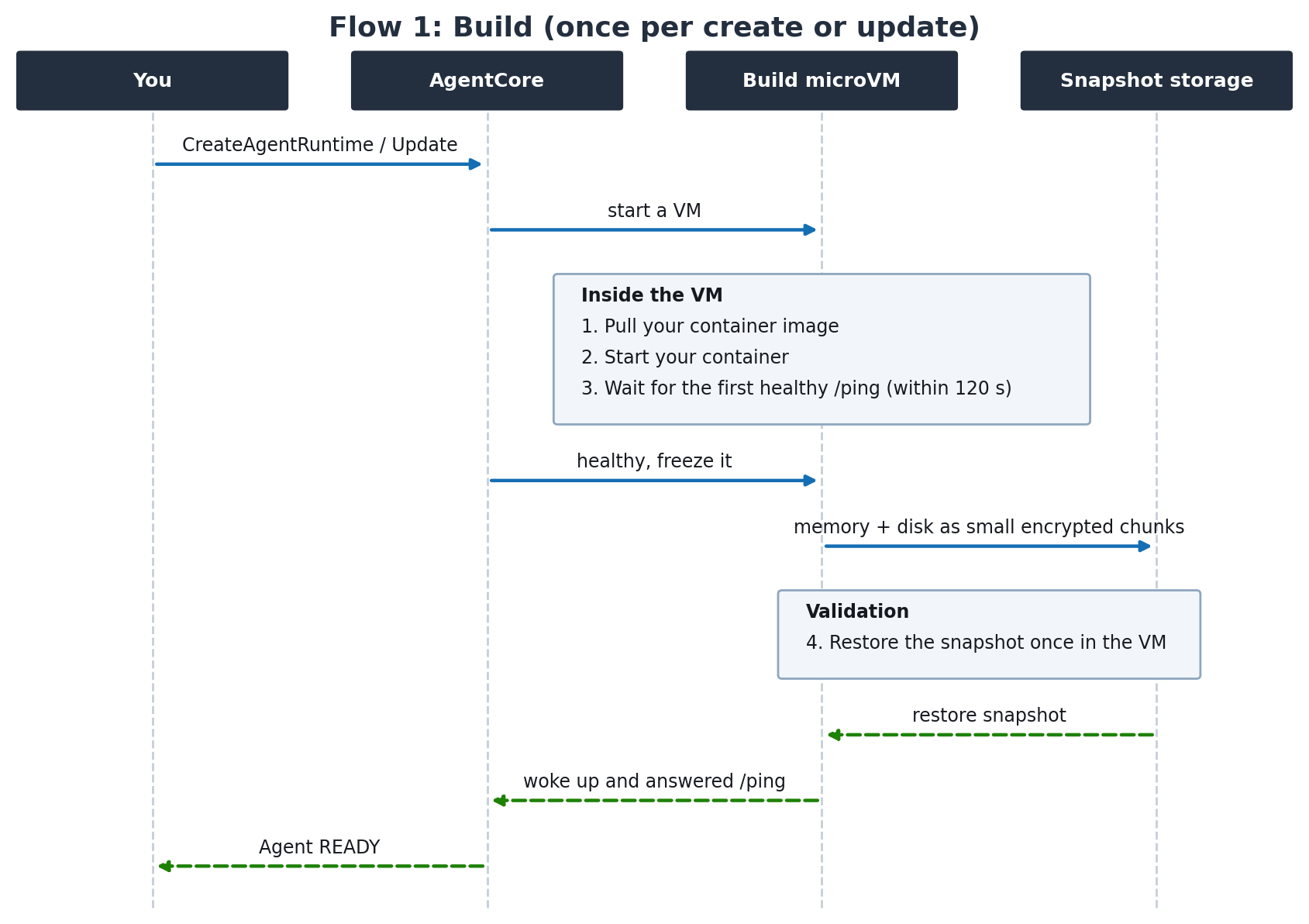
AgentCore runtime with platformVersion set to “V2” changes how sessions start. Instead of initializing your container for every session, it prepares your environment once, snapshots it, and restores that snapshot for each new session. Session start times are faster and more consistent. V2 also reclaims memory your sessions don’t use, so your bill tracks what your agent uses.
For most agents, switching to V2 is all it takes. Some agents need restructuring to get the full benefit, and for chat and voice experiences even 2 seconds is too slow. This post explains how V2 starts a session, how to measure session start time, and how to keep work off the first request, including build hooks, which AgentCore runtime now supports. We cover four patterns, from changes to your agent’s code to starting sessions before users need them.
AgentCore runtime runs each session in a new microVM. On V1, AgentCore pulls your container image from Amazon Elastic Container Registry (Amazon ECR), starts the container, and runs your initialization code before it can process the first request. The image pull dominates, so cold start grows with image size.
Source: AWS Machine Learning Blog — Read the full article on the original site ↗
Get the best of this topic in your inbox
Join the newsletter. A short, useful digest, no spam.



