

Getting AI agents into production at enterprise scale raises hard questions: what data they can reach, how fresh it needs to be, and how to keep them in bounds. At the Agentic Data Summit on December 9, Vishal Mehra, SVP & CIO at GlobalFoundries, shares how one of the world’s leading semiconductor manufacturers is putting agentic AI to work. Hear why GlobalFoundries chose Redpanda, what the team built, the results so far, and lessons for peers. Catch GlobalFoundries live at 10:00 AM PT. The summit is free and virtual and runs 8:30 AM–2:00 PM PT.
AI evals are one of the most important and hardest parts of building AI products. Getting started can feel like navigating a maze of conflicting advice.
I reached out to Hamel Husain, an ML engineer at OpenAI with 20 years of experience, to share a practical introduction to AI evaluation. Previously at Airbnb and GitHub, Hamel has helped more than 35 companies build and evaluate real-world AI products. He coauthored Evals for AI Engineers: Systematically Measuring and Improving AI Applications with Shreya Shankar, an ML systems researcher and PhD candidate at UC Berkeley focused on LLM evaluation and data quality. Together, they’ve trained more than 4,500 engineers and product managers through their AI evals course.
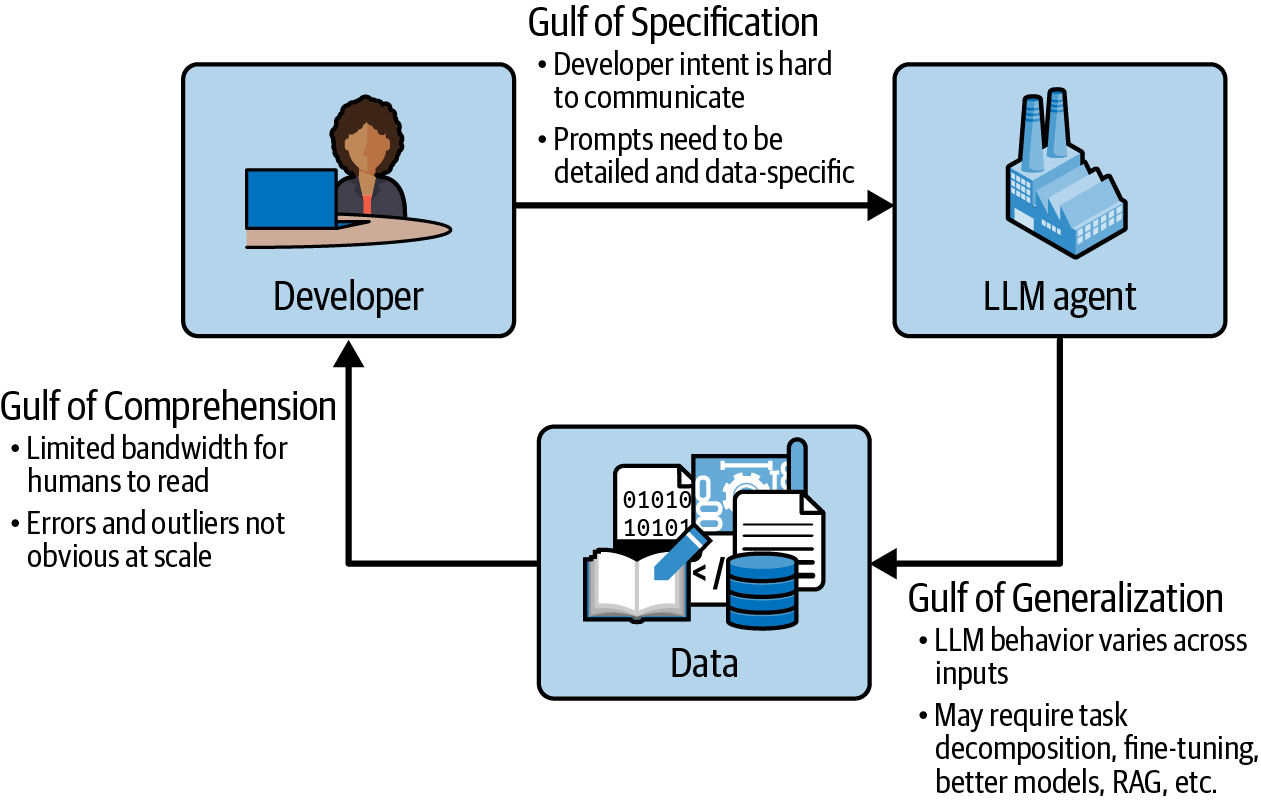
In today’s issue, we’re featuring an excerpt that introduces the Three Gulfs of LLM Application Development: understanding your data, making your requirements explicit, and getting the model to follow them consistently.
Source: ByteByteGo (system design interviews) — Read the full article on the original site ↗