


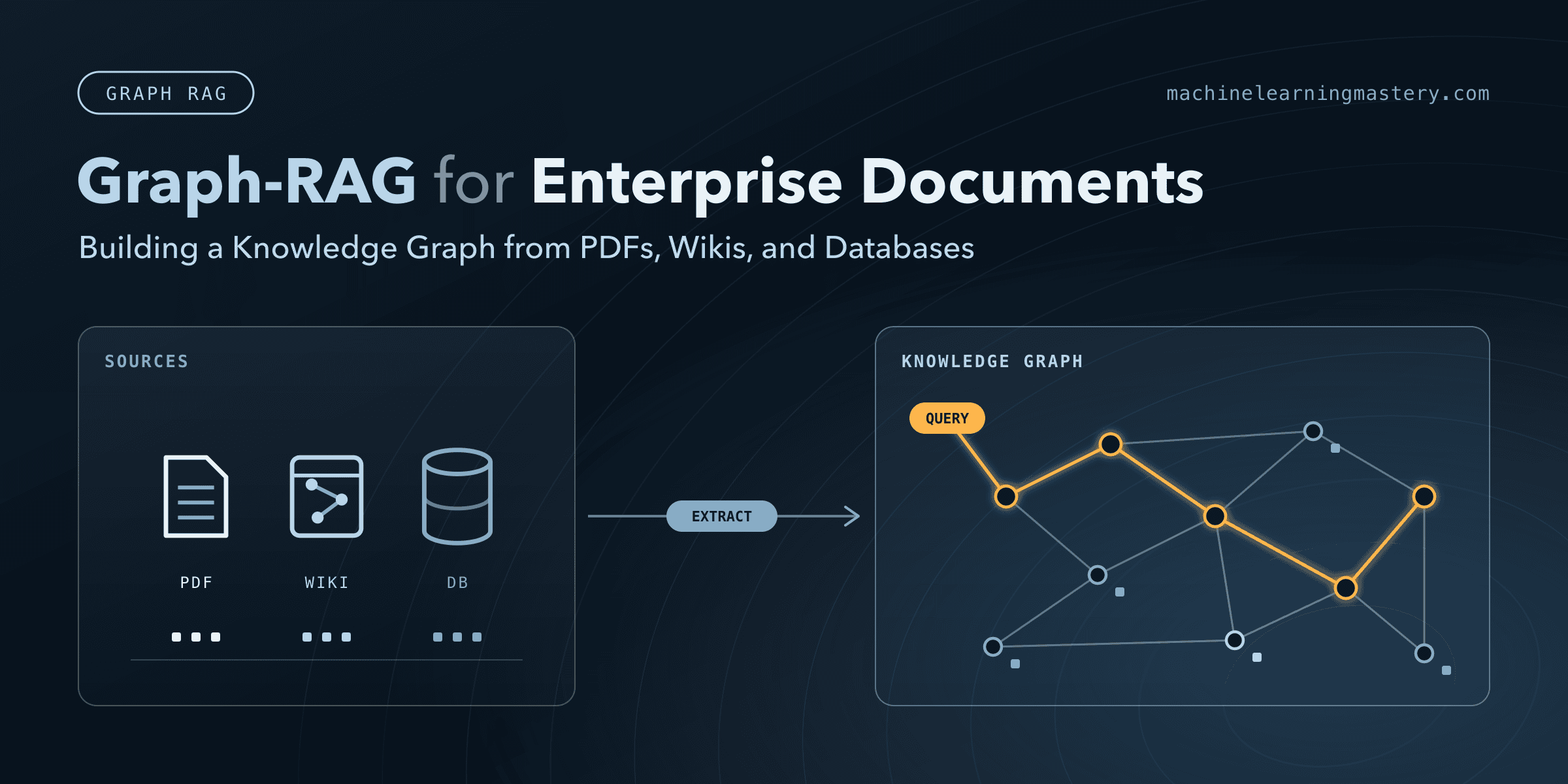
In this article, you will learn how to build a Graph-RAG system that combines a live database, wiki pages, and PDFs into one prioritized knowledge source, so your assistant gives a single, correct answer when those sources disagree.
An engineer pings your internal AI assistant at 11 p.m. and asks who’s on-call for the payments service. The assistant has read the wiki, indexed every PDF in the shared drive, and has a live connection to the service registry. It should be a trivial question. But the wiki was last edited four months ago, the on-call rotation has changed twice since then, and the database has the current answer sitting in a single row. If retrieval treats all three sources as equally trustworthy text, there’s a real chance it hands your engineer someone who left the rotation months ago.
That’s the exact failure covered in the article Beyond Vector Search: Building a Deterministic 3-Tiered Graph-RAG System, where vector-only RAG confuses which team a basketball player currently plays for, because multiple team names sit close together in embedding space. The fix: three retrieval tiers (an absolute-facts graph, a background-stats graph, and a vector database), fused through explicit priority rules written into the prompt instead of a routing algorithm. This article takes that same architecture and points it at a live database, a set of wiki pages, and a batch of PDFs, all feeding one fused answer.
The approach has real-world backing: an IDC study sponsored by Neo4j found organizations grounding generative AI in graph-based context cut hallucination rates by 44 percent on average, and one life sciences company went from a 20 to 40 percent hallucination rate down to 2 to 5 percent.
Source: Machine Learning Mastery — Read the full article on the original site ↗