

Yossi Matias, Vice President, Google & GM, Google Research, Yaniv Leviathan, Google Fellow, Google Research, and Janet Zhou, Group Product Manager, Google Maps
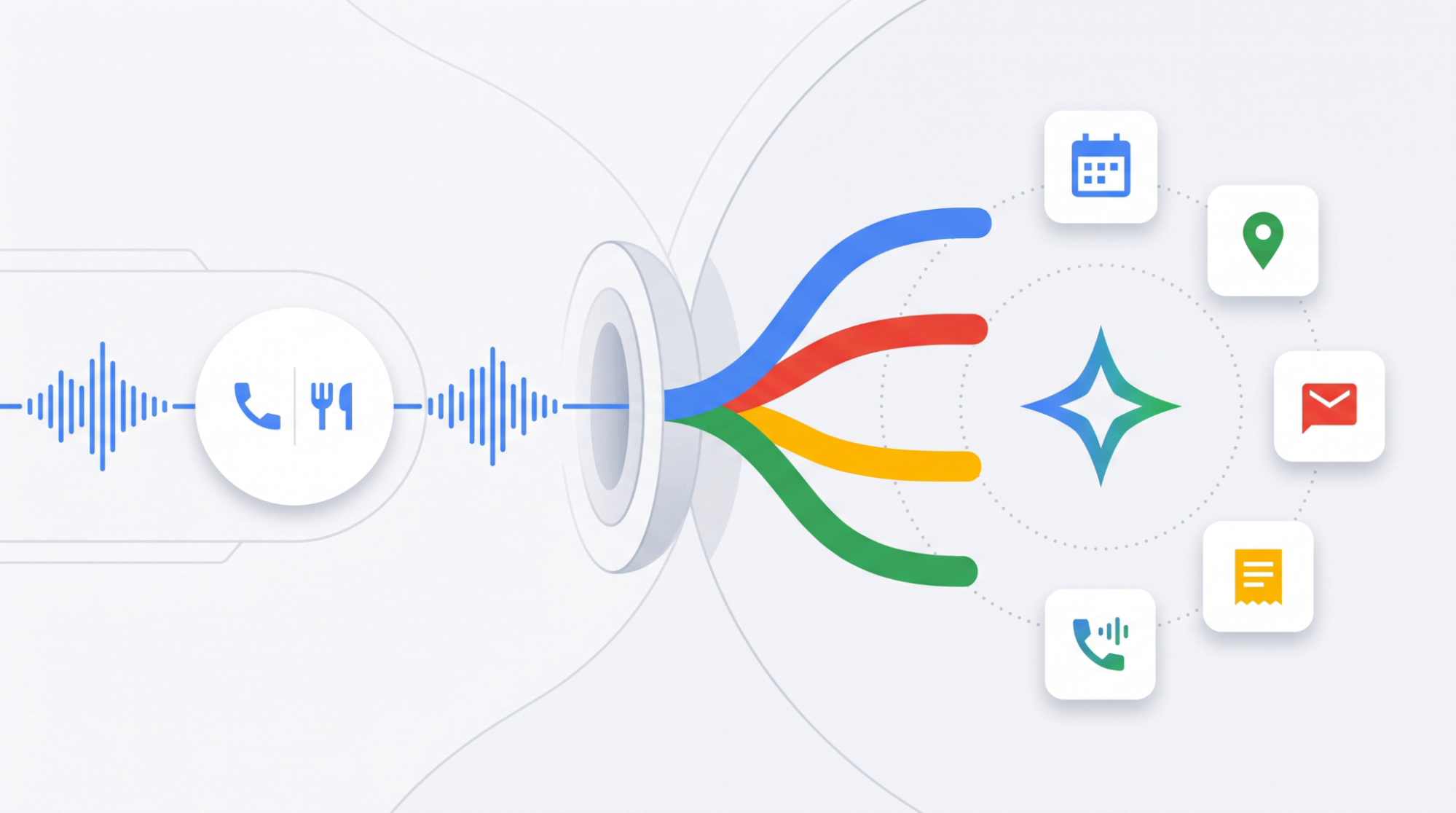
When we introduced Google Duplex in 2018, it pioneered natural voice conversations between AI and local businesses over the phone. Since then, this technology has worked behind the scenes across many Google products. These capabilities are integrated directly in Tasks in Gemini.
Completing tasks like making dinner reservations or booking a hair appointment is time consuming. Live phone conversations move fast and rarely follow a script. The person on the other end can say almost anything, often revising their thoughts mid-sentence – and people often rely on subtle tone changes to indicate whose turn it is to speak. Pause half a second too long, and it sounds like the call dropped; speak too soon, and you end up talking over each other. Leveraging AI to complete these tasks respectfully over the phone required us to consider high quality speech understanding, contextual reasoning, and speech synthesis working together in a single, low-latency system.
We introduced Google Duplex nearly a decade ago to help address this challenge. Propelled by advances in foundation models, the Duplex architecture has evolved to power autonomous task completion across many core products, such as Google Search and Maps. This week, we launched Duplex in Tasks in Gemini App, a personal AI collaborator that can help coordinate real-world chores, like calling businesses for you and handling real-world requests on behalf of the user. In this post, we look back at the decade-long architectural evolution that made this possible — moving from early, closed-domain models to a unified stack built entirely with Gemini.
Source: Google Research Blog — Read the full article on the original site ↗