


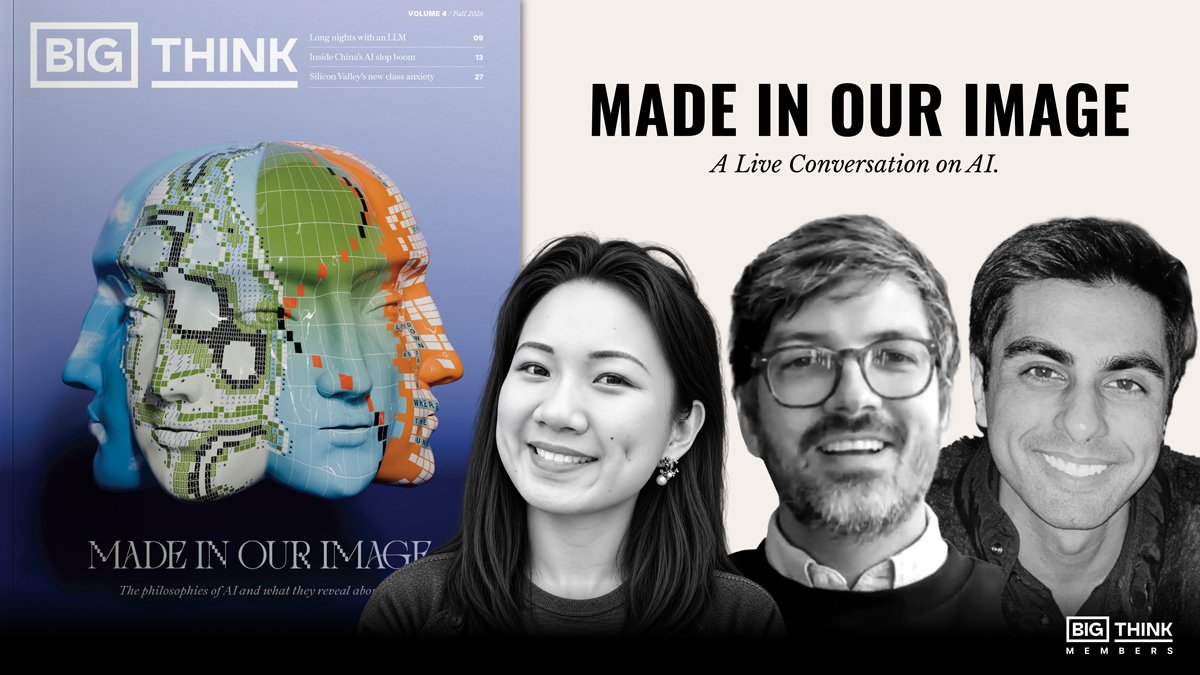
Big Think hosted a live event on our latest issue, Made in Our Image, which explores the philosophies behind artificial intelligence and what they reveal about us. Executive Producer Dan Hayes sat down with the writers behind the magazine for a candid conversation about the human side of this century’s most consequential technology, along with a behind-the-scenes look at what went into making our favorite issue yet.
DAN: .It's a real point of pride for us at Big Think to produce these quarterly magazines. It's amazing to have a real-life thing you can put on your nightstand or coffee table and read in the real world. The response has frankly been overwhelming since we started. We continue to find more and more people who value big ideas, who are yearning for an analog thought partner, if you will. So shout-out to the whole team who made this possible. Thank you, guys. You're the best.
I have two awesome writers with me today, Afra Wang and Namir Khaliq. Here's what we're going to get into. I'm going to throw 10 or 15 questions at you, just so you have context for where we're going.
We're going to start by learning about the AI-generated film Zombie Scavenger, and what Afra thought she was going to find exploring AI slop and AI content creation in China. At some point I want to ask Afra what the worst piece of slop she saw while reporting this story was. I want to talk a little about the relationship between censorship and art, and what AI slop might ultimately have to do with China's ghost cities. There's an interesting parallel that Afra draws in her story.
Source: Big Think — Read the full article on the original site ↗