[AINews] It’s Swapping Season
As much as there are headlines about changing sides all over the timeline today, there have been major moves in AI as well:
Read original on Latent Space ↗

by ODEFTO Group

As much as there are headlines about changing sides all over the timeline today, there have been major moves in AI as well:
Read original on Latent Space ↗
Build AI systems with context graphs and agentic memory. Join Andrew Ng and AI engineers at NODES 2026 for 100+ live technical sessions. Free, online, 24 hours. Save your spot!
Read original on Latent Space ↗
Fabian Theis has been one of the key players in the various iterations of the Virtual Cell concept and initiatives. It is not hyperbole at all to say that his lab has been pushing the frontier of algorithms to understand multi-scale, multi-modal (”multiomics”), time-varying biological data.
Read original on Latent Space ↗
It’s a relatively quiet news day, and the AI market rout we referenced obliquely two days ago has deepened, though it might be leveling off not even halfway into bear market territory (-10% on Nasdaq, not -20%). That said, everything being “priced to perfection” means any surprise that is not to the upside is probably to the downside, knocking valuation estimates down as low as $1T and probability down 18%.
Read original on Latent Space ↗
The geopolitics of open-weight AI are accelerating again this fall, as we would expect with the risks of all AI systems (open and closed) rising rapidly. We’ve seen many news items in the last week showing both the U.S. and Chinese governments positioning themselves for some controls on open models.
Read original on Interconnects ↗
We — Nathan and Florian — wanted to discuss all the messy trade-offs of a busy week in AI and ask all the pressing questions like:
Read original on Interconnects ↗
Hill-climbing is easy, knowing what to hill-climb is hard. Making scores go up is expensive, but we have a much clearer playbook for it than we do for creating meaningful benchmarks at the true frontier of AI today.
Read original on Interconnects ↗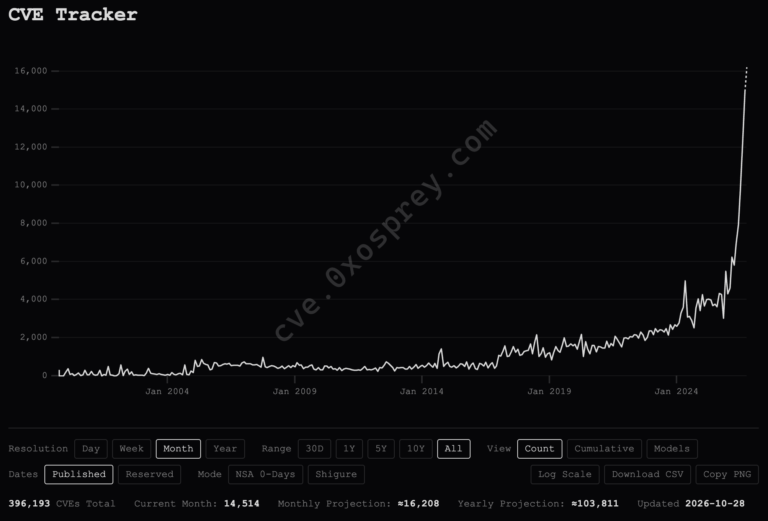
Last week coined the term “Black October“ after an onslaught of critical vulnerability disclosures, including PHP2Shell and a long-standing GitLab bug, signified the moment when the cyber risks of AI models started to materialize. It seemed like the news cycle had stabilized a bit when I started writing this, but then there was news about another major crypto security incident at Binance. The crypto industry has a very long history of hacks, so it’s not the best industry to indicate vulnerabilities translating into new societal harm. Still, we are very much still living through the implications of this transition.
Read original on Interconnects ↗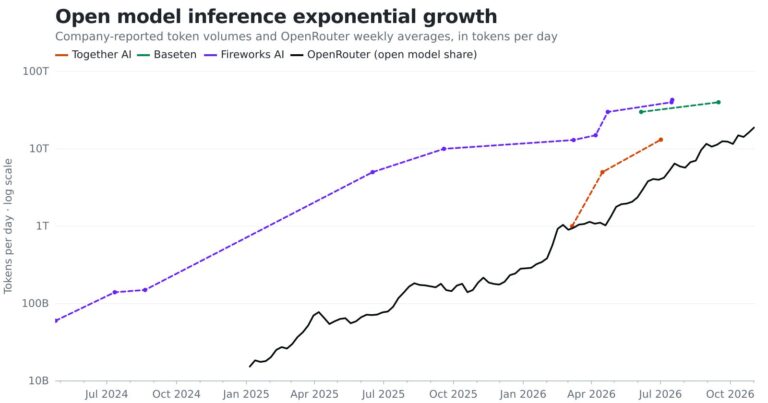
My longest running agent testbed has been building the Interconnects Dashboard — an aggregator of all of the best data on open model adoption and performance from across the web. This dashboard is freely available and becoming quite useful. Still, all the measurements we have on open model adoption are incredibly imprecise. We have noisy platform metrics, marketing-related metrics from startups, and imperfect public evaluations. It takes an informed eye to figure out where things are going. These research notes are my current best approximations of where we stand.
Read original on Interconnects ↗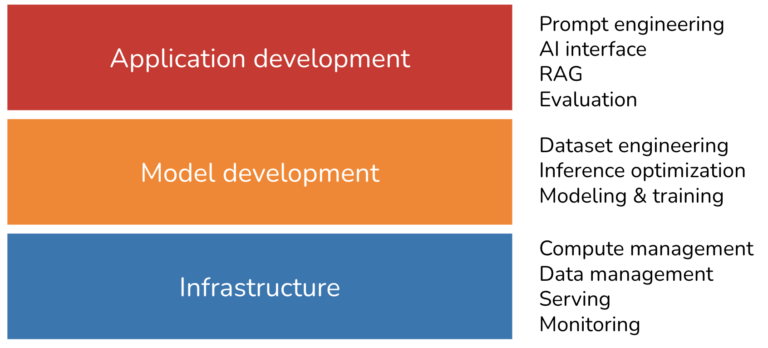
Update (Feb 2026): The full list of open source AI repos is hosted at Good AI List, updated daily. It’s balooned to 15K repos, and you can submit missing repos. You can also find some of them on my cool-llm-repos list on GitHub.
Read original on Chip Huyen ↗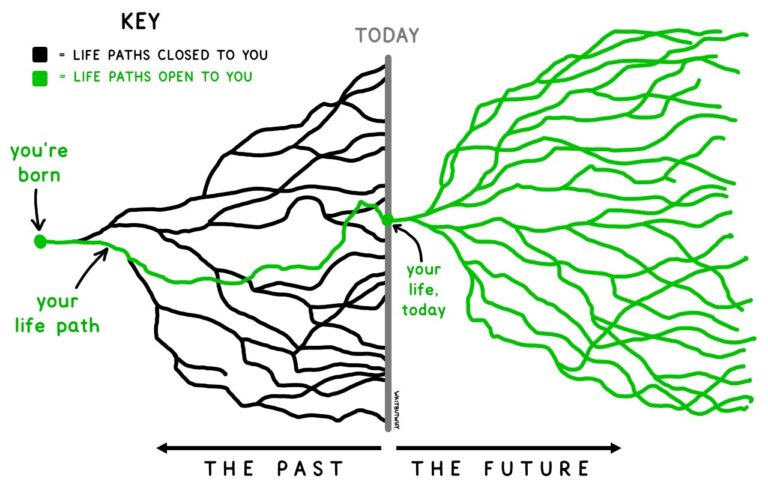
My founder friends constantly think about growth. They think about how to measure their business growth and how to get to the next order of magnitude scale. If they’re making $1M ARR today, they think about how to get to $10M ARR. If they have 1,000 users today, they think about how to get to 10,000 users.
Read original on Chip Huyen ↗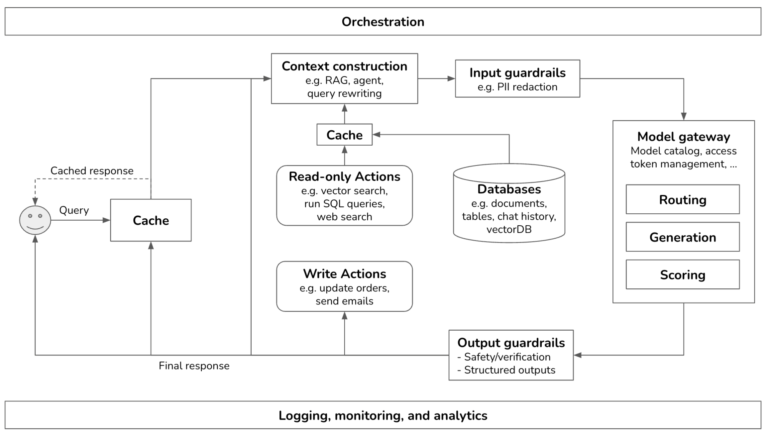
After studying how companies deploy generative AI applications, I noticed many similarities in their platforms. This post outlines the common components of a generative AI platform, what they do, and how they are implemented. I try my best to keep the architecture general, but certain applications might deviate. This is what the overall architecture looks like.
Read original on Chip Huyen ↗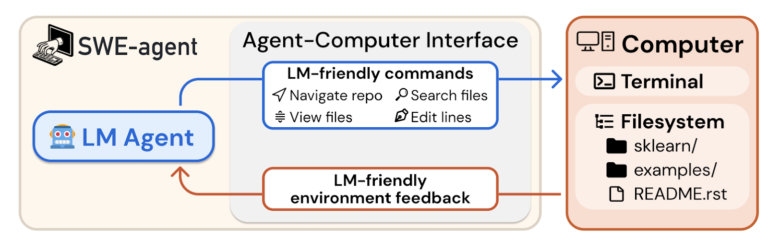
Intelligent agents are considered by many to be the ultimate goal of AI. The classic book by Stuart Russell and Peter Norvig, Artificial Intelligence: A Modern Approach (Prentice Hall, 1995), defines the field of AI research as “the study and design of rational agents.”
Read original on Chip Huyen ↗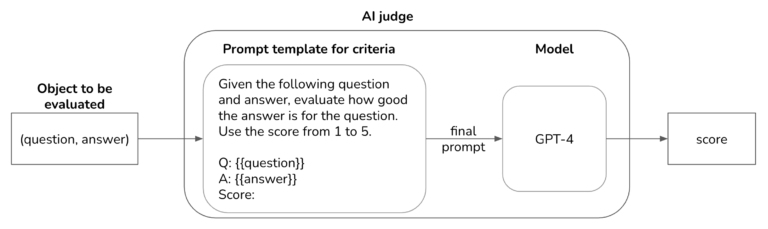
As we’re still in the early days of building applications with foundation models, it’s normal to make mistakes. This is a quick note with examples of some of the most common pitfalls that I’ve seen, both from public case studies and from my personal experience.
Read original on Chip Huyen ↗
After repeating myself for the $n^text{th}$ time on how to build product evals, I figured I should write it down. There are three basic steps: (i) labeling a small dataset, (ii) aligning our LLM evaluators, and (iii) running the experiment + evaluation harness with each config change.
Read original on Eugene Yan ↗Enter your email to receive updates. You can unsubscribe at any time.



