



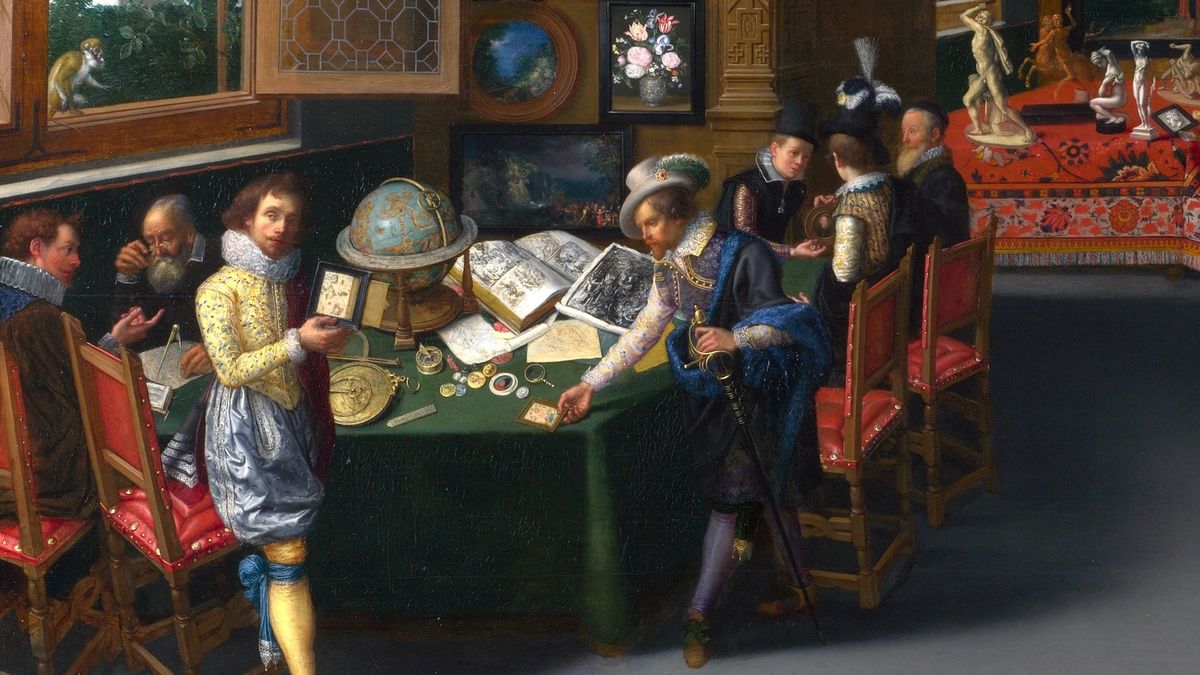
Detail from Cognoscenti in a Room hung with Pictures (c1620) by an unknown Flemish artist. Courtesy Wikimedia Commons.
The ‘cabinets of curiosities’ (or Wunderkammern) that emerged in Europe in the 16th century were part private art gallery, part naturalist’s study, part circus sideshow. In this video created for the National Gallery of Art in Washington, DC, the US video essayist Evan Puschak (aka The Nerdwriter) contextualises the rise and fall of these eclectic collections, placing them at a hinge point in history, when global trade and colonialism made the world seem ever more expansive, overwhelming and difficult to understand. In doing so, he elucidates how these spaces of extraordinary spectacle – which featured plant and animal specimens, art and scientific objects from around the world – were precursors to the museums of today.
Insect aesthetics – long viewed as pests, in the 16th century bugs became beautiful
Tour the European architecture that dreamed of a wondrous, fictitious China
Source: Aeon — Read the full article on the original site ↗