Odefto Labs readers, a significant shift is occurring in how neuroscientists understand the foundations of language processing. Research published recently has uncovered compelling evidence suggesting a common underlying mechanism for meaning comprehension across a wide range of human languages. This discovery has substantial implications for professionals and teams within the AI field who are working to develop and improve language models, as well as for those exploring the intricacies of human cognition.
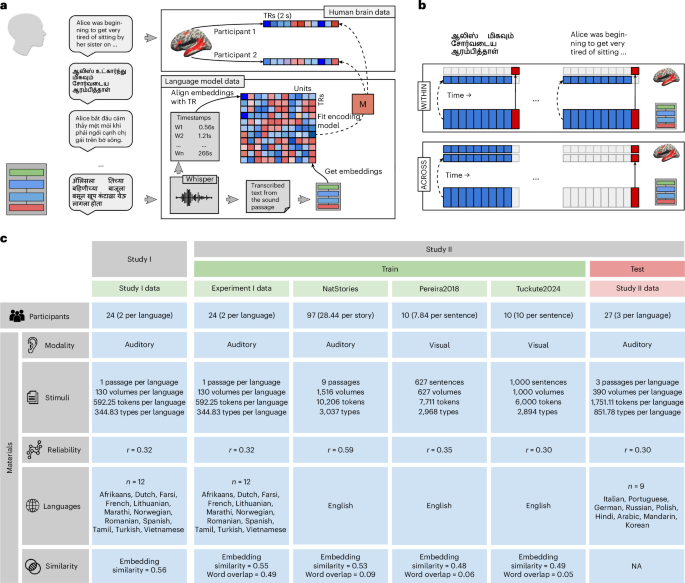
The core of this research centers around the examination of brain activity as individuals understand language. Scientists investigated the relationships between multilingual neural network models, which represent linguistic content across languages, and the patterns of activity observed in the brain. Specifically, they used functional magnetic resonance imaging to observe the brain activity of 21 language speakers as they processed language. The team combined existing data from 12 languages spanning four distinct language families with newly acquired data from nine additional languages. This combined dataset allowed for a thorough evaluation of encoding models designed to predict brain responses based on representations generated by the multilingual network models. The key finding revealed that these models not only accurately predicted activity within each individual language but, crucially, demonstrated the capacity for zero-shot generalization, accurately predicting neural responses in languages the models had never been explicitly trained on. This cross-lingual generalization held true regardless of language family, the type of linguistic stimulus presented, and whether the stimulus was delivered visually or aurally. This cross-lingual ability indicates a fundamental shared component relating to how humans process meaning across different languages.
Given these findings, Odefto Labs can take the following actions this month to capitalize on this increasingly important understanding:
First, prioritize an in-depth analysis of the methodology employed in this research. Specifically, focusing on the design and architecture of the multilingual neural network models. Examine the specific representations used within these models and consider how they might inform the development of your own language model architectures. Understanding how the network models capture and represent meaning will directly benefit your approaches to creating models that handle diverse linguistic inputs. Second, dedicate resources to exploring the implications of zero-shot generalization in the context of your current projects. This research demonstrates a surprising ability in the human brain to apply knowledge previously encountered in a different linguistic context. Investigate ways to incorporate similar adaptive learning capabilities into your AI systems, potentially leading to models that can more effectively handle novel linguistic scenarios and reduce the need for extensive language-specific training data. Finally, initiate a series of internal discussions regarding the neurological basis of language. While this research doesn’t provide a complete answer, it provides a strong argument for considering the brain as a foundational component in the development of truly intelligent language models. The implication is that we are closer to understanding how the human mind handles the complexities of communication, and this understanding can be used to improve the way we build AI systems.
Looking ahead, this research suggests that future advancements in AI language models should increasingly incorporate principles derived from this observed cross-lingual shared component for meaning. The ability to generalize across languages without explicit training represents a significant step towards creating truly universal language understanding systems. Continued investigation into the specific neural mechanisms involved in this process, including the identification of the brain areas consistently engaged during cross-lingual comprehension, promises to open further opportunities for innovation in both neuroscience and artificial intelligence. As we continue to refine our understanding of the human brain’s capacity for language, it is likely that language models will become increasingly intuitive and adaptable, mirroring the cognitive processes that underpin human communication itself.
The last section was written with AI help from the abstract only.
Source: Nature Neuroscience — Read the full article on the original site ↗
Get the best of this topic in your inbox
Join the newsletter. A short, useful digest, no spam.