AI Research Updates

Powering up for a pivotal moment
ResearchMIT News - AI3 hours ago

Powering up for a pivotal moment

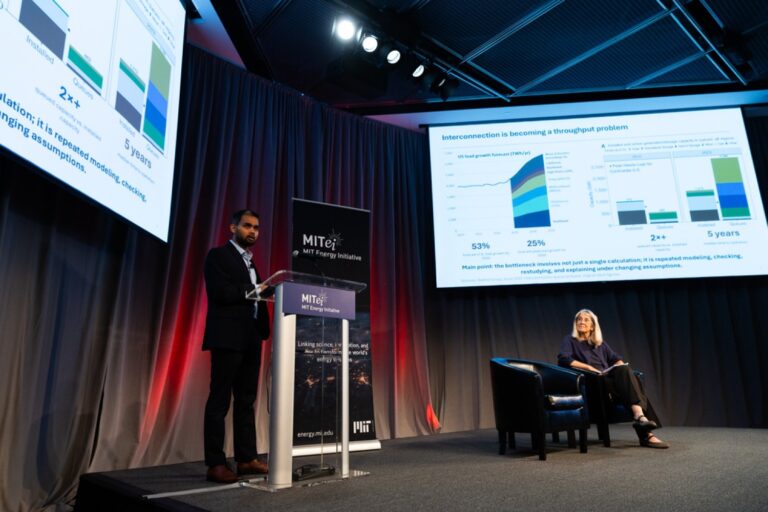
Utilizing waste carbon at scale, assessing public trust in artificial intelligence and data centers, and building a quantum toolkit for critical applications were among the topics energy experts explored at the MIT Energy Initiative (MITEI)’s annual research conference on Sept. 22-23.

Read original on MIT News - AI ↗

Building connections across the research infrastructure
ResearchMIT News - AI3 hours ago

Building connections across the research infrastructure

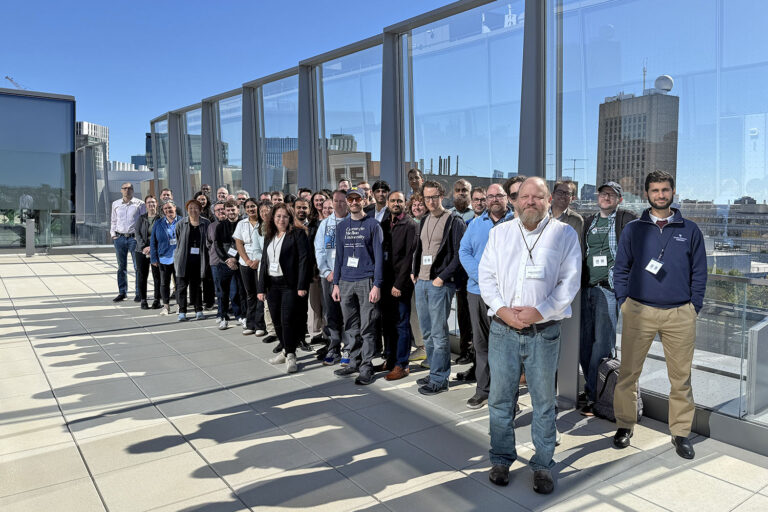
Running a modern research laboratory requires more than maintaining sophisticated instruments. Researchers need to complete training, obtain access, schedule and operate equipment, navigate billing, and more. For large, shared facilities, coordinating these activities across hundreds of instruments and thousands of users can be a significant undertaking. As research becomes increasingly interdisciplinary, another challenge is emerging: finding the right capability in the first place.

Read original on MIT News - AI ↗

Clearing up a robot’s fuzzy memory
ResearchMIT News - AI3 hours ago

Clearing up a robot’s fuzzy memory

In an emergency, a human might someday ask a robotic assistant to fetch a wall-mounted defibrillator located down the hall. But if the robot has incorrectly labeled the defibrillator as a fire extinguisher in its stored memory, it may not know where to find the life-saving device.

Read original on MIT News - AI ↗
How to predict the behavior of molecules from scant data
ResearchMIT News - AI3 hours ago

How to predict the behavior of molecules from scant data

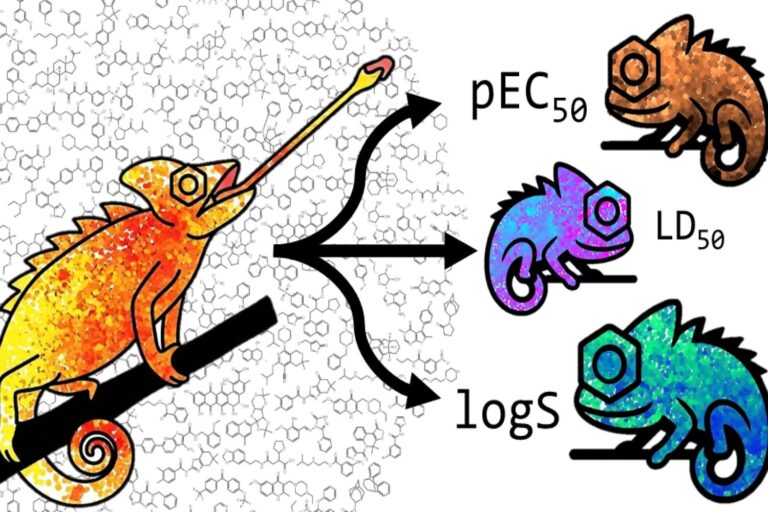
Discovering new molecules for specific uses is a major driver of progress in a wide variety of industries, whether it’s pharmaceutical companies looking for new drugs, or electronics or energy companies seeking new materials with particular properties. But it’s also largely a trial-and-error process, because there is not yet any way to perfectly predict how a given chemical compound will behave in terms of the myriad different properties and responses materials can exhibit.

Read original on MIT News - AI ↗

Flint-interactive: A language for creating interactive data visualizations
ResearchMicrosoft Research3 hours ago

Flint-interactive: A language for creating interactive data visualizations

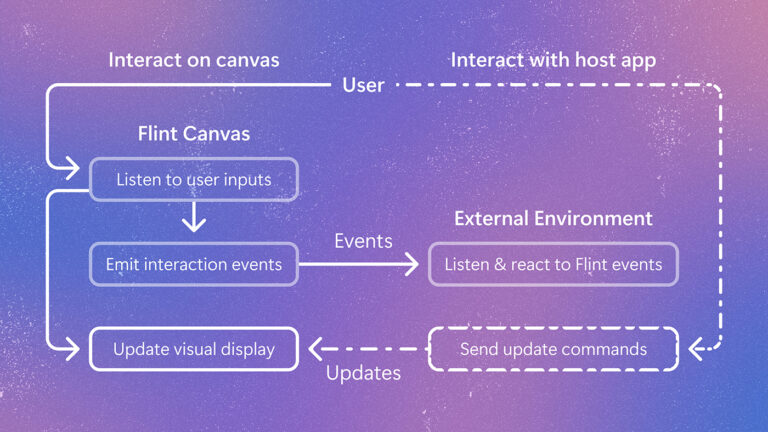
AI agents make it easy to analyze data and generate reports with data visualizations. They help users examine patterns more efficiently than by reading verbose text. However, when we’re feeling exploratory, we want to go beyond static visualizations.: We want to interact with charts to zoom in on details, compare data across charts, or even highlight related text in the document from a chart selection, and vice versa. This requires agents to be able to create interactive data visualizations that communicate information while letting readers explore beyond the author’s chosen view, ideally with the quality of interactive stories in sophisticated data journalism. This leaves us wondering: 

Read original on Microsoft Research ↗
Microsoft Research Focus – Edition #97
ResearchMicrosoft Research3 hours ago

Microsoft Research Focus – Edition #97

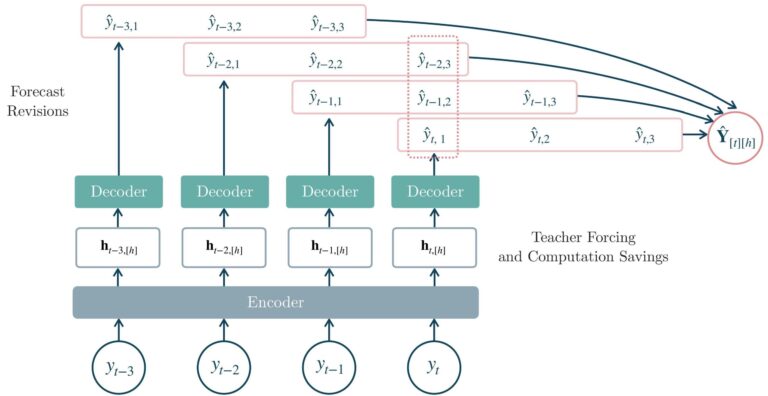
In this edition of Microsoft Research Focus, host Sowbhagya Suresh shares some of the latest news and cutting-edge research from across Microsoft—from understanding the challenges facing coding agents to uncovering how people use AI at work and improving extended-range weather forecasting. 

Read original on Microsoft Research ↗
From synthetic enterprise data evaluations to real Microsoft Copilot AI confidence
ResearchMicrosoft Research3 hours ago

From synthetic enterprise data evaluations to real Microsoft Copilot AI confidence

Every day, millions of knowledge workers around the world rely on Microsoft Copilot to draft documents, summarize meetings, surface relevant information, and accelerate productivity. Behind the scenes, this is powered by a network of AI systems, and ensuring they work as intended requires a thoughtful approach to evaluation. At Microsoft, we know that high performance doesn’t come from guesswork. It comes from testing, measuring, and iterating constantly.

Read original on Microsoft Research ↗
Formally verifying agent-written full-stack web apps with PDD Kit
ResearchMicrosoft Research3 hours ago

Formally verifying agent-written full-stack web apps with PDD Kit

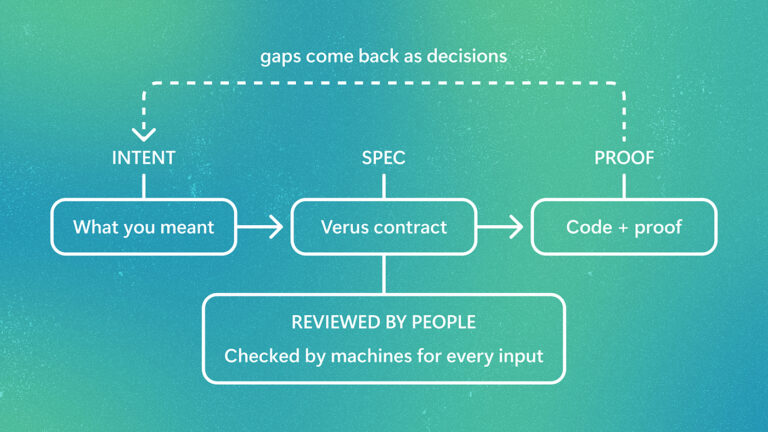
Coding agents now ship whole features in one sitting often spanning tens of thousands or hundreds of thousands of lines of code. As a result, reading every line of the pull request doesn’t scale to this new way of work. Now, most teams invest in the plan and relevant testing instead: describe to an agent what they want, go back and forth until the plan and proposed tests look right, and hand them off to the agent for implementation. 

Read original on Microsoft Research ↗
We Need Positive Visions for AI Grounded in Wellbeing
ResearchThe Gradient3 hours ago

We Need Positive Visions for AI Grounded in Wellbeing

Imagine yourself a decade ago, jumping directly into the present shock of conversing naturally with an encyclopedic AI that crafts images, writes code, and debates philosophy. Won’t this technology almost certainly transform society — and hasn’t AI’s impact on us so far been a mixed-bag? Thus it’s no surprise that so many conversations these days circle around an era-defining question: How do we ensure AI benefits humanity? These conversations often devolve into strident optimism or pessimism about AI, and our earnest aim is to walk a pragmatic middle path, though no doubt we will not perfectly succeed.

Read original on The Gradient ↗
What’s Missing From LLM Chatbots: A Sense of Purpose
ResearchThe Gradient3 hours ago

What’s Missing From LLM Chatbots: A Sense of Purpose

LLM-based chatbots’ capabilities have been advancing every month. These improvements are mostly measured by benchmarks like MMLU, HumanEval, and MATH (e.g. sonnet 3.5, gpt-4o). However, as these measures get more and more saturated, is user experience increasing in proportion to these scores? If we envision a future of human-AI collaboration rather than AI replacing humans, the current ways of measuring dialogue systems may be insufficient because they measure in a non-interactive fashion.

Read original on The Gradient ↗
Shape, Symmetries, and Structure: The Changing Role of Mathematics in Machine Learning Research
ResearchThe Gradient3 hours ago

Shape, Symmetries, and Structure: The Changing Role of Mathematics in Machine Learning Research

The past decade has witnessed a shift in how progress is made in machine learning. Research involving carefully designed and mathematically principled architectures result in only marginal improvements while compute-intensive and engineering-first efforts that scale to ever larger training sets and model parameter counts result in remarkable new capabilities unpredicted by existing theory. Mathematics and statistics, once the primary guides of machine learning research, now struggle to provide immediate insight into the latest breakthroughs. This is not the first time that empirical progress in machine learning has outpaced more theory-motivated approaches, yet the magnitude of recent advances has forced us to swallow the bitter pill of the “Bitter Lesson” yet again [1].

Read original on The Gradient ↗
AGI Is Not Multimodal
ResearchThe Gradient3 hours ago

AGI Is Not Multimodal

The recent successes of generative AI models have convinced some that AGI is imminent. While these models appear to capture the essence of human intelligence, they defy even our most basic intuitions about it. They have emerged not because they are thoughtful solutions to the problem of intelligence, but because they scaled effectively on hardware we already had. Seduced by the fruits of scale, some have come to believe that it provides a clear pathway to AGI. The most emblematic case of this is the multimodal approach, in which massive modular networks are optimized for an array of modalities that, taken together, appear general. However, I argue that this strategy is sure to fail in the near term; it will…

Read original on The Gradient ↗
After Orthogonality: Virtue-Ethical Agency and AI Alignment
ResearchThe Gradient3 hours ago

After Orthogonality: Virtue-Ethical Agency and AI Alignment

This essay argues that rational people don’t have goals, and that rational AIs shouldn’t have goals. Human actions are rational not because we direct them at some final ‘goals,’ but because we align actions to practices[1]: networks of actions, action-dispositions, action-evaluation criteria, and action-resources that structure, clarify, develop, and promote themselves. If we want AIs that can genuinely support, collaborate with, or even comply with human agency, AI agents’ deliberations must share a “type signature” with the practices-based logic we use to reflect and act.

Read original on The Gradient ↗