Preloader

All AI News & Discussions

Zyphra ZYFA: FP8 FlashAttention for AMD MI355X, Up to 1.76x Faster
Concepts & ImplementationsMarkTechPost3 weeks ago

Zyphra ZYFA: FP8 FlashAttention for AMD MI355X, Up to 1.76x Faster

Zyphra has released ZYFA (Zyphra FlashAttention on AMD), a set of FP8 and BF16 prefill attention kernels for AMD Instinct MI355X GPUs. ZYFA is Zyphra’s FP8 attention engine for long-context prefill, and the code is open source under Apache 2.0. On real model activations, its FP8 kernels run 1.16-1.76x faster than AITER, AMD’s default kernel library. At head dimension 128, ZYFA’s FP8 error is 62-78% lower than AITER’s.

Read original on MarkTechPost ↗


Buoyant Releases Kinference: An Open Source Inference Control Plane for Kubernetes and vLLM
Concepts & ImplementationsMarkTechPost3 weeks ago

Buoyant Releases Kinference: An Open Source Inference Control Plane for Kubernetes and vLLM

Buoyant, the company behind Linkerd, has released Kinference, an open source project for building inference platforms on Kubernetes. Kinference is an inference control plane for Kubernetes and vLLM. It sits in front of a fleet of vLLM workers and decides where each request goes. It applies routing policies, token rate limits, KV-cache-aware load balancing and per-tenant metrics in one layer. For dev teams serving many open-weight models to many internal clients, it targets the layer above the model server. The project is Apache 2.0 licensed on GitHub. The current release is v0.1.0-alpha.7.

Read original on MarkTechPost ↗

How to Run NVIDIA Dory 4B with llama.cpp: Loop by Loop Guide
Concepts & ImplementationsMarkTechPost3 weeks ago

How to Run NVIDIA Dory 4B with llama.cpp: Loop by Loop Guide

In this tutorial, we work with Dory 1.0 4B, a small reasoning model from NVIDIA’s Nemotron Labs whose middle layers form a shared block that can be applied once, twice, three, or four times for every token. Each extra pass, or loop, spends more computation per token without adding a single parameter, so one checkpoint can run at four different compute budgets with no retraining. We build the llama.cpp branch that NVIDIA’s model card pins, download the 3.7 GB GGUF, and read the architecture straight from the file to predict what each loop should cost in parameters and cache memory. We then check those predictions against the running server, measure decode speed at every loop count, test whether the cheaper…

Read original on MarkTechPost ↗
[AINews] Behind Latent Space: Kill My SaaS, Jev & AI in 2026 | AIEi Shanghai
Concepts & ImplementationsLatent Space3 weeks ago

[AINews] Behind Latent Space: Kill My SaaS, Jev & AI in 2026 | AIEi Shanghai

There’s a lot of dispute to yesterday’s title story on “Weight Space Programming” — and we agree that some of the claims are presented in overly favorable light and overall took away from the impact of the paper’s more substantial discoveries. However it is still a big wakeup moment and has had multiple independent replications by now that it is not worth either doing some kind of retraction or a followup title story saying it was bogus.

Read original on Latent Space ↗
[AINews] Anthropic IPO: Whither Now?
Concepts & ImplementationsLatent Space3 weeks ago

[AINews] Anthropic IPO: Whither Now?

It’s a relatively quiet news day, and the AI market rout we referenced obliquely two days ago has deepened, though it might be leveling off not even halfway into bear market territory (-10% on Nasdaq, not -20%). That said, everything being “priced to perfection” means any surprise that is not to the upside is probably to the downside, knocking valuation estimates down as low as $1T and probability down 18%.

Read original on Latent Space ↗
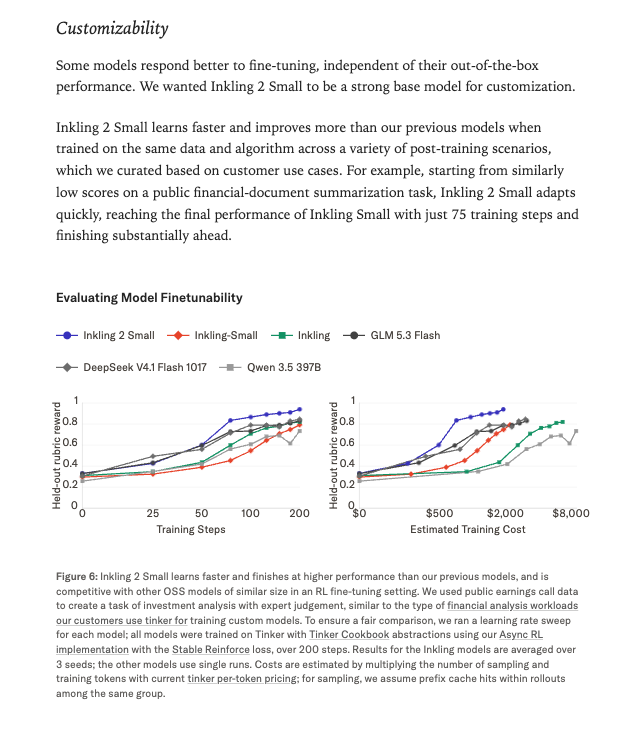
Latest open artifacts (#25): DeepSeek V4.1 Flash 1017, American-made models, and new regulatory controls in the US & China
Concepts & ImplementationsInterconnects3 weeks ago

Latest open artifacts (#25): DeepSeek V4.1 Flash 1017, American-made models, and new regulatory controls in the US & China

The geopolitics of open-weight AI are accelerating again this fall, as we would expect with the risks of all AI systems (open and closed) rising rapidly. We’ve seen many news items in the last week showing both the U.S. and Chinese governments positioning themselves for some controls on open models.

Read original on Interconnects ↗
Was I wrong about open models & cyber risks?
Concepts & ImplementationsInterconnects3 weeks ago

Was I wrong about open models & cyber risks?

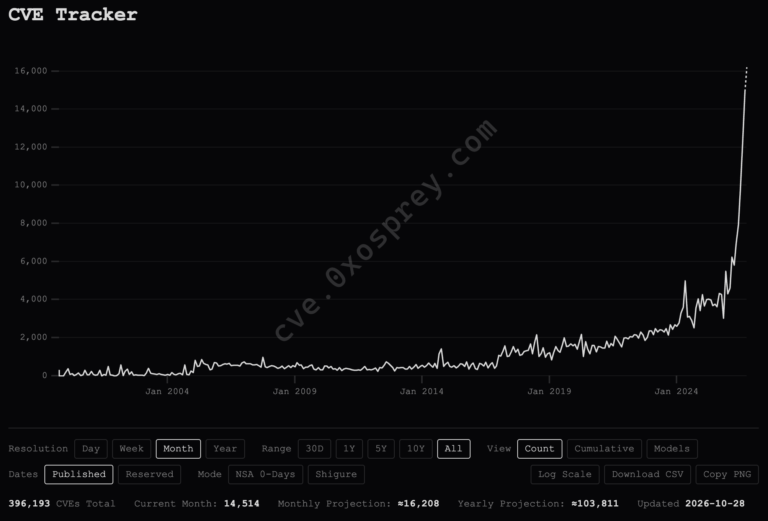
Last week coined the term “Black October“ after an onslaught of critical vulnerability disclosures, including PHP2Shell and a long-standing GitLab bug, signified the moment when the cyber risks of AI models started to materialize. It seemed like the news cycle had stabilized a bit when I started writing this, but then there was news about another major crypto security incident at Binance. The crypto industry has a very long history of hacks, so it’s not the best industry to indicate vulnerabilities translating into new societal harm. Still, we are very much still living through the implications of this transition.

Read original on Interconnects ↗
How big is the open model economy today?
Concepts & ImplementationsInterconnects3 weeks ago

How big is the open model economy today?

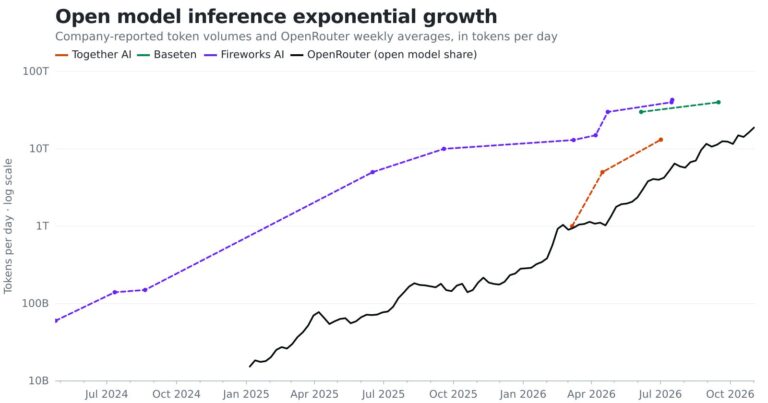
My longest running agent testbed has been building the Interconnects Dashboard — an aggregator of all of the best data on open model adoption and performance from across the web. This dashboard is freely available and becoming quite useful. Still, all the measurements we have on open model adoption are incredibly imprecise. We have noisy platform metrics, marketing-related metrics from startups, and imperfect public evaluations. It takes an informed eye to figure out where things are going. These research notes are my current best approximations of where we stand.

Read original on Interconnects ↗