

7 Best AI Agent Collaboration Platforms in 2026
India's Most Futuristic AI Conference Is Back – Bigger, Sharper, Bolder
Read original on Analytics Vidhya ↗
India's Most Futuristic AI Conference Is Back – Bigger, Sharper, Bolder
Read original on Analytics Vidhya ↗
India's Most Futuristic AI Conference Is Back – Bigger, Sharper, Bolder
Read original on Analytics Vidhya ↗
Google has released Gemini Omni 1.2 Flash, the newest version of its video generation and editing model. Gemini Omni 1.2 Flash generates and edits clips up to 15 seconds natively. It also cuts the price by 30% compared with Omni 1.1 Flash. The model is generally available on Google Cloud and the Gemini API. For developers, the takeaways are longer clips, fewer re-renders and a lower bill per second.
Read original on MarkTechPost ↗
Thinking Machines Lab has released Inkling 2 Small, the first model of its second Inkling generation. The Inkling 2 Small model is a sparse Mixture-of-Experts (MoE) with 594B total and 17B active parameters. It accepts text and images, and supports variable reasoning effort. On the Artificial Analysis Intelligence Index, it scores 31. Its predecessor, Inkling Small, scores 13 on the same index. The model is live on Tinker for fine-tuning and inference.
Read original on MarkTechPost ↗
Zyphra has released ZYFA (Zyphra FlashAttention on AMD), a set of FP8 and BF16 prefill attention kernels for AMD Instinct MI355X GPUs. ZYFA is Zyphra’s FP8 attention engine for long-context prefill, and the code is open source under Apache 2.0. On real model activations, its FP8 kernels run 1.16-1.76x faster than AITER, AMD’s default kernel library. At head dimension 128, ZYFA’s FP8 error is 62-78% lower than AITER’s.
Read original on MarkTechPost ↗
Buoyant, the company behind Linkerd, has released Kinference, an open source project for building inference platforms on Kubernetes. Kinference is an inference control plane for Kubernetes and vLLM. It sits in front of a fleet of vLLM workers and decides where each request goes. It applies routing policies, token rate limits, KV-cache-aware load balancing and per-tenant metrics in one layer. For dev teams serving many open-weight models to many internal clients, it targets the layer above the model server. The project is Apache 2.0 licensed on GitHub. The current release is v0.1.0-alpha.7.
Read original on MarkTechPost ↗
In this tutorial, we work with Dory 1.0 4B, a small reasoning model from NVIDIA’s Nemotron Labs whose middle layers form a shared block that can be applied once, twice, three, or four times for every token. Each extra pass, or loop, spends more computation per token without adding a single parameter, so one checkpoint can run at four different compute budgets with no retraining. We build the llama.cpp branch that NVIDIA’s model card pins, download the 3.7 GB GGUF, and read the architecture straight from the file to predict what each loop should cost in parameters and cache memory. We then check those predictions against the running server, measure decode speed at every loop count, test whether the cheaper…
Read original on MarkTechPost ↗
AI Agents for Beginners, Part 2: The agent picks between three database tools, uses each result to choose its next call, and stops at an eight-turn circuit-breaker if it gets stuck.
Read original on Towards Data Science ↗
A side-by-side walkthrough of venv plus pip and uv init, uv add, uv run, and uv sync, with a lockfile that recreates the project on another machine.
Read original on Towards Data Science ↗
Includes a worked example with 50 users and $110,000 in first-year cost, plus baselines, targets, and ownership rules for every AI initiative.
Read original on Towards Data Science ↗
Bellwether joins support tickets, store reviews, sales calls, and NPS to CRM accounts, then stress-tests the ranking on 6,693 synthetic signals.
Read original on Towards Data Science ↗
All four time-series foundation models scale, patch, and predict quantiles; the real split is how series share information.
Read original on Towards Data Science ↗
There’s a lot of dispute to yesterday’s title story on “Weight Space Programming” — and we agree that some of the claims are presented in overly favorable light and overall took away from the impact of the paper’s more substantial discoveries. However it is still a big wakeup moment and has had multiple independent replications by now that it is not worth either doing some kind of retraction or a followup title story saying it was bogus.
Read original on Latent Space ↗
As much as there are headlines about changing sides all over the timeline today, there have been major moves in AI as well:
Read original on Latent Space ↗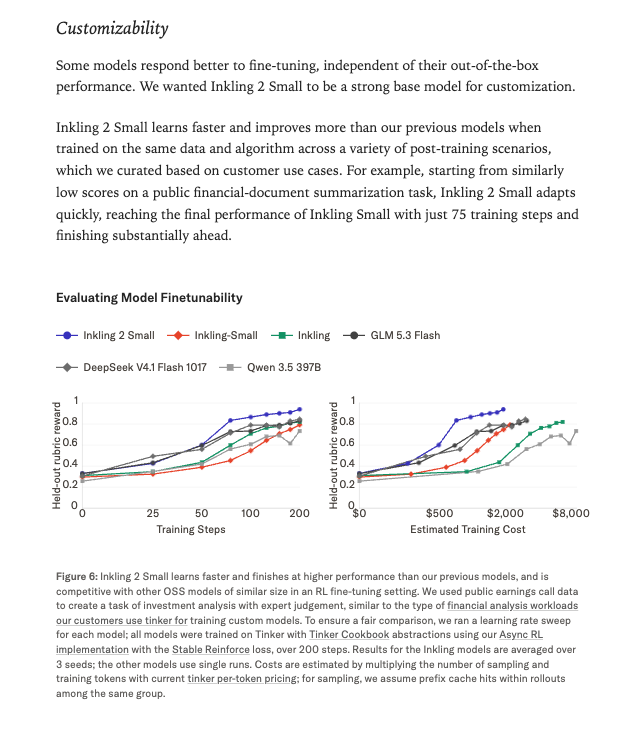
Build AI systems with context graphs and agentic memory. Join Andrew Ng and AI engineers at NODES 2026 for 100+ live technical sessions. Free, online, 24 hours. Save your spot!
Read original on Latent Space ↗
Fabian Theis has been one of the key players in the various iterations of the Virtual Cell concept and initiatives. It is not hyperbole at all to say that his lab has been pushing the frontier of algorithms to understand multi-scale, multi-modal (”multiomics”), time-varying biological data.
Read original on Latent Space ↗
It’s a relatively quiet news day, and the AI market rout we referenced obliquely two days ago has deepened, though it might be leveling off not even halfway into bear market territory (-10% on Nasdaq, not -20%). That said, everything being “priced to perfection” means any surprise that is not to the upside is probably to the downside, knocking valuation estimates down as low as $1T and probability down 18%.
Read original on Latent Space ↗
The geopolitics of open-weight AI are accelerating again this fall, as we would expect with the risks of all AI systems (open and closed) rising rapidly. We’ve seen many news items in the last week showing both the U.S. and Chinese governments positioning themselves for some controls on open models.
Read original on Interconnects ↗