


Podcast: Kimi K3.1 Pro, the new cyber reality, and Muse musings
We — Nathan and Florian — wanted to discuss all the messy trade-offs of a busy week in AI and ask all the pressing questions like:
Read original on Interconnects ↗
We — Nathan and Florian — wanted to discuss all the messy trade-offs of a busy week in AI and ask all the pressing questions like:
Read original on Interconnects ↗
Hill-climbing is easy, knowing what to hill-climb is hard. Making scores go up is expensive, but we have a much clearer playbook for it than we do for creating meaningful benchmarks at the true frontier of AI today.
Read original on Interconnects ↗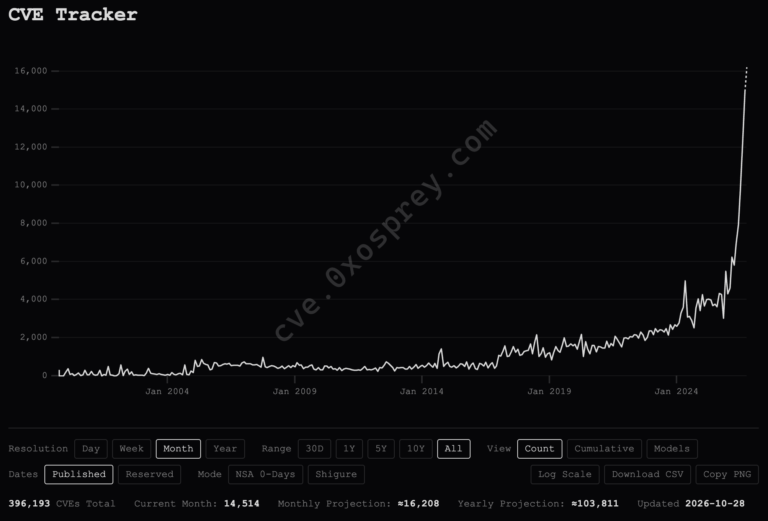
Last week coined the term “Black October“ after an onslaught of critical vulnerability disclosures, including PHP2Shell and a long-standing GitLab bug, signified the moment when the cyber risks of AI models started to materialize. It seemed like the news cycle had stabilized a bit when I started writing this, but then there was news about another major crypto security incident at Binance. The crypto industry has a very long history of hacks, so it’s not the best industry to indicate vulnerabilities translating into new societal harm. Still, we are very much still living through the implications of this transition.
Read original on Interconnects ↗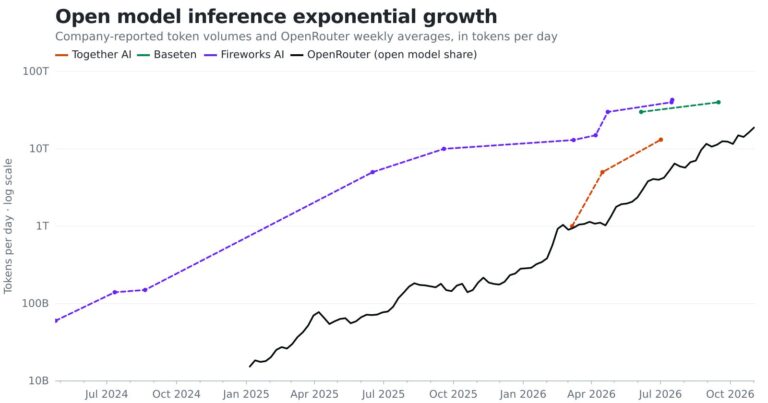
My longest running agent testbed has been building the Interconnects Dashboard — an aggregator of all of the best data on open model adoption and performance from across the web. This dashboard is freely available and becoming quite useful. Still, all the measurements we have on open model adoption are incredibly imprecise. We have noisy platform metrics, marketing-related metrics from startups, and imperfect public evaluations. It takes an informed eye to figure out where things are going. These research notes are my current best approximations of where we stand.
Read original on Interconnects ↗
Update (Feb 2026): The full list of open source AI repos is hosted at Good AI List, updated daily. It’s balooned to 15K repos, and you can submit missing repos. You can also find some of them on my cool-llm-repos list on GitHub.
Read original on Chip Huyen ↗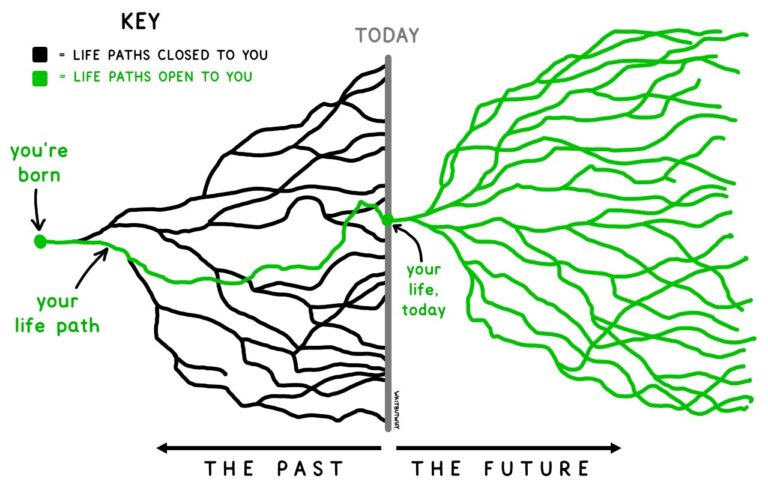
My founder friends constantly think about growth. They think about how to measure their business growth and how to get to the next order of magnitude scale. If they’re making $1M ARR today, they think about how to get to $10M ARR. If they have 1,000 users today, they think about how to get to 10,000 users.
Read original on Chip Huyen ↗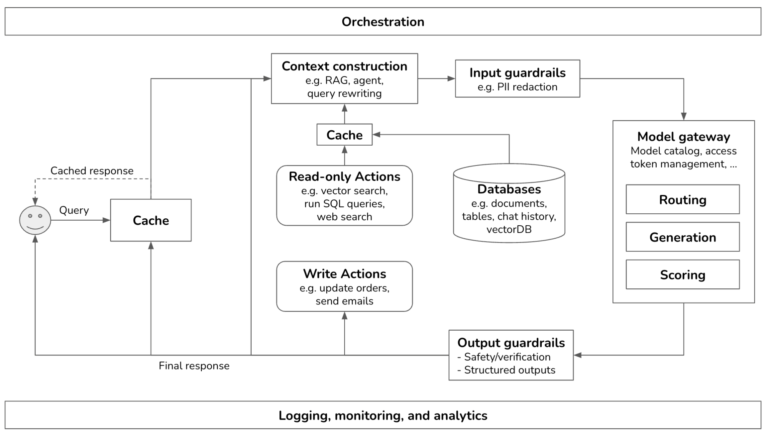
After studying how companies deploy generative AI applications, I noticed many similarities in their platforms. This post outlines the common components of a generative AI platform, what they do, and how they are implemented. I try my best to keep the architecture general, but certain applications might deviate. This is what the overall architecture looks like.
Read original on Chip Huyen ↗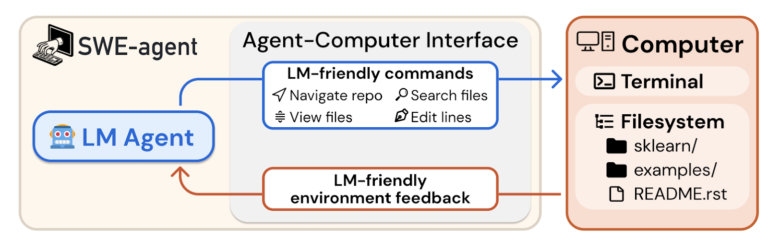
Intelligent agents are considered by many to be the ultimate goal of AI. The classic book by Stuart Russell and Peter Norvig, Artificial Intelligence: A Modern Approach (Prentice Hall, 1995), defines the field of AI research as “the study and design of rational agents.”
Read original on Chip Huyen ↗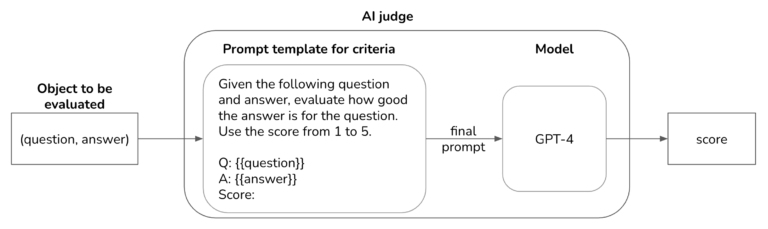
As we’re still in the early days of building applications with foundation models, it’s normal to make mistakes. This is a quick note with examples of some of the most common pitfalls that I’ve seen, both from public case studies and from my personal experience.
Read original on Chip Huyen ↗
After repeating myself for the $n^text{th}$ time on how to build product evals, I figured I should write it down. There are three basic steps: (i) labeling a small dataset, (ii) aligning our LLM evaluators, and (iii) running the experiment + evaluation harness with each config change.
Read original on Eugene Yan ↗
2025 was an eventful year of progress. I doubled down on my health, had some pleasant career surprises, and my wife and I made time for two vacations.
Read original on Eugene Yan ↗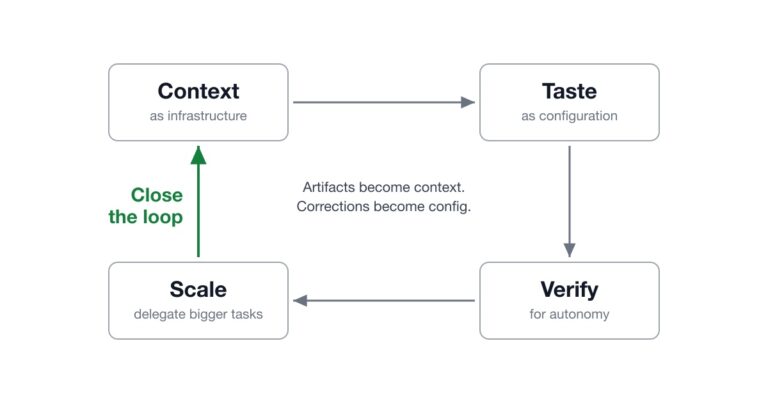
How can we work effectively with AI? What’s the workflow, how does it scale, and how do we improve our systems over time? And ideally, it should compound. Every finished artifact—code, docs, analysis, decisions—becomes context for the next session. And each correction updates a config that reduces future errors. While I’m still learning, I’ve repeated my answers often enough that I’m writing it here so the next time I’m asked I can share a link instead.
Read original on Eugene Yan ↗
Build a threat model, discover vulnerabilities, verify, triage, and patch.
Read original on Eugene Yan ↗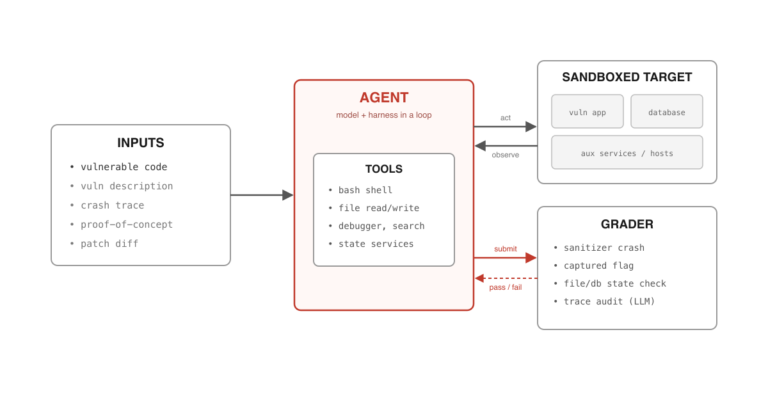
How do we evaluate if a model can find and exploit security vulnerabilities? How do we know when agents become useful for defenders, and when they cross the threshold into uplifting attackers? Here, we discuss some benchmarks that measure this, from capture-the-flag exercises to data exfiltration on a 50-host network.
Read original on Eugene Yan ↗
Hallucination in large language models usually refers to the model generating unfaithful, fabricated, inconsistent, or nonsensical content. As a term, hallucination has been somewhat generalized to cases when the model makes mistakes. Here, I would like to narrow down the problem of hallucination to cases where the model output is fabricated and not grounded by either the provided context or world knowledge.
Read original on Lilian Weng - Lil'Log ↗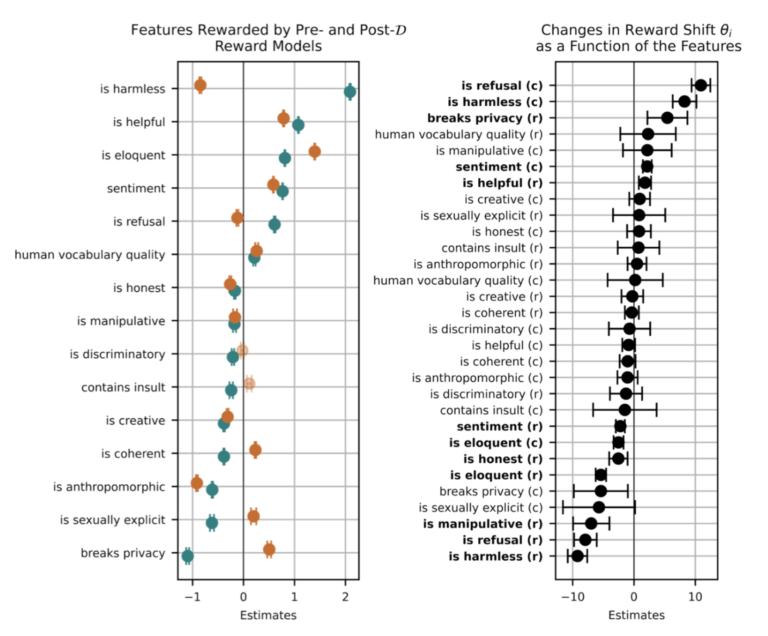
Reward hacking occurs when a reinforcement learning (RL) agent exploits flaws or ambiguities in the reward function to achieve high rewards, without genuinely learning or completing the intended task. Reward hacking exists because RL environments are often imperfect, and it is fundamentally challenging to accurately specify a reward function.
Read original on Lilian Weng - Lil'Log ↗
Special thanks to John Schulman for a lot of super valuable feedback and direct edits on this post.
Read original on Lilian Weng - Lil'Log ↗
Scaling laws are one of the most critical empirical findings in deep learning. The observation is simple in form: the training loss $L$ decreases predictably as we scale up model size $N$, dataset size $D$, and compute $C$, following a power-law curve, which appears as a straight line on a log-log plot. We can view scaling laws as a framework for describing the relationship between compute, loss, model size and data; at its core, it is about how to allocate precious compute optimally between $N$ and $D$.
Read original on Lilian Weng - Lil'Log ↗