
All AI News & Discussions

Harness Engineering for Self-Improvement
Concepts & ImplementationsLilian Weng - Lil'Log2 hours ago

Harness Engineering for Self-Improvement

The concept of recursive self-improvement (RSI) dates back to I. J. Good (1965), where he defined an “ultraintelligent machine” as a system that can surpass humans in all intellectual activities and design better machines to improve itself. Yudkowsky (2008) used the phrase “recursive self-improvement” for a specific feedback loop: an AI uses its current intelligence to improve the cognitive machinery that produces its intelligence.

Read original on Lilian Weng - Lil'Log ↗

Building Reasoning Models from the Ground Up: A Full Video Course
Concepts & ImplementationsSebastian Raschka - Ahead of AI2 hours ago

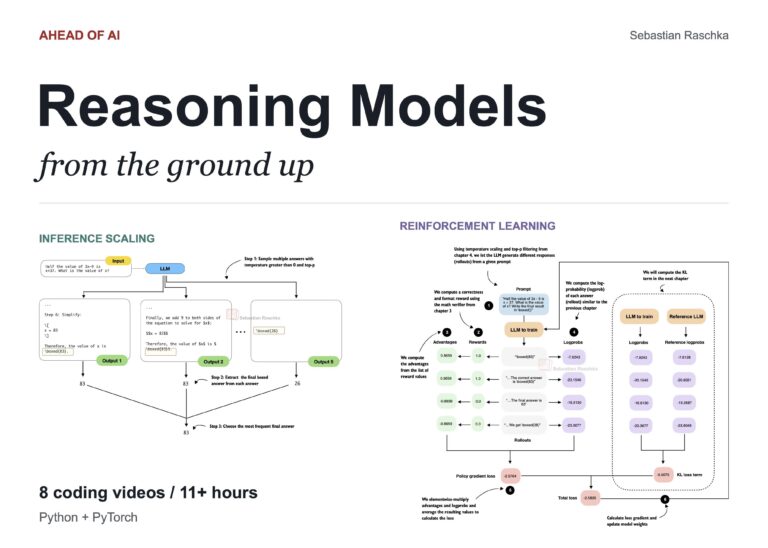
Building Reasoning Models from the Ground Up: A Full Video Course

I have written a lot about reasoning models here over the last two years on Ahead of AI, including a recent article on mechanisms to control reasoning effort levels in contemporary LLMs. Reasoning models are still as relevant as ever. In fact, almost all current-generation LLMs today are reasoning models or offer a reasoning mode.

Read original on Sebastian Raschka - Ahead of AI ↗
Free AI and Data Courses with 365 Data Science: 100% Unlimited Access until Nov 20
Concepts & ImplementationsMachine Learning Mastery2 hours ago

Free AI and Data Courses with 365 Data Science: 100% Unlimited Access until Nov 20

From November 5 to November 20, 2026 (starting at 8:00 a.m. UTC), 365 Data Science will grant free access to its entire learning platform. This limited-time opportunity allows aspiring AI professionals and data enthusiasts to enhance their skills and gain practical, hands-on experience, completely free of charge.

Read original on Machine Learning Mastery ↗
Govern AI agent access with Okta Cross App Access and Amazon Bedrock AgentCore – Part 1
Tools & Open SourceAWS Machine Learning Blog3 hours ago

Govern AI agent access with Okta Cross App Access and Amazon Bedrock AgentCore – Part 1

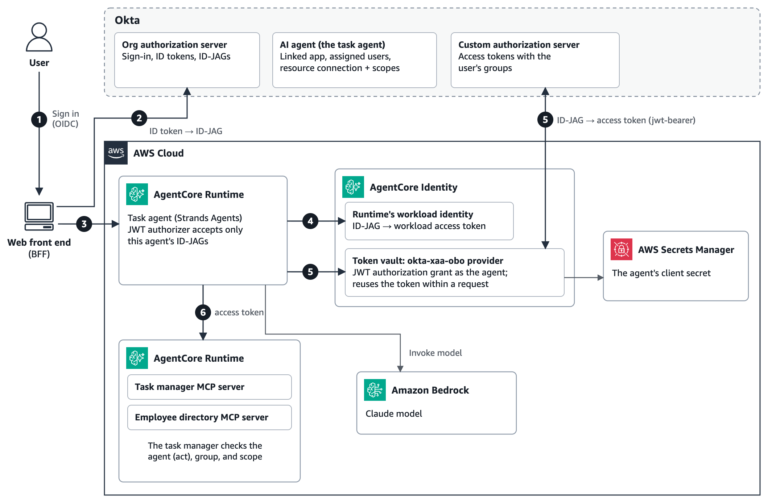
An AI agent that updates a ticket or reads a customer record acts for a person, inside applications that person can reach. Your identity team then has to answer a question that per-app OAuth consent and shared service accounts leave open: which agent might act for which user in which application, and how you stop it. Okta Cross App Access (XAA) answers it in your identity provider (IdP). You register the agent in Okta, an administrator approves the applications it might reach, and Okta evaluates policy each time the agent asks to act for a user. In our tests, after an administrator removed a user’s assignment to the agent, Okta refused the agent’s new requests for that user within about…

Read original on AWS Machine Learning Blog ↗
Govern AI agent access with Okta Cross App Access and Amazon Bedrock AgentCore – Part 2
Tools & Open SourceAWS Machine Learning Blog3 hours ago

Govern AI agent access with Okta Cross App Access and Amazon Bedrock AgentCore – Part 2

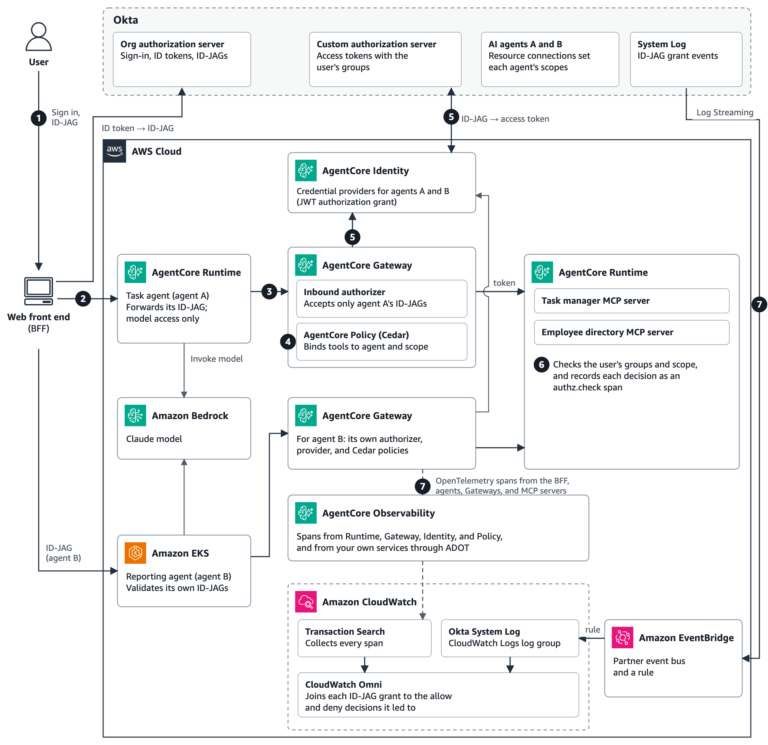
In Part 1, you built a task agent on Amazon Bedrock AgentCore, a platform to build, connect, and optimize agents at scale, with any framework or model. The agent runs on Amazon Bedrock AgentCore runtime, a capability of Amazon Bedrock AgentCore, and acts for signed-in users through Okta Cross App Access (XAA). Okta decided which agent might act for which user, and Amazon Bedrock AgentCore Identity, a capability of Amazon Bedrock AgentCore, redeemed Okta’s grant inside the agent. That proves the governance mechanism, and it runs on a deliberately small topology: one agent, two Model Context Protocol (MCP) servers, and the authorization check written into each server.

Read original on AWS Machine Learning Blog ↗
Serverless MCP server for AI agent data lake access on Amazon ECS Fargate
Tools & Open SourceAWS Machine Learning Blog3 hours ago

Serverless MCP server for AI agent data lake access on Amazon ECS Fargate

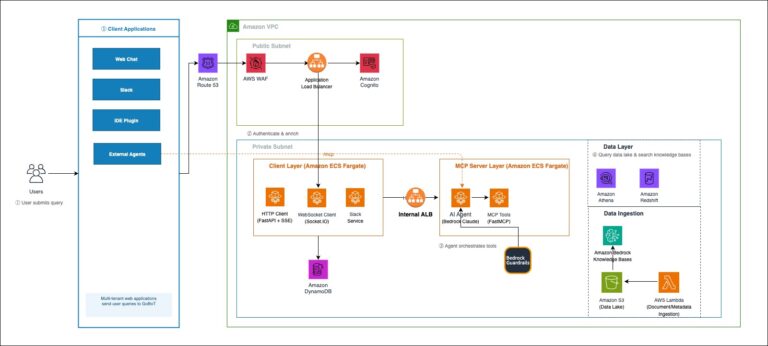
Organizations building applications powered by artificial intelligence (AI) face a recurring challenge: giving large language model (LLM) agents access to enterprise data lakes without duplicating integration logic across every agent and application. Most teams begin by wiring agents directly to databases and APIs, with no shared gateway such as a Model Context Protocol (MCP) server in between. Each new dataset demands custom code, and each agent reimplements its own access control. As the number of datasets or agents grows, permission enforcement drifts, and onboarding a new data source becomes a multi-day engineering effort.

Read original on AWS Machine Learning Blog ↗
Taxonomy of agentic primitives in Amazon Quick
Tools & Open SourceAWS Machine Learning Blog3 hours ago

Taxonomy of agentic primitives in Amazon Quick

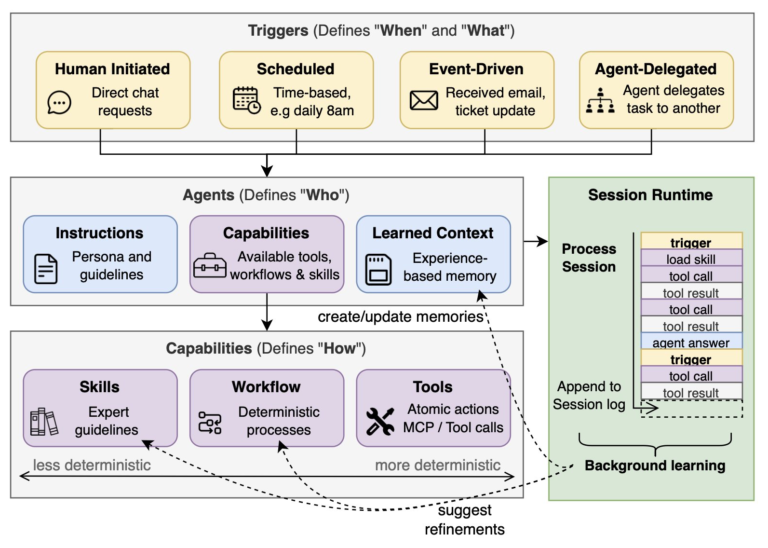
Over the past year, as we built Amazon Quick, our agents went from answering questions to taking actions: scheduling meetings, running research, generating reports. As the system evolved, one problem kept resurfacing: there was no shared definition of the primitives that agentic work is built from. The same few ideas kept getting rebuilt under different names: an actor that does the work, a signal that starts it, a packaged procedure, and a memory that carries lessons forward. This repetition leaked into product design and onto the user.

Read original on AWS Machine Learning Blog ↗
Five Ways NVIDIA Co-Design Maximizes the Value of Every Byte in the AI Factory
Tools & Open SourceNVIDIA Technical Blog3 hours ago

Five Ways NVIDIA Co-Design Maximizes the Value of Every Byte in the AI Factory

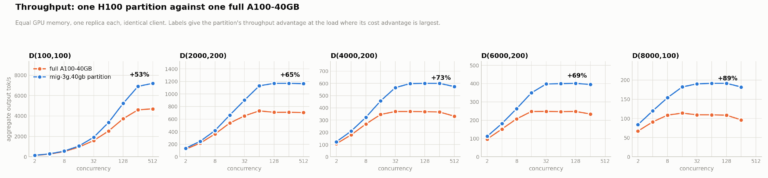
In an AI factory, high bandwidth memory (HBM)is the fastest, most expensive, and most contested memory tier. Every byte spent on a redundant weight copy, an idle session’s KV cache, or a recomputed prefix is a byte that is not being used to produce tokens. The question is no longer how much memory a GPU has, but how much useful work each byte delivers.

Read original on NVIDIA Technical Blog ↗
1 … 3 4 5 6 7 … 10