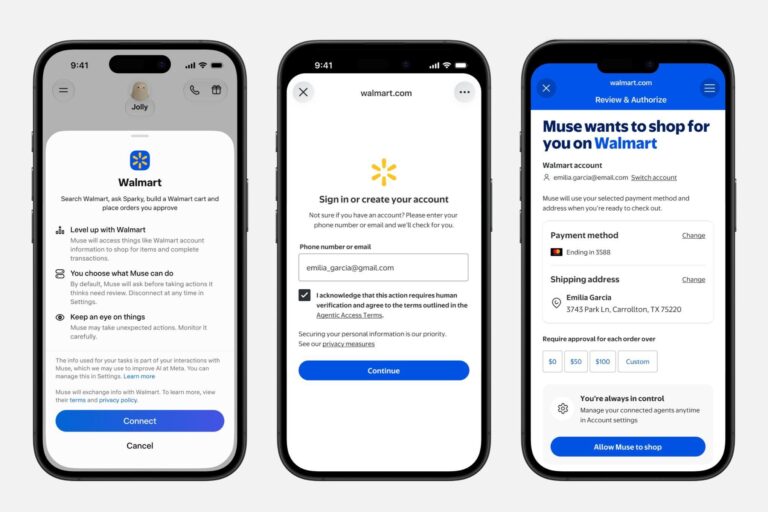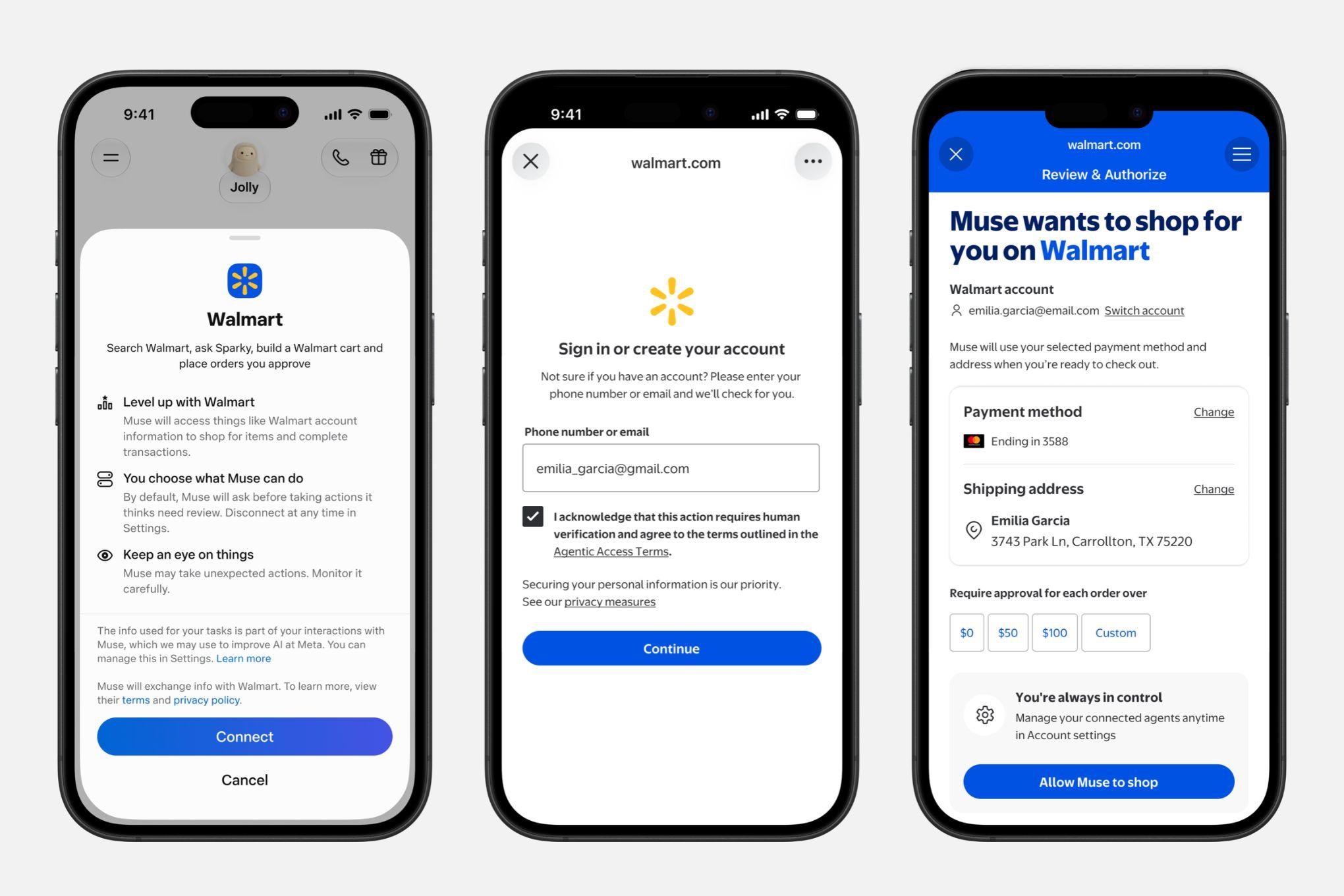
Odefi Labs readers, a notable change has occurred within the retail industry, affecting how AI agents interact with online shopping experiences. Walmart is now allowing Meta’s Muse AI agent to make purchases directly on its website, focusing on Black Friday deals. This change represents an important shift in the retail industry and has implications for businesses and consumers.
This change is important for several reasons. Firstly, it affects Walmart’s operations, showing a willingness to use AI for shopping experiences. Secondly, it demonstrates how AI agents can simplify the buying process, possibly increasing sales for Walmart and attracting new customers. From a competitive standpoint, Walmart’s decision to work with Muse puts it ahead in the growing AI shopping area, while also highlighting the difficulties faced by other large retailers like Amazon and eBay, who currently limit AI agent access to their platforms. The danger for these retailers is that customers might move to platforms offering more AI-powered shopping. However, this also gives Walmart a chance to attract and keep a growing customer base interested in using AI for convenience and personalized shopping. The launch also adds complexity for protecting consumers, demanding careful monitoring of spending limits and purchase approvals set by the agent. Finally, this change will likely lead to more innovation in AI agent technology and how retailers respond, speeding up the development of the retail sector.
To respond to this change, Odefi Labs clients should take these actions this month:
First, learn about the Walmart Agent Gateway and Meta’s Muse AI agent. Review detailed information about how the Gateway works, including the Agent Profiles and spending limit controls. Understand how Muse interacts with the Walmart website, specifically its ability to find products, build shopping lists, and complete transactions. This understanding is important for evaluating the agent’s performance and finding ways to improve it.
Second, perform preliminary tests of Muse’s shopping functions on the Walmart platform. This doesn’t require a large investment; a small, controlled test area allows your team to see how Muse responds to different product questions, assess the accuracy of its suggestions, and evaluate the overall experience. Focus on testing the agent’s ability to set spending limits and confirm purchases. Carefully documenting the agent’s actions and any limits should be essential.
Third, begin looking at Walmart’s approach to AI agent integration with other retailers. Watch how companies like Amazon and eBay react to access for AI agents and consider the long-term effect of Walmart’s strategy on the broader marketplace. Think about how these developments could affect your own AI plans and identify possible partnerships or integrations that match your team’s goals.
Looking ahead, it’s critical to observe how other major retailers react to Walmart’s initiative. The integration of Meta’s Muse is a key step in the wider use of AI agents in online shopping. We will continue to watch for announcements concerning support for additional retailers, the expansion of Muse’s abilities, and the ongoing development of rules for responsible AI use within the shopping environment.
This is Odefto's take on the original article, written with AI help. The link below goes to the source.
Source: The Verge - AI — Read the full article on the original site ↗
Get the best of this topic in your inbox
Join the newsletter. A short, useful digest, no spam.