At least 33,000 students from Nepal were enrolled in American colleges in October, an increase of nearly 15 percent since 2024, according to a recent data analysis.
Despite significant declines in overall international student applications and enrollment since the start of the second Trump administration, the number of students in the United States from crisis-stricken countries has increased since 2024, according to a new analysis of international student data.
The growth is likely driven by refugee and displaced students from Nepal, Colombia and Iran, all countries that have recently been devastated by natural disasters or political upheaval.
Nepal was the largest source country of refugee and displaced students, according to a new data analysis by the Presidents’ Alliance on Higher Education and Immigration.
Most Popular
- The Invisible Labor of Women Leaders (opinion)
- How Will Trump’s New Rule Change Programmatic Accreditation?
- Faculty, Alumni Rally Against Pepperdine Faith Statement
The analysis estimates that more than 85,000 students enrolled in American colleges are refugees or displaced, but don’t have verified refugee status. The report doesn’t include students with temporary protected status; those designated as refugees, asylum seekers or humanitarian parolees; or other displaced students already living in the U.S.
Instead, the Alliance’s analysis tracked the Department of Homeland Security’s Student and Exchange Visitor Information System data on students from 26 source countries. That list drew from the top 10 countries of origin for refugees according to the U.N. Refugee Agency, the countries that have been designated for temporary protected status or for special student relief by the U.S., the top countries of origin of resettled refugees, and the international students in the U.S. with “stateless” status.
Most of the 26 countries are in Latin America, the Middle East and Asia and have recently experienced political disruptions, natural disasters or other humanitarian crises.
Despite the jump in students from Columbia and Nepal, the countries from which the Trump administration has restricted travel sent far fewer students in 2026. Nearly 57 percent fewer students from Eritrea studied in the U.S. this year compared to 2024. Similarly, the total number of students from Ethiopia, Myanmar, Sudan and Yemen dropped about 30 percent. Although the number of students from Iran, where a full travel ban is in place, decreased by 16 percent, the country still represented the third-largest population of foreign students on the Presidents’ Alliance’s list of 26 countries.
Laura Wagner, director of refugee student initiatives at the Presidents’ Alliance, said the data reveals how policies such as travel bans affect refugee students. She said the data should encourage colleges to make dedicated efforts to support refugee and displaced students.
“It also highlights the need for direct outreach and policies that are inclusive and welcoming of refugees,” Wagner said. “When we abandon a generation of refugee students, we limit their potential and undermine our nation’s access to future leaders and entrepreneurs.”
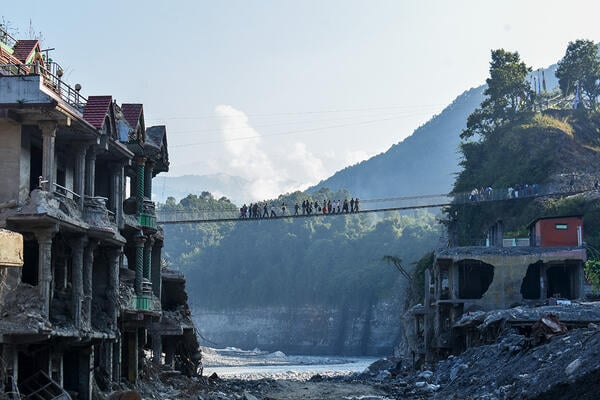
The international student data showed more than 33,000 students from Nepal were in the United States in October, an increase of nearly 15 percent since 2024. Although the data doesn’t reveal the students’ motivations, authors believe the influx of students from Nepal may be related to the recent flooding that killed more than 1,500, left thousands missing and destroyed entire communities. According to the Institute of International Education’s Open Doors data, Nepal was one of the leading countries of origin for all international students in 2025, accounting for 3 percent of all foreign students in the U.S.
The Presidents’ Alliance’s report also showed that nearly 13,000 students in the U.S. came from Colombia, an increase of about 12 percent since 2024. That country has experienced significant political turmoil surrounding its last presidential election and a controversial right-wing leader. Additionally, several cities were damaged and more than 100 people were killed by a 7.4-magnitude earthquake in August. The report also shows increases in students from Cameroon, Guatemala, Honduras, Hong Kong, Nicaragua, Ukraine and South Sudan (the only country with a travel ban to see an increase in students, according to the report).
“While clearly not all students from the countries selected are refugees or facing displacement, our assumption is that the combination of political upheaval and natural disasters in these areas makes it highly likely that many students from these countries can fall into the category of refugee or displaced,” the report says. “Regardless of their official categorization, it is likely many of these students are facing some amount of strife associated with their displacement.”
Editor's Picks
- Faculty, Alumni Rally Against Pepperdine’s New Faith Statement
- U of Kentucky Proposes Technology Policy Restricting All ‘Political Activity’
- International Student Enrollment Down 9% in Fall 2026
Source: Inside Higher Ed — Read the full article on the original site ↗
Get the best of this topic in your inbox
Join the newsletter. A short, useful digest, no spam.